Sunday, December 28, 2025
ADVT 
Health

Some Facts About Flu And How To Avoid Getting It

Darpan News Desk The Canadian Press, 13 Jan, 2017 12:45 PM
    ORONTO — Canada is in the midst of the flu season, with cases mounting across the country. Here are answers to some commonly asked questions about influenza.   
     
     
    WHAT IS FLU?
     
    The flu is a contagious respiratory disease caused by the influenza virus, which infects the nose, throat and lungs. Infection can cause mild to severe illness, and in some cases lead to hospitalization and even death.


    WHAT ARE SYMPTOMS OF FLU?
     
    Fever, runny nose, sore throat, cough, muscle or body aches, headache and fatigue. Some people may have vomiting and diarrhea, although those symptoms are more common in children.


    HOW DOES FLU SPREAD?
     
    Influenza viruses are believed to spread from one person to another mainly by air-borne droplets when infected people cough, sneeze or talk. Touching a surface or object contaminated by the virus and then touching one's mouth, eyes or nose can also lead to infection.


    HOW SOON DO SYMPTOMS BEGIN?
     
    Symptoms begin about one to four days after exposure — on average, in about two days.


    HOW LONG IS A PERSON CONTAGIOUS?
     
    Flu can be passed to someone else even before symptoms appear. Most adults may be able to infect others beginning one day before symptoms develop and up to five to seven days after getting sick. Some people, especially young children and those with weakened immune systems, may be infectious for even longer.


    HOW DO I KNOW IF IT'S FLU OR A COLD?
     
    Influenza and the common cold are caused by different viruses, but both share some common symptoms. However, fever is rare with a cold and body aches, if they occur, are generally mild, while those associated with flu can be intense. Extreme fatigue is common with the flu but unusual with a cold.


    HOW CAN I PROTECT MYSELF FROM GETTING FLU?
     
    Infectious diseases experts say the best way to prevent infection is to get a seasonal flu vaccination each year. Other preventive measures — staying away from people who are sick, covering the mouth and nose when coughing and sneezing, and frequent hand-washing — also help slow the spread of influenza.

    MORE Health ARTICLES

    Oxygen injections to protect you from air pollution

    Oxygen injections to protect you from air pollution
    Drug injections are fine but oxygen injections? As the air pollution keeps getting worse, this is the future to protect yourself from airborne diseases.

    Oxygen injections to protect you from air pollution

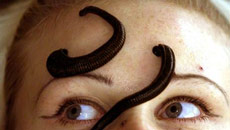
    Believe it or not, Leeches can fix torn ear!

    Believe it or not, Leeches can fix torn ear!
    A 19-year-old woman in the US who lost her ear to a dog attack got it back with the help of a few leeches.

    Believe it or not, Leeches can fix torn ear!

    New insights on how brain develops memories

    New insights on how brain develops memories
    In a key study that may give insights into disorders such as schizophrenia and depression, scientists have studied our ability to store memories in brain during childhood.

    New insights on how brain develops memories

    Go for food with rough texture for a healthy you!

    Go for food with rough texture for a healthy you!
    In contrast, when made to focus on the calorie content, the participants consumed a higher volume of brownies when they were hard (vs soft).

    Go for food with rough texture for a healthy you!

    Robot sex to determine how life began

    Robot sex to determine how life began
    This may come straight from Ripley's Believe It or Not! Scientists have performed robot sex to find how life began on earth. Scientists used rat-sized robots to study evolutionary patterns over thousands of generations without them growing old in the process.

    Robot sex to determine how life began

    Internal body clock puzzle solved

    Internal body clock puzzle solved
    Our internal body clock, influenced by the exposure to light, dictates the wake-sleep cycle.

    Internal body clock puzzle solved