Tuesday, December 23, 2025
ADVT 
Health

South Asians Sharing Ancestry With A Mysterious Population: Researchers

Darpan News Desk IANS, 30 Mar, 2016 01:32 PM
    Many bloodlines around the world, particularly of south Asian descent, may actually be a bit more Denisovan -- a mysterious population of hominids that lived around the same time as the Neanderthals - researchers including Indian-origin scientists have revealed.
     
    The team from Harvard Medical School and University of California-Los Angeles (UCLA) has created a world map and also used comparative genomics to make predictions about where Denisovan and Neanderthal genes may be impacting modern human biology. 
     
    The analysis also proposes that modern humans interbred with Denisovans about 100 generations after their trysts with the Neanderthals.
     
    Denisovan genes can potentially be linked to a more subtle sense of smell in Papua New Guineans and high-altitude adaptions in Tibetans. 
     
    Meanwhile, Neanderthal genes found in people around the world most likely contribute to tougher skin and hair.
     
    Most non-Africans possess at least a little bit Neanderthal DNA. 
     
    “There are certain classes of genes that modern humans inherited from the archaic humans with whom they interbred, which may have helped the modern humans to adapt to the new environments in which they arrived,” explained senior author David Reich, geneticist at Harvard Medical School. 
     
    On the flip side, there was negative selection to systematically remove ancestry that may have been problematic from modern humans. 
     
    “We can document this removal over the 40,000 years since these admixtures occurred,” Reich added.
     
    Reich and lab members, Swapan Mallick and Nick Patterson, teamed up with previous laboratory member Sriram Sankararaman, assistant professor of computer science at the University of California, Los Angeles for the project.


    They found evidence that both Denisovan and Neanderthal ancestry has been lost from the X chromosome as well as genes expressed in the male testes. 
     
    The team theorises that this has contributed to reduced fertility in males, which is commonly observed in other hybrids between two highly divergent groups of the same species.
     
    The researchers collected their data by comparing known Neanderthal and Denisovan gene sequences across more than 250 genomes from 120 non-African populations publicly available through the Simons Genome Diversity Project.
     
    The analysis was carried out by a machine-learning algorithm that could differentiate between components of both kinds of ancestral DNA, which are more similar to one another than to modern humans.
     
    The study's limitation is that it relies on the current library of ancient genomes available. 
     
    “We can't use this data to make claims about what the Denisovans or Neanderthals looked like, what they ate, or what kind of diseases they were susceptible to," said Sankararaman, first author on the paper. “We are still very far from understanding that.”
     
    The new map of archaic ancestry was published in the journal Current Biology.

    MORE Health ARTICLES

    Yoga May Reduce Side Effects Of Prostate Cancer Treatment

    Yoga May Reduce Side Effects Of Prostate Cancer Treatment
    Practicing yoga can improve quality of life of men with prostate cancer who are undergoing radiation therapy, says a new study led by an Indian-origin researcher.

    Yoga May Reduce Side Effects Of Prostate Cancer Treatment

    Canada Will Increase Iraqi Trainers, Fight Climate Change With Obama: Justin Trudeau

    MANILA, Philippines — Canada will increase the number of ground troops it has in Iraq to train local forces as a way of making a bigger military contribution to the coalition fighting Islamic militants, Prime Minister Justin Trudeau says.

    Canada Will Increase Iraqi Trainers, Fight Climate Change With Obama: Justin Trudeau

    UVic Develops Less-bloody Blood Test That Is Already In Use At Mayo Clinic

    UVic Develops Less-bloody Blood Test That Is Already In Use At Mayo Clinic
    VICTORIA — Forget the long, sharp needles and vials of blood taken to check for cancers, diabetes and heart problems — researchers at the University of Victoria have developed a new test requiring only a single drop.

    UVic Develops Less-bloody Blood Test That Is Already In Use At Mayo Clinic

    Canada Seeing Outbreaks Of Pertussis. Is Waning Immunity From Shots One Reason?

    Canada Seeing Outbreaks Of Pertussis. Is Waning Immunity From Shots One Reason?
    The bacterial infection, which often but not always causes a "whoop" sound when breathing or coughing, is particularly dangerous for very young babies, say doctors. The disease can lead to hospitalization and, in rare cases, death.

    Canada Seeing Outbreaks Of Pertussis. Is Waning Immunity From Shots One Reason?

    Machine Used In Cancer, Heart Disease Scans In Alberta Back Up And Running

    Machine Used In Cancer, Heart Disease Scans In Alberta Back Up And Running
    EDMONTON — A key piece of machinery in Alberta used in diagnostic tests such as cancer and heart disease is back up and running after a four-week shutdown.

    Machine Used In Cancer, Heart Disease Scans In Alberta Back Up And Running

    Belt Getting Tighter? Study Finds A Pot Belly Risky Even If You're Not Considered Overweight

    Belt Getting Tighter? Study Finds A Pot Belly Risky Even If You're Not Considered Overweight
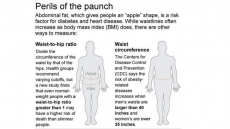
    New research suggests normal-weight people who carry their fat at their waistlines may be at higher risk of death over the years than overweight or obese people whose fat is more concentrated on the hips and thighs.

    Belt Getting Tighter? Study Finds A Pot Belly Risky Even If You're Not Considered Overweight