Tuesday, May 26, 2026
ADVT 
Health

Stillbirth In First Pregnancy Ups Risk On Second Time

Darpan News Desk IANS, 25 Jun, 2015 11:39 AM
    Women who have experienced a stillbirth have up to a four-fold increased risk of stillbirth in a second pregnancy compared to those who had an initial live birth, says a new study led by an Indian-British scientist.
     
    Stillbirth is still a major public health concern despite rates falling across high income countries. Stillbirth refers to foetal death at more than 20 weeks' gestation or a birth weight of at least 400g.
     
    "Stillbirth is one of the most common adverse obstetric outcomes and a traumatic experience for parents," explained India-born Sohinee Bhattacharya from the University of Aberdeen, Scotland.
     
    "Couples who have experienced a stillbirth need to understand why it happened and want to know the risk for future pregnancies," Bhattacharya noted.
     
    They undertook systematic review and meta-analysis to examine the link between stillbirth in an initial pregnancy and risk of stillbirth in a subsequent pregnancy.
     
    The team analysed 13 cohort and three case-control studies from high-income countries. Data was collected for 3,412,079 women out of which 3,387,538 (99.3 percent) had a previous live birth and 24,541 (0.7 percent) had a stillbirth in an initial pregnancy.
     
    Stillbirths occurred in the subsequent pregnancy for 14,283 women: 606 of 24,541 (2.5 percent) in women with a history of stillbirth and 13,677 of 3,387,538 (0.4 percent) in women with no history.
     
    Women who had a stillbirth in an initial pregnancy had a nearly fivefold increased risk of stillbirth in a second pregnancy. This risk is higher than stillbirth linked with medical conditions such as diabetes or hypertension.
     
    "Pregnancies should be closely monitored, and antenatal interventions and care be offered at the first sign of increased risk of distress or danger," the authors said.
     
    The study appeared in The BMJ.
    MORE Health ARTICLES

    Believe it or not, Leeches can fix torn ear!

    Believe it or not, Leeches can fix torn ear!
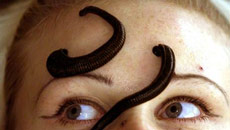
    A 19-year-old woman in the US who lost her ear to a dog attack got it back with the help of a few leeches.

    Believe it or not, Leeches can fix torn ear!

    New insights on how brain develops memories

    New insights on how brain develops memories
    In a key study that may give insights into disorders such as schizophrenia and depression, scientists have studied our ability to store memories in brain during childhood.

    New insights on how brain develops memories

    Go for food with rough texture for a healthy you!

    Go for food with rough texture for a healthy you!
    In contrast, when made to focus on the calorie content, the participants consumed a higher volume of brownies when they were hard (vs soft).

    Go for food with rough texture for a healthy you!

    Robot sex to determine how life began

    Robot sex to determine how life began
    This may come straight from Ripley's Believe It or Not! Scientists have performed robot sex to find how life began on earth. Scientists used rat-sized robots to study evolutionary patterns over thousands of generations without them growing old in the process.

    Robot sex to determine how life began

    Internal body clock puzzle solved

    Internal body clock puzzle solved
    Our internal body clock, influenced by the exposure to light, dictates the wake-sleep cycle.

    Internal body clock puzzle solved

    Want to be happy? Be extrovert

    Want to be happy? Be extrovert
    If happiness is what you are seeking, just be yourself - call an old friend to dinner or smile at a passerby - as a study has found that people with outgoing behaviour are a happier lot across cultures.

    Want to be happy? Be extrovert