Tuesday, February 10, 2026
ADVT 
Health

Stillbirth In First Pregnancy Ups Risk On Second Time

Darpan News Desk IANS, 25 Jun, 2015 11:39 AM
    Women who have experienced a stillbirth have up to a four-fold increased risk of stillbirth in a second pregnancy compared to those who had an initial live birth, says a new study led by an Indian-British scientist.
     
    Stillbirth is still a major public health concern despite rates falling across high income countries. Stillbirth refers to foetal death at more than 20 weeks' gestation or a birth weight of at least 400g.
     
    "Stillbirth is one of the most common adverse obstetric outcomes and a traumatic experience for parents," explained India-born Sohinee Bhattacharya from the University of Aberdeen, Scotland.
     
    "Couples who have experienced a stillbirth need to understand why it happened and want to know the risk for future pregnancies," Bhattacharya noted.
     
    They undertook systematic review and meta-analysis to examine the link between stillbirth in an initial pregnancy and risk of stillbirth in a subsequent pregnancy.
     
    The team analysed 13 cohort and three case-control studies from high-income countries. Data was collected for 3,412,079 women out of which 3,387,538 (99.3 percent) had a previous live birth and 24,541 (0.7 percent) had a stillbirth in an initial pregnancy.
     
    Stillbirths occurred in the subsequent pregnancy for 14,283 women: 606 of 24,541 (2.5 percent) in women with a history of stillbirth and 13,677 of 3,387,538 (0.4 percent) in women with no history.
     
    Women who had a stillbirth in an initial pregnancy had a nearly fivefold increased risk of stillbirth in a second pregnancy. This risk is higher than stillbirth linked with medical conditions such as diabetes or hypertension.
     
    "Pregnancies should be closely monitored, and antenatal interventions and care be offered at the first sign of increased risk of distress or danger," the authors said.
     
    The study appeared in The BMJ.
    MORE Health ARTICLES

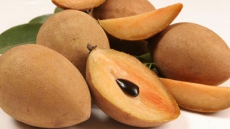
    Eat chikoo to fight cancer

    Eat chikoo to fight cancer
    The sweet and succulent chikoo or Sapota fruit, a popular ingredient for desserts, could well be the answer to halt cancer from spreading, according to a study by Indian scientists....

    Eat chikoo to fight cancer

    Tweaking brain circuits may cure autism

    Tweaking brain circuits may cure autism
    In a ray of hope for people suffering from autism, researchers have discovered neuron populations in a region of the mouse brain that controls...

    Tweaking brain circuits may cure autism

    New method can detect epilepsy symptoms early in kids

    New method can detect epilepsy symptoms early in kids
    Using an electroencephalography (EEG) analytical method, a team of doctors and scientists in Taiwan has successfully developed a tool to detect..

    New method can detect epilepsy symptoms early in kids

    Vitamin B1 deficiency can damage your brain

    Vitamin B1 deficiency can damage your brain
    Include more vitamin B1-rich food in your diet as neurologists have underlined that deficiency of a single vitamin B1 (or thiamine) can cause a potentially...

    Vitamin B1 deficiency can damage your brain

    Cure for glaucoma in sight

    Cure for glaucoma in sight
    A cure is now in sight for the dangerous eye disease glaucoma, which is a leading cause of irreversible blindness, says a new study....

    Cure for glaucoma in sight

    Sleeping brain active even when you doze off

    Sleeping brain active even when you doze off
    Have you ever performed calculations or classified words before falling asleep and then experienced continuing those calculations during your snooze? Well, salute your wonder brain....

    Sleeping brain active even when you doze off