If one goes by a survey, most new and expecting mothers consider stretch marks as one of the most worrisome issues with respect to their physical appearance.
According to the Yummy Mummy Survey by Nielsen, one of the most worrisome issues with respect to their physical appearance as stated by 84 percent of new and expecting mothers are stretch marks.
The Yummy Mummy Survey also uncovered that there are several beliefs around stretch marks which are still prevalent amongst new and expecting mothers. For instance, 76 percent agree that stretch marks happen only on the tummy.
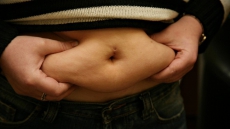
“It is common to develop stretch marks on the breasts, thighs, hips, lower back and buttocks when there is rapid stretching of the skin like weight gain in these areas.
"Stretch marks can appear anywhere on the body, but it is more likely for them to form where larger amounts of fats are stored in the body,” Kiran Coelho, who’s been the gynaecologist to Bollywood actresses like Shilpa Shetty, Lara Dutta and Mandira Bedi, said in a statement.
“Though many of my patients worry about stretch marks, very few are aware of the facts. As many as 66 percent new and expecting mothers agree that stretch marks have no cure," she added.
One of the key findings of the survey was that stretch marks were found to pose not only physical but social challenges as well.
In India, where the traditional sari is worn to most special occasions (especially post pregnancy), 80 percent new and expecting mothers agree that they think wearing a sari during or post pregnancy becomes an embarrassment because of stretch marks showing.
The Yummy Mummy Survey also uncovered that there are several dated myths surrounding pregnancy which are still followed by new and expecting mothers or fathers in India.
For instance, the size of the stomach can identify the gender of the baby and the survey reveals only 40 percent of new and expecting mothers or fathers disagree that a heavy baby bump is welcoming a baby girl.
Ask these new moms and moms-to-be what they associate with being a “Yummy Mummy” and 62 percent new and expecting fathers associate maintaining body post pregnancy as much as pre pregnancy with Yummy Mummy, 67 percent new and expecting fathers associate beautiful skin with Yummy Mummy.
As many as 91 percent of them have admitted to actively taking steps to make their wives a Yummy Mummy.