Thursday, December 25, 2025
ADVT 
Health

Sweat-eating bacteria may treat acne

Darpan News Desk IANS, 30 Sep, 2014 11:10 AM
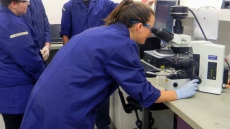
    Bacteria that metabolise ammonia - a major component of sweat - may improve skin health and some day could be used for the treatment of skin disorders such as acne or chronic wounds, shows new research.
     
    Human volunteers using the bacteria reported better skin condition and appearance compared with a placebo control group, said researchers after the study.
     
    For the study, researchers used a strain of Nitrosomonas eutropha -- ammonia-oxidising bacteria (AOB) isolated from organic soil samples.
     
    In the placebo-controlled study involving 24 volunteers, one group applied a suspension of the live bacteria on their face and scalp for one week while a second group used placebo.
     
    Both groups were followed for an additional two weeks.
     
    The AOB users reported qualitative improvements in skin condition compared with no or minimal improvement reported by the control group.
     
    "The use of a bacterial DNA detection assay demonstrated the presence of AOB in 83-100 percent of skin swabs obtained from AOB users but not in any of the placebo control samples," said Larry Weiss, chief medical officer at AOBiome, a biotech start-up in Cambridge, Massachusetts.
     
    Importantly, there were no adverse events associated with the topical application of AOB.
     
    AOB are ubiquitous in soil and water and are essential components of the nitrogen cycle and environmental nitrification processes.
     
    "Live Nitrosomonas are well tolerated and may hold promise as novel, self-regulating topical delivery agent of nitrite and nitric oxide to the human skin," Weiss concluded.
     
    The researchers presented the results at the fifth ASM Conference on Beneficial Microbes in Washington, DC recently.


    MORE Health ARTICLES

    Hypoventilation patients at risk during air travel

    Hypoventilation patients at risk during air travel
    Obese people who suffer from hypoventilation should be cautious while travelling via air....

    Hypoventilation patients at risk during air travel

    Immigrant kids in US at higher obesity risk

    Immigrant kids in US at higher obesity risk
    Immigrant kids in the US are more likely to grow obese than US-born Caucasian children, a study says....

    Immigrant kids in US at higher obesity risk

    Artificial anti-cancer molecules created in a jiffy

    Artificial anti-cancer molecules created in a jiffy
    In what could lead to new anti-cancer drugs, researchers have developed a new method to produce molecules that have a similar structure to peptides...

    Artificial anti-cancer molecules created in a jiffy

    Neuronal 'sweet spot' can curb obesity

    Neuronal 'sweet spot' can curb obesity
    Preventing weight gain, obesity and diabetes could be as simple as keeping a nuclear receptor from being activated in a small part of the brain, says a new study....

    Neuronal 'sweet spot' can curb obesity

    First molecular map to detect vision loss created

    First molecular map to detect vision loss created
    An Indian-origin researcher-led team has created the most detailed map to date of a region of the human eye, long associated with blinding diseases...

    First molecular map to detect vision loss created

    Revealed: Why brain tumours are more common in men

    Revealed: Why brain tumours are more common in men
    The absence of a protein known to reduce cancer risk can explain why brain tumours occur more often in males and are more harmful than similar tumours in females....

    Revealed: Why brain tumours are more common in men