Saturday, December 27, 2025
ADVT 
Health

Sweat-eating bacteria may treat acne

Darpan News Desk IANS, 30 Sep, 2014 11:10 AM
    Bacteria that metabolise ammonia - a major component of sweat - may improve skin health and some day could be used for the treatment of skin disorders such as acne or chronic wounds, shows new research.
     
    Human volunteers using the bacteria reported better skin condition and appearance compared with a placebo control group, said researchers after the study.
     
    For the study, researchers used a strain of Nitrosomonas eutropha -- ammonia-oxidising bacteria (AOB) isolated from organic soil samples.
     
    In the placebo-controlled study involving 24 volunteers, one group applied a suspension of the live bacteria on their face and scalp for one week while a second group used placebo.
     
    Both groups were followed for an additional two weeks.
     
    The AOB users reported qualitative improvements in skin condition compared with no or minimal improvement reported by the control group.
     
    "The use of a bacterial DNA detection assay demonstrated the presence of AOB in 83-100 percent of skin swabs obtained from AOB users but not in any of the placebo control samples," said Larry Weiss, chief medical officer at AOBiome, a biotech start-up in Cambridge, Massachusetts.
     
    Importantly, there were no adverse events associated with the topical application of AOB.
     
    AOB are ubiquitous in soil and water and are essential components of the nitrogen cycle and environmental nitrification processes.
     
    "Live Nitrosomonas are well tolerated and may hold promise as novel, self-regulating topical delivery agent of nitrite and nitric oxide to the human skin," Weiss concluded.
     
    The researchers presented the results at the fifth ASM Conference on Beneficial Microbes in Washington, DC recently.

    MORE Health ARTICLES

    Technology to catch dozing drivers on the go

    Technology to catch dozing drivers on the go
    Long rides at night can now become a lot more pleasant and safe if you listen to researchers who have developed an inexpensive and easier way to find out when the person behind the wheel is about to nod off.

    Technology to catch dozing drivers on the go

    Astronauts may face attention deficit risks

    Astronauts may face attention deficit risks
    Astronauts who are radiation-sensitive need to take extra care to protect their brains as they may face risks of attention deficit and slower reaction times, a study suggests.

    Astronauts may face attention deficit risks

    Befriend a cyber buddy to stay motivated

    Befriend a cyber buddy to stay motivated
    Although a human partner is a better motivator during exercise, a software-generated cyber partner can also be effective in making you work a little extra, research reveals.

    Befriend a cyber buddy to stay motivated

    New method to treat cocaine addiction effectively

    New method to treat cocaine addiction effectively
    There is hardly any effective medications for cocaine addiction, but researchers have now discovered a new compound that can halt cocaine addiction, raising hope for new treatment for drug addicts.

    New method to treat cocaine addiction effectively

    How bariatric surgery can help control diabetes

    How bariatric surgery can help control diabetes
    That bariatric surgery, or obesity surgery, leads to weight loss is well known, but researchers have now identified the mechanism why obesity surgery also leave positive effects on diabetes and heart diseases.

    How bariatric surgery can help control diabetes

    Now, 3D-printed plaster cast to heal wound faster

    Now, 3D-printed plaster cast to heal wound faster
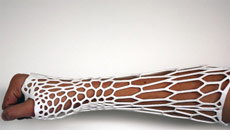
    In what could revolutionise plaster cast technology, a Turkish design student has unveiled a slick 3D-printed cast with ventilation holes that reduces healing time by around 40 percent than currently used plaster casts.

    Now, 3D-printed plaster cast to heal wound faster