Sunday, March 29, 2026
ADVT 
Health

Take The Stairs To Slow Brain Ageing

IANS, 10 Mar, 2016 12:20 PM
    Climbing the stairs can not only help you stay physically fit but also improve brain health, suggests new research.
     
    "There already exist many 'Take the stairs' campaigns in office environments and public transportation centres," said lead researcher Jason Steffener from Concordia University in Montreal, Canada.
     
    "This study shows that these campaigns should also be expanded for older adults so that they can work to keep their brains young," said Steffener.
     
    The researchers found that education also played a positive role in brain health.
     
    The study, published in the journal Neurobiology of Aging, showed that the more flights of stairs a person climbs and the more years of school a person completes, the "younger" their brain physically appears.
     
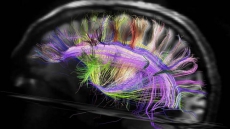
    For the study, Steffener and his co-authors used magnetic resonance imaging (MRI) to non-invasively examine the brains of 331 healthy adults who ranged in age from 19 to 79.
     
    They measured the volume of grey matter found in participants' brains because its decline, caused by neural shrinkage and neuronal loss, is a very visible part of the chronological aging process. 
     
    Then, they compared brain volume to the participants' reported number of flights of stairs climbed and years of schooling completed.
     
    Results were clear -- the more flights of stairs climbed, and the more years of schooling completed, the younger the brain.
     
    "This is encouraging because it demonstrates that a simple thing like climbing stairs has great potential as an intervention tool to promote brain health," Steffener said.
    MORE Health ARTICLES

    Eye changes can predict dementia

    Eye changes can predict dementia
    A loss of cells in the retina is one of the earliest signs of a form of dementia in people with a genetic risk for the brain disorder - even before any changes appear....

    Eye changes can predict dementia

    Canadian doctors have begun using stem cell transplants to treat 'Stiff Person Syndrome'

    Canadian doctors have begun using stem cell transplants to treat 'Stiff Person Syndrome'

    TORONTO - Canadian doctors have begun using stem cell transplants to treat "stiff person syn...

    Canadian doctors have begun using stem cell transplants to treat 'Stiff Person Syndrome'

    Can right brain rhythm create a super-perceiving human?

    Can right brain rhythm create a super-perceiving human?
    A certain type of brainwave plays a key role in our sensitivity towards touch and driving. The right brain rhythm can make people have more perceptual and attentive powers...

    Can right brain rhythm create a super-perceiving human?

    Can Ebola strike India?

    Can Ebola strike India?
    There are about 500 Indians in Guinea, 3,000 in Liberia and 1,200 in Sierra Leone, from where the maximum cases have been reported. Nigeria has a much...

    Can Ebola strike India?

    Indian scientists find a 'wonder herb' in the high Himalayas

    Indian scientists find a 'wonder herb' in the high Himalayas
    In the high hostile peaks of the Himalayas where sustaining life is a challenge in itself, Indian scientists say they have found a "wonder herb" which can regulate...

    Indian scientists find a 'wonder herb' in the high Himalayas

    Robotic walking stick for visually impaired

    Robotic walking stick for visually impaired
    In a first, engineers have designed a robotic walking stick for the visually impaired that can detect the user's immediate path and store localised geographical information...

    Robotic walking stick for visually impaired