Wednesday, December 31, 2025
ADVT 
Health

Take The Stairs To Slow Brain Ageing

IANS, 10 Mar, 2016 12:20 PM
    Climbing the stairs can not only help you stay physically fit but also improve brain health, suggests new research.
     
    "There already exist many 'Take the stairs' campaigns in office environments and public transportation centres," said lead researcher Jason Steffener from Concordia University in Montreal, Canada.
     
    "This study shows that these campaigns should also be expanded for older adults so that they can work to keep their brains young," said Steffener.
     
    The researchers found that education also played a positive role in brain health.
     
    The study, published in the journal Neurobiology of Aging, showed that the more flights of stairs a person climbs and the more years of school a person completes, the "younger" their brain physically appears.
     
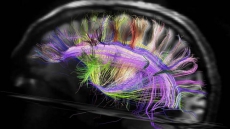
    For the study, Steffener and his co-authors used magnetic resonance imaging (MRI) to non-invasively examine the brains of 331 healthy adults who ranged in age from 19 to 79.
     
    They measured the volume of grey matter found in participants' brains because its decline, caused by neural shrinkage and neuronal loss, is a very visible part of the chronological aging process. 
     
    Then, they compared brain volume to the participants' reported number of flights of stairs climbed and years of schooling completed.
     
    Results were clear -- the more flights of stairs climbed, and the more years of schooling completed, the younger the brain.
     
    "This is encouraging because it demonstrates that a simple thing like climbing stairs has great potential as an intervention tool to promote brain health," Steffener said.

    MORE Health ARTICLES

    'Off switch' for pain discovered

    'Off switch' for pain discovered
    Researchers have uncovered a new way to block neuropathic pain including pain caused by chemotherapeutic agents and bone cancer....

    'Off switch' for pain discovered

    Nervous system plays bigger role in infections

    Nervous system plays bigger role in infections
    The nervous system may play a bigger role in infections and auto-immune diseases than previously known, says a study....

    Nervous system plays bigger role in infections

    Ebola test results now in 15 minutes!

    Ebola test results now in 15 minutes!
    The project, led by the Pasteur Institute in Dakar, Senegal, uses a "mobile suitcase laboratory", BBC reported....

    Ebola test results now in 15 minutes!

    Not all mosquitoes can transmit malaria

    Not all mosquitoes can transmit malaria
    A genetic study has revealed that certain species of mosquitoes have evolved to better transmit malaria than even some of their close cousins....

    Not all mosquitoes can transmit malaria

    Mechanism linked to stroke damage identified

    Mechanism linked to stroke damage identified
    Researchers have discovered the mechanism linked to stroke damage and brain function, thus paving the way to develop a new drug target to block brain damage....

    Mechanism linked to stroke damage identified

    Ebola virus detected in semen three months after symptoms end

    Ebola virus detected in semen three months after symptoms end
    The World Health Organisation (WHO) warned Friday that the semen of men recovering from Ebola can contain the deadly virus up to three months after the symptoms disappear...

    Ebola virus detected in semen three months after symptoms end