Sunday, May 17, 2026
ADVT 
Health

This Automated, Robotic Drill May Perform Surgery In 2.5 Minutes

Darpan News Desk IANS, 01 May, 2017 12:27 PM
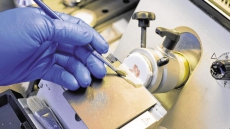
    A computer-driven automated drill that could perform a type of complex cranial surgery 50 times faster -- decreasing operating time from two hours to 2.5 minutes -- has been developed by researchers, including one of Indian-origin.
     
    A translabyrinthine surgery is performed to expose slow-growing, benign tumours that form around the auditory nerves.
     
    For such complex surgeries, surgeons typically use hand drills to make intricate openings, adding hours to a procedure and may also increase the risks of loss of facial movement. 
     
    However, the new automated machine replaces hand drills to produce fast, clean, and safe cuts, reducing the time the wound is open and the patient is anesthetised, thereby decreasing the incidence of infection, human error, and surgical cost. 
     
    "I was interested in developing a low-cost drill that could do a lot of the grunt work to reduce surgeon fatigue," said A.K. Balaji, Associate Professor at the University of Utah in the US. 
     
    The drill, which could play a pivotal role in future surgical procedures like hip implants, was developed from scratch to meet the needs of the neurosurgical unit, as well as developed software that sets a safe cutting path, the researchers said in the paper reported in the journal Neurosurgical Focus.
     
    First, the patient is imaged using a CT scan to gather bone data and identify the exact location of sensitive structures, such as nerves and major veins and arteries that must be avoided. Surgeons use this information to programme the cutting path of the drill. 
     
    In addition, the surgeon can programme safety barriers along the cutting path within 1 mm of sensitive structures. 
     
    If the drill gets too close to the facial nerve and irritation is monitored during surgery, the drill automatically turns off. 

    MORE Health ARTICLES

    Phone use may lead to brain cancer

    Phone use may lead to brain cancer
    The longer someone talks over the phone - in terms of hours and years - the more likely is he/she to develop glioma, a deadly form of brain cancer, says a new study....

    Phone use may lead to brain cancer

    Artificial retina could help restore vision of elderly

    Artificial retina could help restore vision of elderly
    A team of researchers has created a wireless and light-sensitive, flexible film that could potentially substitute a damaged retina....

    Artificial retina could help restore vision of elderly

    Flawed gene may curb heart attack risk by half

    Flawed gene may curb heart attack risk by half
    Rare mutations that shut down a single gene called NPC1L1 are linked to lower cholesterol levels and a 50 percent reduction in the risk of heart attack, says an Indian-origin cardiologist....

    Flawed gene may curb heart attack risk by half

    Vitamin B doesn't stem memory loss

    Vitamin B doesn't stem memory loss
    A day before Indian Prime Minister Narendra Modi arrives in Brisbane for the G20 summit, Australia is waiting anxiously for the Indian Prime Minister's overdue visit to commence....

    Vitamin B doesn't stem memory loss

    Personalized Genetic Test Could Predict Prostate Cancer Recurrence

    Personalized Genetic Test Could Predict Prostate Cancer Recurrence
    TORONTO — Canadian researchers have developed a genetic test to identify which men are at highest risk for recurrence of prostate cancer following localized treatment with surgery or radiation therapy.

    Personalized Genetic Test Could Predict Prostate Cancer Recurrence

    Oral cancer virus spreads via oral, genital route

    Oral cancer virus spreads via oral, genital route
    Transmission of human papillomavirus (HPV) occurs via oral-oral and oral-genital routes, says new research....

    Oral cancer virus spreads via oral, genital route