Wednesday, February 11, 2026
ADVT 
Health

Toddler's eye contact may signal autism risk

Darpan News Desk Darpan, 25 Jul, 2014 10:03 AM
    Low levels of joint attention - the act of making eye contact with another person to share an experience - without a positive affective component (a smile) in the first year is linked to high risk of autism disorder, says a study.
     
    Early joint attention initiation without smiling - matter-of-fact looking at a person to communicate interest in a toy - was negatively associated with Autism Spectrum Disorder (ASD) symptoms, the findings showed.
     
    "The ability to coordinate attention with another person without a smile, without an emotional component, seems to be particularly important for high-risk siblings in the development of ASD symptoms," said Devon Gangi from University of Miami, US.
     
    "The detection of markers associated with autism early in life, before a child can be diagnosed with autism, is important to help identify children at the greatest need for early interventions," Gangi said.
     
    Some babies are at risk for autism because they have an older sibling that has the disorder.
     
    According to the study, the less joint attention without smiling at 8 months in a high-risk sibling, the more likely they were to have elevated ASD symptoms by 30 months.
     
    Less early initiating of joint attention without smiling is a particularly important skill for high-risk siblings, the study added.
     
    The researchers primarily predicted the children's symptom level. Symptoms vary in at-risk siblings, some of whom have an ASD outcome and some of whom do not. They did not look at whether the younger sibling eventually received an ASD diagnosis.
     
    The study appeared in the Journal of Autism and Developmental Disorders.
    MORE Health ARTICLES

    Fly's genome study offers hope for sleeping sickness

    Fly's genome study offers hope for sleeping sickness
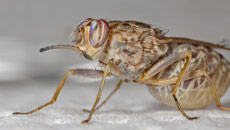
    With genome decoding of tsetse fly that causes the potentially fatal sleeping sickness disease, scientists have discovered new clues to the diet, vision and reproductive strategies of the insect.

    Fly's genome study offers hope for sleeping sickness

    Technology to catch dozing drivers on the go

    Technology to catch dozing drivers on the go
    Long rides at night can now become a lot more pleasant and safe if you listen to researchers who have developed an inexpensive and easier way to find out when the person behind the wheel is about to nod off.

    Technology to catch dozing drivers on the go

    Astronauts may face attention deficit risks

    Astronauts may face attention deficit risks
    Astronauts who are radiation-sensitive need to take extra care to protect their brains as they may face risks of attention deficit and slower reaction times, a study suggests.

    Astronauts may face attention deficit risks

    Befriend a cyber buddy to stay motivated

    Befriend a cyber buddy to stay motivated
    Although a human partner is a better motivator during exercise, a software-generated cyber partner can also be effective in making you work a little extra, research reveals.

    Befriend a cyber buddy to stay motivated

    New method to treat cocaine addiction effectively

    New method to treat cocaine addiction effectively
    There is hardly any effective medications for cocaine addiction, but researchers have now discovered a new compound that can halt cocaine addiction, raising hope for new treatment for drug addicts.

    New method to treat cocaine addiction effectively

    How bariatric surgery can help control diabetes

    How bariatric surgery can help control diabetes
    That bariatric surgery, or obesity surgery, leads to weight loss is well known, but researchers have now identified the mechanism why obesity surgery also leave positive effects on diabetes and heart diseases.

    How bariatric surgery can help control diabetes