Tuesday, February 3, 2026
ADVT 
Health

True happiness lies in your DNA

Darpan News Desk IANS, 18 Jul, 2014 01:33 PM
    Looking for eternal happiness? Try to match the DNA of Danish people.
     
    According to an interesting study, genetics could be the key to explaining a nation's level of happiness.
     
    The closer a nation is to the genetic makeup of the people of Denmark, the happier that country is, University of Warwick researchers found.
     
    "We found that the greater a nation's genetic distance from Denmark, the lower the reported wellbeing of that nation. Our research adjusted for influences like Gross Domestic Product, culture, religion and the strength of the welfare state and geography," explained Eugenio Proto from the University's centre for competitive advantage in the global economy (CAGE).
     
    Eugenio Proto and his team found three forms of evidence for a link between genetic makeup and a nation's happiness.
     
    Firstly, they used data on 131 countries from a number of international surveys including the Gallup World Poll, World Value Survey and the European Quality of Life Surveys.
     
    The researchers linked cross-national data on genetic distance and well-being.
     
    The second form of evidence looked at existing research suggesting an association between mental wellbeing and a mutation of the gene that influences the re-uptake of serotonin - believed to be linked to human mood.
     
    The short version of the gene has been associated with lower life satisfaction.
     
    "We found that Denmark and the Netherlands appear to have the lowest percentage of people with this short version," Proto suggested.
     
    The final form of evidence looked at whether the link between genetics and happiness also held true across generations and continents.
     
    "There are reasons to believe that genetic patterns may help researchers understand international well-being levels and more research in this area is needed," they concluded.
     

    MORE Health ARTICLES

    Believe it or not, Leeches can fix torn ear!

    Believe it or not, Leeches can fix torn ear!
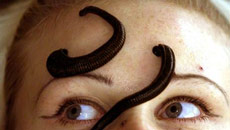
    A 19-year-old woman in the US who lost her ear to a dog attack got it back with the help of a few leeches.

    Believe it or not, Leeches can fix torn ear!

    New insights on how brain develops memories

    New insights on how brain develops memories
    In a key study that may give insights into disorders such as schizophrenia and depression, scientists have studied our ability to store memories in brain during childhood.

    New insights on how brain develops memories

    Go for food with rough texture for a healthy you!

    Go for food with rough texture for a healthy you!
    In contrast, when made to focus on the calorie content, the participants consumed a higher volume of brownies when they were hard (vs soft).

    Go for food with rough texture for a healthy you!

    Robot sex to determine how life began

    Robot sex to determine how life began
    This may come straight from Ripley's Believe It or Not! Scientists have performed robot sex to find how life began on earth. Scientists used rat-sized robots to study evolutionary patterns over thousands of generations without them growing old in the process.

    Robot sex to determine how life began

    Internal body clock puzzle solved

    Internal body clock puzzle solved
    Our internal body clock, influenced by the exposure to light, dictates the wake-sleep cycle.

    Internal body clock puzzle solved

    Want to be happy? Be extrovert

    Want to be happy? Be extrovert
    If happiness is what you are seeking, just be yourself - call an old friend to dinner or smile at a passerby - as a study has found that people with outgoing behaviour are a happier lot across cultures.

    Want to be happy? Be extrovert