Wednesday, December 17, 2025
ADVT 
Health

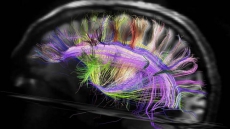
Tweaking brain circuits may cure autism

Darpan News Desk IANS, 14 Sep, 2014 07:48 AM
    In a ray of hope for people suffering from autism, researchers have discovered neuron populations in a region of the mouse brain that controls whether the animal engages in social behaviour or asocial repetitive self-grooming behaviour.
     
    Autism has also been linked to dysfunction of the amygdala, a brain structure involved in processing emotions. Humans with autism often show a reduced frequency of social interactions and an increased tendency to engage in repetitive solitary behaviour.
     
    Lead researcher David J. Anderson, a Biology professor at the California Institute of Technology and his colleagues discovered two intermingled but distinct population of neurons in the amygdala.
     
    One "social neurons" population promotes social behaviour such as mating, fighting or social grooming while the other "self-grooming neurons" population controls repetitive self-grooming - an asocial behaviour.
     
    To study the relationship between these two cell types and their associated behaviour, researchers used a technique called optogenetics.
     
    Anderson's team was able to selectively switch on the neurons associated with social behaviour and those linked with asocial behaviour.
     
    "Surprisingly, these two groups of neurons appear to interfere with each other's function: the activation of 'social neurons' inhibits self-grooming behaviour while the activation of 'self-grooming neurons' inhibits social behaviour," Anderson noted.
     
    In autism, there is a decrease in social interactions and there is often an increase in repetitive, sometimes asocial or self-oriented behaviour - a phenomenon known as perseveration.
     
    "By stimulating a particular set of neurons, we are both inhibiting social interactions and promoting these persistent behaviours," Anderson said.
     
    If we find the right population of neurons, it might be possible to override the genetic component of a behavioural disorder like autism by just changing the activity of the brain circuits, concluded the study that was reported in the journal Cell.

    MORE Health ARTICLES

    Gene behind benign breast tumours identified

    Gene behind benign breast tumours identified
    Researchers have identified a critical gene that could help clinicians distinguish fibroadenomas cases from breast cancer. Fibroadenomas is the most...

    Gene behind benign breast tumours identified

    Married and stressed? Have more sex

    Married and stressed? Have more sex
    Married but remain stressed owing to work or family-related issues? Have frequent sex to shun those unnecessary bouts of tension and lead a healthy life....

    Married and stressed? Have more sex

    Scientists discover new clues to brain's wiring

    Scientists discover new clues to brain's wiring
    In a step forward in learning how a developing brain is built, researchers have identified a group of proteins that programme a common type of brain nerve cell...

    Scientists discover new clues to brain's wiring

    New drug cures Hepatitis C in HIV patients

    New drug cures Hepatitis C in HIV patients
    In a ray of hope for patients infected with both HIV and Hepatitis C, researchers have found that a combination drug therapy cures chronic Hepatitis C in majority of such patients....

    New drug cures Hepatitis C in HIV patients

    How new dads' brains react to fatherhood

    How new dads' brains react to fatherhood
    Not just moms, a new dad's heart too pours for his or her toddler the moment he looks at him or her playing...

    How new dads' brains react to fatherhood

    Researchers make IVF safer for women

    Researchers make IVF safer for women
    Researchers could have just made IVF - an assisted fertilisation therapy - treatment safer for women after successfully using a new method to stimulate ovulation...

    Researchers make IVF safer for women