Friday, December 19, 2025
ADVT 
Health

Tweaking brain circuits may cure autism

Darpan News Desk IANS, 14 Sep, 2014 07:48 AM
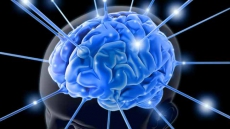
    In a ray of hope for people suffering from autism, researchers have discovered neuron populations in a region of the mouse brain that controls whether the animal engages in social behaviour or asocial repetitive self-grooming behaviour.
     
    Autism has also been linked to dysfunction of the amygdala, a brain structure involved in processing emotions. Humans with autism often show a reduced frequency of social interactions and an increased tendency to engage in repetitive solitary behaviour.
     
    Lead researcher David J. Anderson, a Biology professor at the California Institute of Technology and his colleagues discovered two intermingled but distinct population of neurons in the amygdala.
     
    One "social neurons" population promotes social behaviour such as mating, fighting or social grooming while the other "self-grooming neurons" population controls repetitive self-grooming - an asocial behaviour.
     
    To study the relationship between these two cell types and their associated behaviour, researchers used a technique called optogenetics.
     
    Anderson's team was able to selectively switch on the neurons associated with social behaviour and those linked with asocial behaviour.
     
    "Surprisingly, these two groups of neurons appear to interfere with each other's function: the activation of 'social neurons' inhibits self-grooming behaviour while the activation of 'self-grooming neurons' inhibits social behaviour," Anderson noted.
     
    In autism, there is a decrease in social interactions and there is often an increase in repetitive, sometimes asocial or self-oriented behaviour - a phenomenon known as perseveration.
     
    "By stimulating a particular set of neurons, we are both inhibiting social interactions and promoting these persistent behaviours," Anderson said.
     
    If we find the right population of neurons, it might be possible to override the genetic component of a behavioural disorder like autism by just changing the activity of the brain circuits, concluded the study that was reported in the journal Cell.

    MORE Health ARTICLES

    Anti-depressants during pregnancy up obesity, diabetes risk in kids

    Anti-depressants during pregnancy up obesity, diabetes risk in kids
    Pregnant women are particularly vulnerable to depression, but women who take anti-depressants during pregnancy may be predisposing their infants to Type 2 diabetes and obesity later in life, says a study.

    Anti-depressants during pregnancy up obesity, diabetes risk in kids

    Simple blood tests can save hepatitis patients

    Simple blood tests can save hepatitis patients
    Blood tests can save more than 80 percent hepatitis C patients and over 60 percent hepatitis B patients when combined with proper prevention and treatment, say experts.

    Simple blood tests can save hepatitis patients

    Strong parental bonds make kids smart

    Strong parental bonds make kids smart
    Sharing a strong bond with your kids is vital for them to socialise, make friends and enjoy positive, close relationships with others, a study shows.

    Strong parental bonds make kids smart

    Natural beauty favoured by most but how natural is it?

    Natural beauty favoured by most but how natural is it?
    Almost three quarters of men say they find women more attractive when they wear less makeup; however what they think is the natural look is more likely to take hours of effort and plenty of special makeup tricks, says a research.

    Natural beauty favoured by most but how natural is it?

    Menthol cigarettes lure teenagers to smoke more: Study

    Menthol cigarettes lure teenagers to smoke more: Study
    Flavoured cigarettes appeal the youth and teenagers, who use menthol cigarettes, more per day than their peers who smoke non-menthols, says a study.

    Menthol cigarettes lure teenagers to smoke more: Study

    Tap brain's self-repairing mechanism to fight diseases

    Tap brain's self-repairing mechanism to fight diseases
    Forget drugs and neurogenesis, the self-repairing mechanism of the adult brain can help preserve brain function and can be targeted as a potential therapeutic intervention in neurodegenerative diseases such as Alzheimer's, Prion or Parkinson's, says a study.

    Tap brain's self-repairing mechanism to fight diseases