Saturday, December 20, 2025
ADVT 
Health

Tweaking brain circuits may cure autism

Darpan News Desk IANS, 14 Sep, 2014 07:48 AM
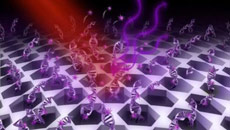
    In a ray of hope for people suffering from autism, researchers have discovered neuron populations in a region of the mouse brain that controls whether the animal engages in social behaviour or asocial repetitive self-grooming behaviour.
     
    Autism has also been linked to dysfunction of the amygdala, a brain structure involved in processing emotions. Humans with autism often show a reduced frequency of social interactions and an increased tendency to engage in repetitive solitary behaviour.
     
    Lead researcher David J. Anderson, a Biology professor at the California Institute of Technology and his colleagues discovered two intermingled but distinct population of neurons in the amygdala.
     
    One "social neurons" population promotes social behaviour such as mating, fighting or social grooming while the other "self-grooming neurons" population controls repetitive self-grooming - an asocial behaviour.
     
    To study the relationship between these two cell types and their associated behaviour, researchers used a technique called optogenetics.
     
    Anderson's team was able to selectively switch on the neurons associated with social behaviour and those linked with asocial behaviour.
     
    "Surprisingly, these two groups of neurons appear to interfere with each other's function: the activation of 'social neurons' inhibits self-grooming behaviour while the activation of 'self-grooming neurons' inhibits social behaviour," Anderson noted.
     
    In autism, there is a decrease in social interactions and there is often an increase in repetitive, sometimes asocial or self-oriented behaviour - a phenomenon known as perseveration.
     
    "By stimulating a particular set of neurons, we are both inhibiting social interactions and promoting these persistent behaviours," Anderson said.
     
    If we find the right population of neurons, it might be possible to override the genetic component of a behavioural disorder like autism by just changing the activity of the brain circuits, concluded the study that was reported in the journal Cell.


    MORE Health ARTICLES

    'I can' mentality can help shed extra fat

    'I can' mentality can help shed extra fat
    Want to maintain your slim figure years after childbirth? Develop an "I can" mentality whenever confronted with barriers to your everyday physical activities, a study suggested.

    'I can' mentality can help shed extra fat

    People in desk jobs gain weight for sure

    People in desk jobs gain weight for sure
    If you have gained extra waistline, do not get enough sunlight for your bones and strain your eyes in front of a computer screen, you have all reasons to complain about your desk job.

    People in desk jobs gain weight for sure

    Revealed: How cancer cells spread

    Revealed: How cancer cells spread
    The migration of cancer cells from the primary tumour to nearby tissues and organs is regulated by a signalling pathway in a finely orchestrated manner, researchers have discovered.

    Revealed: How cancer cells spread

    Sunlight deficiency causing bone-health problems in young Women

    Sunlight deficiency causing bone-health problems in young Women
    Sunlight missing from the lives of busy young women is making them deficient in Vitamin D, which has emerged as a major health issue among them, experts say. Vitamin D deficiency in young girls can precipitate osteoporosis and increase the risk of fractures.

    Sunlight deficiency causing bone-health problems in young Women

    Don't forget health while on holiday

    Don't forget health while on holiday
    Staying healthy during a holiday period isn't as tough as it seems. Just a few simple steps can make all the difference.

    Don't forget health while on holiday

    India bans testing of animals for cosmetic products

    India Friday banned testing for cosmetic products and their ingredients on animals.

    India bans testing of animals for cosmetic products