Sunday, December 21, 2025
ADVT 
Health

Tweaking brain circuits may cure autism

Darpan News Desk IANS, 14 Sep, 2014 07:48 AM
    In a ray of hope for people suffering from autism, researchers have discovered neuron populations in a region of the mouse brain that controls whether the animal engages in social behaviour or asocial repetitive self-grooming behaviour.
     
    Autism has also been linked to dysfunction of the amygdala, a brain structure involved in processing emotions. Humans with autism often show a reduced frequency of social interactions and an increased tendency to engage in repetitive solitary behaviour.
     
    Lead researcher David J. Anderson, a Biology professor at the California Institute of Technology and his colleagues discovered two intermingled but distinct population of neurons in the amygdala.
     
    One "social neurons" population promotes social behaviour such as mating, fighting or social grooming while the other "self-grooming neurons" population controls repetitive self-grooming - an asocial behaviour.
     
    To study the relationship between these two cell types and their associated behaviour, researchers used a technique called optogenetics.
     
    Anderson's team was able to selectively switch on the neurons associated with social behaviour and those linked with asocial behaviour.
     
    "Surprisingly, these two groups of neurons appear to interfere with each other's function: the activation of 'social neurons' inhibits self-grooming behaviour while the activation of 'self-grooming neurons' inhibits social behaviour," Anderson noted.
     
    In autism, there is a decrease in social interactions and there is often an increase in repetitive, sometimes asocial or self-oriented behaviour - a phenomenon known as perseveration.
     
    "By stimulating a particular set of neurons, we are both inhibiting social interactions and promoting these persistent behaviours," Anderson said.
     
    If we find the right population of neurons, it might be possible to override the genetic component of a behavioural disorder like autism by just changing the activity of the brain circuits, concluded the study that was reported in the journal Cell.


    MORE Health ARTICLES

    Men in 'healthy' countries have eyes for beauty!

    Men in 'healthy' countries have eyes for beauty!
    All the pretty women out there, if wooing a man is what is in your mind, move on to a country where conditions are not that harsh as feminine charm sweeps men living in countries with 'healthy' conditions.

    Men in 'healthy' countries have eyes for beauty!

    Health Alert- WHO report reveals worldwide threat to public health

    Health Alert- WHO report reveals worldwide threat to public health
    A new report by the World Health Organisation (WHO) - its first to globally look at antimicrobial resistance, including antibiotic resistance - reveals that this serious threat is no longer a prediction for the future but is happening right now in every region of the world and has the potential to affect anyone, of any age, in any country.

    Health Alert- WHO report reveals worldwide threat to public health

    TV shows can transmit stress too: Study

    TV shows can transmit stress too: Study
    Just like cold, stress can also be contagious and it matters only a little whether we have any relation with the stressed person that we may come in contact with or not, says a study.

    TV shows can transmit stress too: Study

    Vitamin D deficiency may lead to prostate cancer: Study

    Vitamin D deficiency may lead to prostate cancer: Study
    Get under the morning sun sooner rather than later as vitamin D deficiency has now been linked to aggressive prostate cancer, an alarming study indicated.

    Vitamin D deficiency may lead to prostate cancer: Study

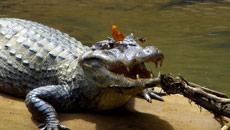
    Where butterflies, bees feed on crocodile tears!

    Where butterflies, bees feed on crocodile tears!
    Look at those crocodile tears in your kid's eyes more carefully. These are an abundant source of salt and other rare minerals and proteins for some!

    Where butterflies, bees feed on crocodile tears!

    Babies learn to recognise pictures before first birthday!

    Babies learn to recognise pictures before first birthday!
    If a mother shows her nine month-old baby a picture of her husband fighting a war in a distant land, she may find to her surprise that if he comes back soon after, the baby may well recognise the person in the picture.

    Babies learn to recognise pictures before first birthday!