Monday, December 22, 2025
ADVT 
Health

Tweaking brain circuits may cure autism

Darpan News Desk IANS, 14 Sep, 2014 07:48 AM
    In a ray of hope for people suffering from autism, researchers have discovered neuron populations in a region of the mouse brain that controls whether the animal engages in social behaviour or asocial repetitive self-grooming behaviour.
     
    Autism has also been linked to dysfunction of the amygdala, a brain structure involved in processing emotions. Humans with autism often show a reduced frequency of social interactions and an increased tendency to engage in repetitive solitary behaviour.
     
    Lead researcher David J. Anderson, a Biology professor at the California Institute of Technology and his colleagues discovered two intermingled but distinct population of neurons in the amygdala.
     
    One "social neurons" population promotes social behaviour such as mating, fighting or social grooming while the other "self-grooming neurons" population controls repetitive self-grooming - an asocial behaviour.
     
    To study the relationship between these two cell types and their associated behaviour, researchers used a technique called optogenetics.
     
    Anderson's team was able to selectively switch on the neurons associated with social behaviour and those linked with asocial behaviour.
     
    "Surprisingly, these two groups of neurons appear to interfere with each other's function: the activation of 'social neurons' inhibits self-grooming behaviour while the activation of 'self-grooming neurons' inhibits social behaviour," Anderson noted.
     
    In autism, there is a decrease in social interactions and there is often an increase in repetitive, sometimes asocial or self-oriented behaviour - a phenomenon known as perseveration.
     
    "By stimulating a particular set of neurons, we are both inhibiting social interactions and promoting these persistent behaviours," Anderson said.
     
    If we find the right population of neurons, it might be possible to override the genetic component of a behavioural disorder like autism by just changing the activity of the brain circuits, concluded the study that was reported in the journal Cell.

    MORE Health ARTICLES

    Now, 3D-printed plaster cast to heal wound faster

    Now, 3D-printed plaster cast to heal wound faster
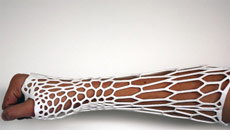
    In what could revolutionise plaster cast technology, a Turkish design student has unveiled a slick 3D-printed cast with ventilation holes that reduces healing time by around 40 percent than currently used plaster casts.

    Now, 3D-printed plaster cast to heal wound faster

    Smart cup that delivers coffee, news too!

    Smart cup that delivers coffee, news too!
    Reading the morning newspaper while sipping a cup of coffee is set to become an even smoother experience as a Finnish coffee roastery company has developed a smart coffee cup that could also display an e-paper.

    Smart cup that delivers coffee, news too!

    An 'upside-down planet' discovered

    An 'upside-down planet' discovered
    Like so many interesting discoveries, this one happened largely by accident. An astronomer has discovered an ‘upside-down planet’ that reveals new method for studying binary star systems.

    An 'upside-down planet' discovered

    Our ancestors enjoyed summer holidays at Antartica!

    Our ancestors enjoyed summer holidays at Antartica!
    If this information stands true, the history books have to be rewritten soon. According to scientists, some parts on the coldest region on our earth - Antartica - was as warm as today's California coast.

    Our ancestors enjoyed summer holidays at Antartica!

    Garnish food with edible flowers for disease-free life!

    Garnish food with edible flowers for disease-free life!
    Forget food, try some flowers instead to increase immunity. If we go by a new research, common edible flowers in China are rich in phenolics and have excellent antioxidant capacity.

    Garnish food with edible flowers for disease-free life!

    Humans left Africa in two migration waves: Study

    Humans left Africa in two migration waves: Study
    In a significant discovery, researchers have found that modern humans may have dispersed in more than one wave of migration out of Africa.

    Humans left Africa in two migration waves: Study