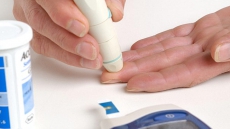
NEW YORK — A urine-based test for Zika virus infection has shown to be more effective than the common blood-based one for many patients, a development that could make testing for the infection easier.
The test could potentially aid efforts to control Zika, which is mainly carried by mosquitoes, as it is expected to spread further into North America in the coming months.
"The timing is excellent," said Dr. William Schaffner, an infectious disease expert at Vanderbilt University.
The Centers for Disease Control and Prevention issued new testing guidance Tuesday, saying the virus particles can be detected at higher levels and for a longer period of time in urine than in blood.
The new guidance will make it easier to test more people for the virus. Until this week, CDC officials have said the best way to detect Zika virus is to test their blood. The blood is analyzed using a sophisticated lab technique that detects a germ's genetic material.
But health officials on Tuesday reported on an analysis of 66 people in Florida who were tested for Zika using the same detection method but with both blood and urine samples. About twice as many urine samples correctly tested positive as compared to blood samples.
What's more, the test in urine did a good job detecting the virus for two weeks after the onset of symptoms. The test in blood does a good job only for about one week.
That's an important development, Schaffner said.

"There's a much longer window for detecting the virus," he said.
Still, the CDC recommends testing both blood and urine in the first week. And it recommends a different type of blood test, one that detects a person's immune response to the virus as opposed to the virus itself, if more than two weeks have passed since the patient's first symptoms.
"We are not recommending to replace blood testing. We're saying to do both," said Dr. Marc Fischer, a CDC epidemiologist who helped write the guidelines.
Zika virus causes only a mild and brief illness, at worst, in most people. Symptoms include fever, rash, joint pain, and red eyes, and they usually last no more than a week.
But in some situations, the virus has been linked to far more serious complications.
A Zika epidemic has been sweeping through Latin America and the Caribbean. Last year, when Zika outbreaks were being reported in Brazil for the first time, doctors saw a dramatic increase in severe brain-related birth defects in babies born to women infected during pregnancy. After looking at different kinds of evidence, health officials this year concluded Zika causes such birth defects.

Doctors also believe — and are trying to establish — that Zika can cause a rare paralyzing condition called Guillain-Barre syndrome.
Zika can be spread through sex, bit is mainly transmitted by a certain species of tropical mosquito called Aedes aegypti. That kind of transmission has not yet been seen in the U.S. mainland, but that may change as temperatures rise and mosquito populations boom.
The 472 reported infections reported in the 50 states so far all have been people who had travelled to Zika outbreak countries, or their sex partners.
Though it's common for disease investigators to begin looking for an infection in blood, germs can be more diffused in the bloodstream and harder to spot in lab analysis. It makes sense that a germ's remnants would be concentrated in urine, along with other things the body is trying to excrete, Schaffner said.