Tuesday, February 10, 2026
ADVT 
Health

Vaccine for dust-mite allergies

Darpan News Desk IANS, 23 Jul, 2014 06:52 AM
  • Vaccine for dust-mite allergies
If you are allergic to dust mites, here comes the help. Researchers have now developed a vaccine that can combat dust-mite allergies by switching on the body's immune response.
 
In animal tests, the nano-sized vaccine package lowered lung inflammation by 83 percent despite repeated exposure to the allergens.
 
"The vaccine package contains a booster that alters the body's inflammatory response to dust-mite allergens," informed paper's first author Vijaya Joshi, a graduate fellow in pharmacy at University of Iowa in US.
 
The vaccine takes advantage of the body's natural inclination to defend itself against foreign bodies.
 
A key to the formula lies in the use of an adjuvant - which boosts the potency of the vaccine - called CpG.
 
The CpG sets off a fire alarm within the body, springing immune cells into action. Those immune cells absorb the CpG and dispose of it.
 
"Combining the antigen (the vaccine) and CpG causes the body to change its immune response, producing antibodies that dampen the damaging health effects dust-mite allergens generally cause," explained Aliasger Salem, a professor in pharmaceutical sciences at University of Iowa.
 
In lab tests, the CpG-antigen package was absorbed 90 percent of the time by immune cells.
 
The researchers followed up those experiments by giving the package to mice and exposing the animals to dust-mite allergens every other day for nine days total.
 
In analyses conducted at the University's college of public health, packages with CpG yielded greater production of the desirable antibodies.
 
"This work suggests a way forward to alleviate mite-induced asthma in allergy sufferers," said Peter Thorne, a public health professor at the university.
 
The paper appeared in the journal American Association of Pharmaceutical Scientists.
MORE Health ARTICLES

Scientists rewrite code of life with 'alien' DNA

Scientists rewrite code of life with 'alien' DNA
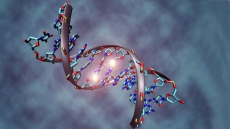
In a major breakthrough that could re-write the history of life on earth, scientists have successfully added an alien pair of DNA "letters" (or bases) to create the first "semi-synthetic" bacterium.

Scientists rewrite code of life with 'alien' DNA

Now, a DNA tool to spot cancer

Now, a DNA tool to spot cancer
Detecting cancer could soon become a lot easier as scientists have used DNA to develop a tool that detects and reacts to chemical changes caused by cancer cells.

Now, a DNA tool to spot cancer

What you were waiting for! A device that detects pee in pool

What you were waiting for! A device that detects pee in pool
Those who have a habit of peeing in a swimming pool, beware. Here comes a device glows green the moment it detects traces of human waste in water.

What you were waiting for! A device that detects pee in pool

Do humans have spiders' genes?

Do humans have spiders' genes?
Not only the spiderman, even you may share certain genomic similarities with spiders, a study that for the first time sequenced the genome of a spider has revealed.

Do humans have spiders' genes?

Anger a better motivator for volunteers than sympathy?

Anger a better motivator for volunteers than sympathy?
Angry people do not always raise a ruckus; they may also bring about positive changes to society with a new study showing that anger may be more effective at motivating people to volunteer than other motives.

Anger a better motivator for volunteers than sympathy?

Impulsive people at greater risk of food addiction

Impulsive people at greater risk of food addiction
Impulsive people are at greater risks of food and drug addition as impulsivity is a result of cellular activities in the part of the brain involved with reward and not a result of dysfunctional eating behaviour, a study indicated.

Impulsive people at greater risk of food addiction