Wednesday, February 11, 2026
ADVT 
Health

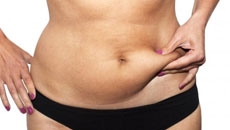
Waistlines still expanding among US adults

Darpan News Desk Darpan, 22 Sep, 2014 05:44 PM
    Although the obesity rate calculated from body mass index (BMI) figures has not gone up significantly, the waistlines of US adults, especially that of women, continue to expand, says a study.
     
    The prevalence of abdominal obesity and average waist circumference increased among US adults from 1999 to 2012, the study noted.
     
    Waist circumference is a simple measure of total and intra-abdominal body fat.
     
    Prevalence of obesity calculated from body mass index (BMI) figures did not change significantly from 2003-2004 to 2011-2012.
     
    "In contrast, our analyses using data from the same surveys indicate that the prevalence of abdominal obesity is still increasing," said study leader Earl Ford from the US Center for Disease Control and Prevention.
     
    "The reasons for increase in waist circumference in excess of what would be expected from changes in BMI remain speculative, but several factors, including sleep deprivation, endocrine disruptors and certain medications have been proposed as potential explanations," the researchers noted.
     
    For the study, the researchers used data from seven two-year cycles of the National Health and Nutrition Examination Survey (NHANES) starting with 1999-2000 and concluding with 2011-2012.
     
    Abdominal obesity was defined as a waist circumference greater than 40.2 inches (102 cm) in men and greater than 34.6 inches (88 cm) in women.
     
    Data from 32,816 men and non-pregnant women aged 20 years or older was analysed.
     
    The overall age-adjusted average waist circumference increased progressively and significantly, from 37.6 inches in 1999-2000 to 38.8 inches in 2011-2012.
     
    A more significant increase occurred in women (1.5 inches) than in men (0.8 inch).
     
    The overall age-adjusted prevalence of abdominal obesity increased significantly from 46.4 percent in 1999-2000 to 54.2 percent in 2011-2012.
     
    The study appeared in the journal JAMA (Journal of the American Medical Association).

    MORE Health ARTICLES

    Fasting during Ramadan: The health risks for Diabetic Muslims

    Fasting during Ramadan: The health risks for Diabetic Muslims
    Muslims around the world fast in this holy month of Ramadan -- from pre-dawn hours to dusk. Health experts have a word of caution for those who may be diabetic.

    Fasting during Ramadan: The health risks for Diabetic Muslims

    Burn brown fat, shed weight faster

    Burn brown fat, shed weight faster
    If you want to lose weight fast, turn your focus on brown fat instead of normal, white fat. According to researchers, brown fat plays an active role in metabolism.

    Burn brown fat, shed weight faster

    How conflict affects women's reproductive health

    How conflict affects women's reproductive health
    Gender-based violence, sexually transmitted infections including HIV, and maternal and neonatal mortality and morbidity all flourish in times of conflict

    How conflict affects women's reproductive health

    Gentlemen, Listen to your wife to lower heart attack risk

    Gentlemen, Listen to your wife to lower heart attack risk
     Do find time to talk to your wife even if you come tired from office and want to hit the sack - for a better heart health.

    Gentlemen, Listen to your wife to lower heart attack risk

    Boost protein intake to lose weight

    Boost protein intake to lose weight
    Counting calories before every meal to keep your weight in check? You may chill out a bit now as researchers have found that instead of counting calories for weight loss, you would do better to boost the protein content of your diet.

    Boost protein intake to lose weight

    Get it right! More lefties are born in winter

    Get it right! More lefties are born in winter
    Are you left-handed and born in winter? Blame your hormones as according to new research, more left-handed men are born specifically during November, December and January.

    Get it right! More lefties are born in winter