Thursday, January 1, 2026
ADVT 
Health

Watch out! Your smartphone may be harbouring bacteria

Darpan News Desk IANS, 20 Jan, 2015 11:06 AM
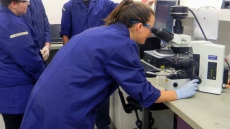
    A group of students from University of Surrey in Britain has revealed that the home button on your smartphone may be harbouring millions of bacteria - some even harmful.
     
    They found that it is not just your own germs that can be found on your phone.
     
    The devices also carry bacteria you have picked up from other people, news.com.au reported.
     
    For the study, the team dipped phones into Petri dishes and watched the growths of bacteria flourish.
     
    According to Simon Park, the lecturer behind the university's annual study, phones store a record of our personal touch as well, especially on the home button.
     
    "It is unusual but very effective way of engaging our students with the often overlooked microbiology of everyday life," Park was quoted as saying.
     
    Most of the bacteria is harmless but some disease-carrying bacteria such as the Staphylococcus aureus were also seen during the experiment.


    MORE Health ARTICLES

    Hepatitis C may become rare by 2036: Study

    Hepatitis C may become rare by 2036: Study
    The deadly hepatitis C could become a rare disease by the year 2036 owing to new effective drugs and widespread screening, says a study....

    Hepatitis C may become rare by 2036: Study

    Hypoventilation patients at risk during air travel

    Hypoventilation patients at risk during air travel
    Obese people who suffer from hypoventilation should be cautious while travelling via air....

    Hypoventilation patients at risk during air travel

    Immigrant kids in US at higher obesity risk

    Immigrant kids in US at higher obesity risk
    Immigrant kids in the US are more likely to grow obese than US-born Caucasian children, a study says....

    Immigrant kids in US at higher obesity risk

    Artificial anti-cancer molecules created in a jiffy

    Artificial anti-cancer molecules created in a jiffy
    In what could lead to new anti-cancer drugs, researchers have developed a new method to produce molecules that have a similar structure to peptides...

    Artificial anti-cancer molecules created in a jiffy

    Neuronal 'sweet spot' can curb obesity

    Neuronal 'sweet spot' can curb obesity
    Preventing weight gain, obesity and diabetes could be as simple as keeping a nuclear receptor from being activated in a small part of the brain, says a new study....

    Neuronal 'sweet spot' can curb obesity

    First molecular map to detect vision loss created

    First molecular map to detect vision loss created
    An Indian-origin researcher-led team has created the most detailed map to date of a region of the human eye, long associated with blinding diseases...

    First molecular map to detect vision loss created