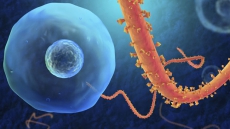
NEW YORK — A rare tropical disease is spreading in parts of Latin America and the Caribbean. The mosquito-borne Zika virus usually causes a mild illness but is now suspected in an unusual birth defect and possibly other health issues. Some things to know:
WHAT IS ZIKA?
The Zika (ZEE'-ka) virus was first discovered in monkey in Uganda in 1947; its name comes from the Zika forest where it was first discovered. It is native mainly to tropical Africa, with outbreaks in Southeast Asia and the Pacific Islands. It showed up in Brazil last year and has since been seen in many Latin American countries and Caribbean islands.
HOW IS IT SPREAD?
It is transmitted through bites from the same kind of mosquitoes that can spread other tropical diseases, like dengue fever, chikungunya and yellow fever. It is not known to spread from person to person. Investigators, though, are exploring the possibility that the virus can be passed on through sex — it was found in one man's semen in Tahiti and there's been another report of possible spread of the virus through sex.
The World Health Organization says Zika is rapidly spreading in the Americas because it is new to the region, people aren't immune to it, and the Aedes aegypti mosquito that carries it is just about everywhere — including along the southern United States. Canada and Chile are the only places without this mosquito.
ARE THERE SYMPTOMS?
Experts think most people infected with Zika virus don't get sick. And those that do usually develop mild symptoms — fever, rash, joint pain, and red eyes — which usually last no more than a week. There is no specific medicine and there hasn't been a vaccine developed for it, which is the case for some other tropical illnesses that cause periodic outbreaks.
WHY IS IT A CONCERN NOW?
In Brazil, there's been mounting evidence linking Zika infection in pregnant women to a rare birth defect called microcephaly, in which a newborn's head is smaller than normal and the brain may not have developed properly. Brazilian health officials last October noticed a spike in cases of microcephaly in tandem with the Zika outbreak. The connection to Zika is still being investigated, and officials note there are many causes of the condition. Nearly 4,000 cases have been tallied.
Meanwhile, doctors have noted increased reports of a nerve condition called Guillain-Barre (gee-YAHN'-buh-RAY) that can cause paralysis. But the link to the Zika virus is not clear; other infections can spark the problem, including dengue fever.

CAN THE SPREAD BE STOPPED?
Individuals can protect themselves from mosquito bites by using insect repellents, and wearing long sleeves and long pants — especially during daylight, when the mosquitoes tend to be most active, health officials say. Eliminating breeding spots and controlling mosquito populations can help prevent the spread of the virus.
HAVE THERE BEEN CASES IN THE U.S.?
Yes, but in travellers. There've been more than two dozen cases diagnosed in the U.S. since 2007, all travellers who are believed to have caught it overseas. (Puerto Rico and the U.S. Virgin Islands have each had a recent case that didn't involve a traveller.)
The kind of mosquito that spreads Zika is found along the southern United States, so experts think it's likely the pests may end up spreading the virus there. But officials also have said Zika infections probably won't be a big problem in the U.S. for a number of reasons, including the more common use of air conditioning and door and window screens. Recent U.S. outbreaks of dengue and chikungunya — carried by the same mosquito — suggest any Zika outbreaks may be relatively small, said Dr. Lyle Petersen of the Centers for Disease Control and Prevention.
ARE THERE ANY TRAVEL ADVISORIES?
U.S. health officials recommend that pregnant women should consider postponing trips to 22 destinations. Latin America: Bolivia, Brazil, Colombia, Ecuador, El Salvador, French Guiana, Guatemala, Guyana, Honduras, Mexico, Panama, Paraguay, Suriname and Venezuela. In the Caribbean: Barbados, Guadeloupe, Haiti, Martinique, St. Martin and Puerto Rico. Also, Cape Verde, off the coast of western Africa; and Samoa in the South Pacific.
In Brazil, most of the mothers who had babies with microcephaly were apparently infected during the first trimester, but there is some evidence the birth defect can occur later in the pregnancy, CDC officials say. The travel alert applies to women in any stage of pregnancy.