Friday, February 6, 2026
ADVT 
Health

Why Asians may be at increased risk of heart disease

Darpan News Desk IANS, 25 Sep, 2014 10:27 AM
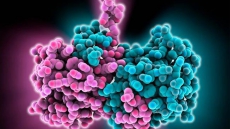
    A genetic mutation that occurs predominantly among people of East Asian descent disables a common metabolic protein called ALDH2, encoded in the gene, and leads to an increased risk of heart disease and poorer outcomes after a heart attack, says a study.
     
    "It is the first time ALDH2 has been shown to play a role in cell survival. Now we have come to understand that when the ALDH2 gene is mutated, cells are likely to undergo programmed cell death, causing tissue damage," said lead author of the study Antje Ebert from Stanford University' School of Medicine in the US.
     
    The researchers used stem cells to learn how this common mutation in Asians affects heart health.
     
    They did so by comparing heart muscle cells, made from induced pluripotent stem cells, or iPS cells, of people carrying the mutation with those devoid of it.
     
    IPS cells are created in the laboratory from specialised adult cells like skin. They are pluripotent, meaning they can be coaxed to become any cell in the body.
     
    The iPS cells in this study were created from skin samples donated by 10 men, ages 21-22, of East Asian descent.
     
    "This study is one of the first to show that we can use iPS cells to study ethnic-specific differences among populations," said Joseph Wu from Stanford.
     
    "These findings may help us discover new therapeutic paths for heart disease for carriers of this mutation," Wu added.
     
    "In the future, I believe we will have banks of iPS cells generated from different ethnic groups," Wu noted.
     
    Drug companies or clinicians can then compare how members of different ethnic groups respond to drugs or diseases, or study how one group might differ from another, or tailor specific drugs to fit particular groups, he added.
     
    The study appeared in the journal Science Translational Medicine.
    MORE Health ARTICLES

    Can right brain rhythm create a super-perceiving human?

    Can right brain rhythm create a super-perceiving human?
    A certain type of brainwave plays a key role in our sensitivity towards touch and driving. The right brain rhythm can make people have more perceptual and attentive powers...

    Can right brain rhythm create a super-perceiving human?

    Can Ebola strike India?

    Can Ebola strike India?
    There are about 500 Indians in Guinea, 3,000 in Liberia and 1,200 in Sierra Leone, from where the maximum cases have been reported. Nigeria has a much...

    Can Ebola strike India?

    Indian scientists find a 'wonder herb' in the high Himalayas

    Indian scientists find a 'wonder herb' in the high Himalayas
    In the high hostile peaks of the Himalayas where sustaining life is a challenge in itself, Indian scientists say they have found a "wonder herb" which can regulate...

    Indian scientists find a 'wonder herb' in the high Himalayas

    Robotic walking stick for visually impaired

    Robotic walking stick for visually impaired
    In a first, engineers have designed a robotic walking stick for the visually impaired that can detect the user's immediate path and store localised geographical information...

    Robotic walking stick for visually impaired

    Genes may influence hangover chances

    Genes may influence hangover chances
    According to new research from University of Missouri-Columbia, genetic factors accounted for 45 percent of the difference in hangover frequency in women and 40 percent in men...

    Genes may influence hangover chances

    Green tea can protect spinal cord neurons

    Green tea can protect spinal cord neurons
    Chinese researchers have found evidence that polyphenols can protect spinal cord neurons against oxidative stress and can reduce free radical damage....

    Green tea can protect spinal cord neurons