Sunday, December 28, 2025
ADVT 
Health

Why autistic people see faces differently

Darpan News Desk IANS, 26 Nov, 2014 11:29 AM
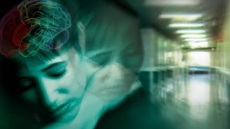
    People with autism spectrum disorder (ASD) gain different perceptions from peoples' faces as the way they gather information - not the judgement process itself - is different from those without the disorder, says a study.
     
    "The evaluation of an individual's face is a rapid process that influences our future relationship with the individual," said lead author of the study Baudouin Forgeot d'Arc from University of Montreal in Canada.
     
    The study was conducted in collaboration with a team from the Hôpital Robert-Debré in Paris, who recruited 71 individuals, including a control group and an ASD group, without intellectual disabilities.
     
    The researchers presented 36 pairs of photographic and synthetic images to the participants, and evaluated their social judgment by asking them to indicate which emotionally neutral faces appeared "kind" to them.
     
    When photographic images of neutral faces were presented, the judgment of ASD participants was mixed compared to participants in the control group - the choices of the ASD participants were not predictable from one participant to another.
     
    However, the researchers found no difference between the groups when participants were presented with synthetic images, which were nevertheless created based on the characteristics of the photographic images previously shown.
     
    The differences observed when they viewed photographic images suggest that the way they gather information about people's faces is critical.

    MORE Health ARTICLES

    Condom that fights sexually-transmitted diseases

    Condom that fights sexually-transmitted diseases
    Imagine a condom that not only stops pregnancy but also kills germs that can lead to sexually transmitted diseases (STDs)....

    Condom that fights sexually-transmitted diseases

    Impulsive behaviour linked to brain connectivity

    Impulsive behaviour linked to brain connectivity
    In what could help better understand behavioural problems and social adaptation difficulties in children, researchers have found that patterns of brain connectivity...

    Impulsive behaviour linked to brain connectivity

    Vitamin D deficiency increases schizophrenia risk

    Vitamin D deficiency increases schizophrenia risk
    Individuals with Vitamin D deficiency are twice as likely to be diagnosed with schizophrenia as compared to those who have sufficient levels of the...

    Vitamin D deficiency increases schizophrenia risk

    Cancer drug can detect HIV virus

    Cancer drug can detect HIV virus
    In a key discovery against HIV, researchers have shown that an anti-cancer drug can activate hidden HIV to levels readably detectable in the blood by...

    Cancer drug can detect HIV virus

    High salt ups heart disease risk in diabetics

    High salt ups heart disease risk in diabetics
    People with Type-2 diabetes have more to add to their list of dietary restrictions as researchers have found that a high salt diet may double their risk of developing...

    High salt ups heart disease risk in diabetics

    Indian scientists craft portable blood-disorder detection kit

    Indian scientists craft portable blood-disorder detection kit
    Harnessing the technology that powers new-age mobile phones, Indian scientists are set to develop a portable and affordable kit - a lab-on-a-chip - detection...

    Indian scientists craft portable blood-disorder detection kit