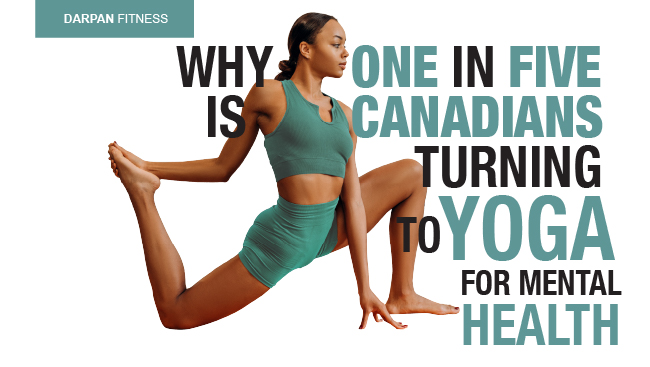
It won't be wrong to say that Yoga has been India's greatest export to the world. While Yoga has a deeper philosophical and spiritual significance, the world has also greatly benefited from its numerous health benefits.
Yoga is not the name of a single practice. It comprises thousands of physical exercises, each with its own benefits. Hatha Yoga is arguably the most popular form. A more physical type of yoga that focuses on breath-controlled exercises is called Pranayama. In fact, Hatha Yoga is the most popular form of Yoga throughout the globe.
Canada is undergoing a major mental health crisis, as noted by an August 2025 survey by Mental Health Research Canada (MHRC). According to the survey of over 4,600 adult Canadians, 44% of Canadians have reported being diagnosed with a mental health condition at some point in their lives. Diagnoses of depression (32%) and anxiety (30%) are the most common. Without any support from their family or the healthcare system, people diagnosed with a mental health condition are prone to alcohol, cannabis, or opioid usage.
Yoga, however, is turning out to be a popular form of exercise to tackle mental health issues. According to reports, at least one in five Canadians practices yoga. In addition, 9% of Canadians say they do yoga because of its therapeutic effects.
Here's how Yoga can come to the rescue of your mental health:
1) Helps Fight Stress
Yoga exercises, according to medical research, reduce stress hormones and lead to higher levels of endorphins, which provide pain relief. According to a Harvard Health report, Yoga can also increase levels of a chemical called gamma-aminobutyric acid (GABA), which helps improve your mood and decrease anxiety. Moreover, meditation helps reduce activity in the limbic system, which regulates emotions. Previous research has suggested that reduced emotional activity leads to a more tempered response to stressful situations.
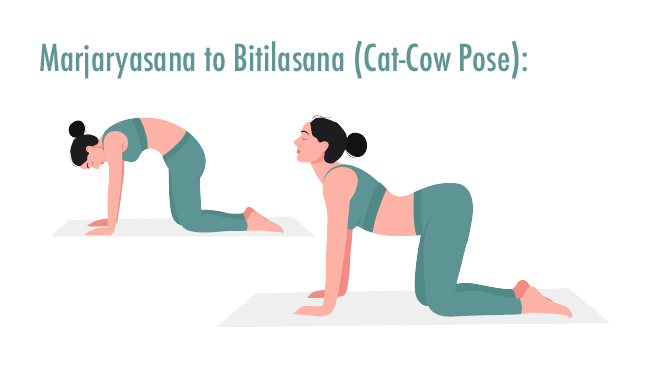
Marjaryasana to Bitilasana (Cat-Cow Pose):Start on your hands and knees, inhale, let your belly drop. Then, lift your chest and tailbone while looking forward. Pause for a moment. Then flow into the Cat Pose for balance.
2) Improves Sleep Quality
Regular practice of Pranayama has been linked to better sleep quality. According to a Centre for Disease Control survey, over 55% of yoga practitioners have reported better sleep patterns. The relaxing effect of conscious breathing and gentle body movements is known to help reduce levels of cortisol, which plays a role in causing problems related to sleep disorders. Good sleep helps in improving mental health by regulating mood, sharpening cognitive functions, and processing complex emotions.
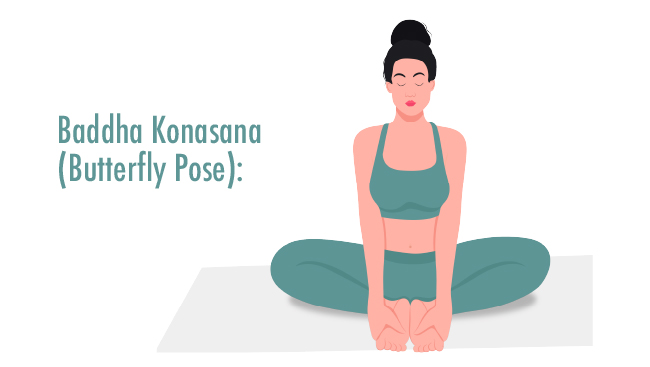
Baddha Konasana (Butterfly Pose):Sit with your legs extended, then bring the soles of your feet together and let your knees fall open comfortably. Hold your feet or ankles and keep your spine long as you breathe slowly. Gently hinge forward without rounding your back, then release your breath slowly.
3) Enhances Mindfulness
Breathing is an essential component of Yoga. By urging people to focus on their own breathing patterns and body movements, Yoga stresses living in the present. That's mindfulness in a nutshell. Mindfulness helps enhance self-control, develop equanimity, improve concentration, and declutter the mind. As per a 2021 Indian study, Yoga practitioners are higher on mindfulness, empathy & self-transcendence compared to non-practitioners. Being mindful during Yoga also has a physical benefit: It can help practitioners avoid injury.
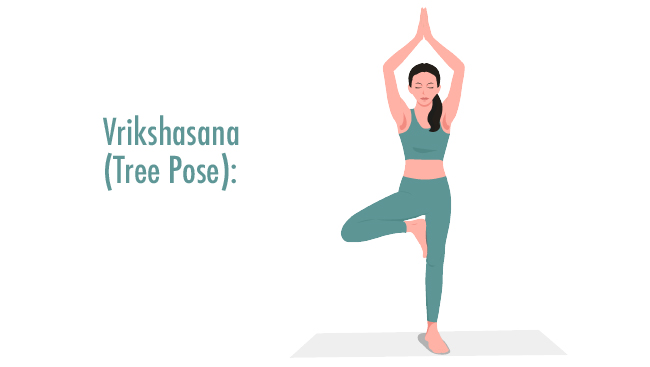
Vrikshasana (Tree Pose):Stand up, shift your weight to one foot, and place the other foot on your inner thigh. Lift your arms overhead. Bring your palms together (like a namaste). Keep your head steady. Hold a few deep breaths, then release and repeat.
4) Boost Self-Esteem
Consumerism in a rapidly globalizing world has created a generation of people who often struggle with issues of self-esteem and self-confidence. Nowadays, social media posts on destination weddings, high-end products and glitzy foreign locations have become a way of seeking external validation. On the flip side, many engage with such posts and enter a phase of self-doubt and low self-esteem. However, Yoga tells people to focus internally, self-introspect, and seek answers to their deepest questions. Once people start looking within, the need for external validation vanishes.
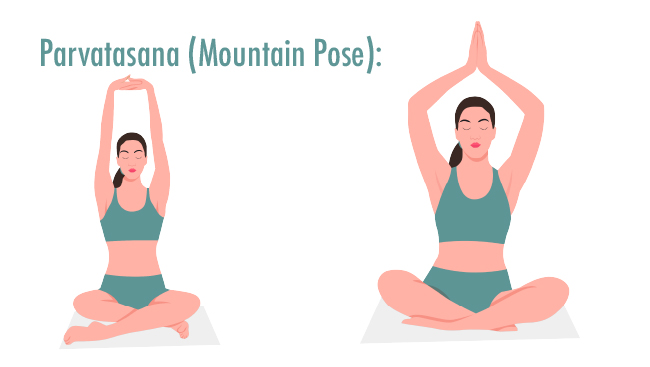
Parvatasana (Mountain Pose):Sit cross-legged. Inhale and raise your arms. Then, join the palms (like a namaste) and keep them straight. Maintain the stretch with joined palms, then slowly return. Repeat the process.