Sunday, December 21, 2025
ADVT 
Health

World's first battery-less pacemaker in the works

Darpan News Desk IANS, 01 Sep, 2014 07:40 AM
    In a revolutionary breakthrough for heart patients, scientists have come up with a way to power a cardiac pacemaker with an alternative energy source - the heart motion.
     
    This new type of cardiac pacemaker is based on a commercially available, automatic wristwatch and does not require battery replacement.
     
    "The heart seems to be a very promising energy source because its contractions are repetitive and present for 24 hours a day, seven days a week," said Adrian Zurbuchen, a PhD candidate from the cardio-vascular engineering group in the University of Bern, Switzerland.
     
    To test the watch, researchers developed an electronic circuit to transform and store the signal into a small buffer capacity.
     
    They then connected the system to a custom-made cardiac pacemaker.
     
    The system worked in three steps. First, the watch acquired energy from the heart.
     
    Second, the energy was temporarily stored in the buffer capacity.
     
    And finally, the buffered energy was used by the pacemaker to apply minute stimuli to the heart.
     
    The researchers successfully tested the system in experiments with domestic pigs.
     
    The energy harvesting system has the potential to avoid both disadvantages by providing the world with a battery-less and lead-less pacemaker.
     
    The next step is to integrate both the electronic circuit for energy storage and the custom-made pacemaker directly into the harvesting device.
     
    "This will eliminate the need for leads," he concluded.
     
    Zurbuchen presented the findings at the ongoing European Society of Cardiology (ESC) Congress, 2014 in Barcelona, Spain.


    MORE Health ARTICLES

    Men in 'healthy' countries have eyes for beauty!

    Men in 'healthy' countries have eyes for beauty!
    All the pretty women out there, if wooing a man is what is in your mind, move on to a country where conditions are not that harsh as feminine charm sweeps men living in countries with 'healthy' conditions.

    Men in 'healthy' countries have eyes for beauty!

    Health Alert- WHO report reveals worldwide threat to public health

    Health Alert- WHO report reveals worldwide threat to public health
    A new report by the World Health Organisation (WHO) - its first to globally look at antimicrobial resistance, including antibiotic resistance - reveals that this serious threat is no longer a prediction for the future but is happening right now in every region of the world and has the potential to affect anyone, of any age, in any country.

    Health Alert- WHO report reveals worldwide threat to public health

    TV shows can transmit stress too: Study

    TV shows can transmit stress too: Study
    Just like cold, stress can also be contagious and it matters only a little whether we have any relation with the stressed person that we may come in contact with or not, says a study.

    TV shows can transmit stress too: Study

    Vitamin D deficiency may lead to prostate cancer: Study

    Vitamin D deficiency may lead to prostate cancer: Study
    Get under the morning sun sooner rather than later as vitamin D deficiency has now been linked to aggressive prostate cancer, an alarming study indicated.

    Vitamin D deficiency may lead to prostate cancer: Study

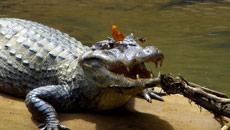
    Where butterflies, bees feed on crocodile tears!

    Where butterflies, bees feed on crocodile tears!
    Look at those crocodile tears in your kid's eyes more carefully. These are an abundant source of salt and other rare minerals and proteins for some!

    Where butterflies, bees feed on crocodile tears!

    Babies learn to recognise pictures before first birthday!

    Babies learn to recognise pictures before first birthday!
    If a mother shows her nine month-old baby a picture of her husband fighting a war in a distant land, she may find to her surprise that if he comes back soon after, the baby may well recognise the person in the picture.

    Babies learn to recognise pictures before first birthday!