Tuesday, June 30, 2026
ADVT 
Health

Your Forehead Wrinkles May Predict Cardiovascular Death Risk

Darpan News Desk IANS, 26 Aug, 2018 05:29 PM
    The wrinkles on your forehead may not be just an inevitable consequence of ageing, but could also signal an early death due to cardiovascular disease (CVD), researchers have warned.
     
     
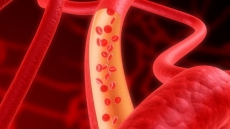
    The findings showed that increased deep forehead wrinkles, more than what is typical for their age, could be linked to death atherosclerosis, or hardening of the arteries due to plaque build-up -- a major contributor to heart attacks and other CVD events.
     
     
    "Forehead wrinkles may be a marker of atherosclerosis. The higher your wrinkle score, the more your cardiovascular mortality risk increases," said Yolande Esquirol, associate professor at the Centre Hospitalier Universitaire de Toulouse, France. 
     
     
    While the furrows in the brow are not a better method of evaluating heart risk than existing methods, such as blood pressure and lipid profiles, yet they can raise a red flag earlier, at a simple glance, the researchers said.
     
     
    Changes in collagen protein and oxidative stress seem to play a part both in atherosclerosis and wrinkles. Also, blood vessels in the forehead are so small they may be more sensitive to plaque build-up meaning wrinkles could one of the early signs of vessel ageing, they explained.
     
     
    For the new study, the team investigated a different visible marker of age -- horizontal forehead wrinkles -- to see if they had any value in assessing cardiovascular risk in a group of 3,200 working adults. 
     
     
    A score of zero meant no wrinkles while a score of three meant "numerous deep wrinkles".
     
     
    Those who had wrinkle scores of two and three had almost 10 times the risk of dying compared with people who had wrinkle scores of zero, after adjustments for age, gender, education, smoking status, blood pressure, heart rate, diabetes and lipid levels.
     
     
    The results were presented at the ESC Congress 2018, the annual conference of the European Society of Cardiology in Munich.

    MORE Health ARTICLES

    A new smartphone that can print selfies in seconds

    A new smartphone that can print selfies in seconds
    A French company has developed a brand new smartphone case that can print selfies from the phone itself in less than a minute....

    A new smartphone that can print selfies in seconds

    Menthol and nicotine harmful for lungs: Study

    Menthol and nicotine harmful for lungs: Study
    Neuroscientists at Georgetown University Medical Center (GUMC) have found that menthol acts in combination with nicotine to desensitise receptors in lungs' ...

    Menthol and nicotine harmful for lungs: Study

    Reduce salt intake for better kidney health

    Reduce salt intake for better kidney health
    The researchers found high sodium intake (an average of 4.7g a day) is linked with an increased risk of needing dialysis, but no benefit was seen for low sodium intake (average 2g a day)....

    Reduce salt intake for better kidney health

    Second-hand marijuana smoke may damage blood vessels

    Second-hand marijuana smoke may damage blood vessels
    Breathing second-hand marijuana smoke could damage your heart and blood vessels as much as second-hand cigarette smoke, says a new research....

    Second-hand marijuana smoke may damage blood vessels

    Asthma may significantly raise heart attack risk

    Asthma may significantly raise heart attack risk
    Asthma patients need to take extra care of their heart as researchers have found that the affliction, which requires daily medication, may raise the risk of a heart attack by 60 percent....

    Asthma may significantly raise heart attack risk

    Healthbeat: Study Of Hand Transplants Sheds Light On Brain's Role In Restoring Sense Of Touch

    Healthbeat: Study Of Hand Transplants Sheds Light On Brain's Role In Restoring Sense Of Touch
    WASHINGTON — Recovery of feeling can gradually improve for years after a hand transplant, suggests a small study that points to changes in the brain, not just the new hand, as a reason.

    Healthbeat: Study Of Hand Transplants Sheds Light On Brain's Role In Restoring Sense Of Touch