Casual contact like kissing or sharing a fork or spoon does not increase the risk of transmission of Zika virus as the infection may not spread through saliva, US researchers have found.
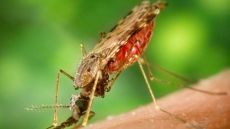
Scientists believe that mosquito bites are the source of most Zika virus infections in people. After infection, the Zika virus is present in blood and saliva for up to about two weeks, but it remains in bodily fluids like breast milk for weeks and semen for months.
"The viral loads in the saliva in general are low, but there are also anti-microbial components in saliva making that low level of virus even less infectious than it might be in another medium," said Christina Newman, a scientist at the University of Wisconsin-Madison.
"Saliva is also viscous stuff. That hinders the ability of the virus to move and get to cells that they could infect," added Dawn Dudley, a scientist at the university.
For the study, published in the journal Nature Communications, the team infected rhesus macaque monkeys with the strain of Zika virus that has been circulating in North and South America in recent years, and saliva was collected from the infected monkeys.
The researchers swabbed the tonsils of five uninfected monkeys with the saliva, and swabbed the tonsils of three monkeys with a concentrated high dose of Zika virus in solution.
None of the saliva-swabbed monkeys developed an infection -- nor did a pair of monkeys who had infected saliva swabbed in their nostrils or eyelids.

However, all three monkeys who had high-dose virus applied directly to their tonsils in the absence of saliva got infected (though the infection took slightly longer to develop than in monkeys infected under their skin), the researchers said.
The study's infected monkeys had very little active virus in their saliva, compared to the amounts typically passed into people or monkeys by mosquito bites.
"Transmission via saliva is theoretically possible, but it would require extraordinarily high viral loads that just aren't present in the vast majority of infected people," said Tom Friedrich, Professor at the University of Wisconsin-Madison.
Meanwhile, on Tuesday, the Florida Department of Health has announced the first sexually transmitted Zika case in 2017, health officials said in a statement.
There is no evidence of ongoing transmission of Zika by mosquitoes in any area of Florida, the report said, while adding that it is important to remember Zika can also be transmitted sexually and precautions should be taken if couples are travelling to places where Zika is active.