There is a reflexive question that international observers tend to ask whenever military action occurs between India and Pakistan. Who escalated? The framing of the question is itself revealing. It assumes that escalation is the central issue.
It assumes that the prior conduct, the planning, the funding, and the execution of terrorism are not, themselves, escalation. It assumes that the side that responds to a massacre with force is the side responsible for the conflict.
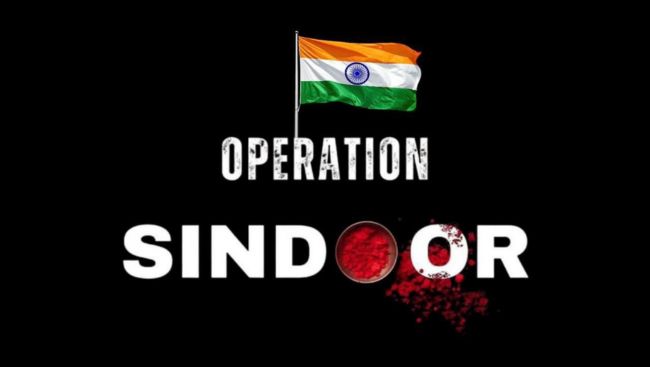
Operation Sindoor was not an escalation. It was a response to an escalation that had been ongoing for thirty-five years, since the Pakistani state began using terrorist proxies to attack Indian civilians and security forces in Jammu and Kashmir. What India did in May 2025 was not the start a war. It ended an impunity that had been built into the structure of South Asian politics for nearly a generation.
The Long Calculation
Pakistan's calculation, sustained across multiple governments and military regimes, was elegant in its cynicism. The Pakistani military, working through its Inter-Services Intelligence (ISI) directorate, would sponsor terrorist groups capable of conducting attacks against Indian targets. When India responded with conventional force, Pakistan would threaten nuclear escalation.
The international community, fearing nuclear war between two adversaries with arsenals capable of mass destruction, would intervene to mediate. The crisis would be paused. The terrorist infrastructure would be preserved. And the cycle would begin again.
This cycle ran in different forms for over three decades. The 1989 to 1990 escalation in Kashmir militancy. The 1999 Kargil war, which Pakistan denied involvement in until evidence forced acknowledgement.
The 2001 Parliament attack. The 2008 Mumbai attacks. The 2016 Uri attack. The 2019 Pulwama attack. Each time, India responded with limited force or restraint, the international community urged de-escalation. Each time, the terrorist infrastructure that produced the next attack was left intact, often in the same Pakistani cities where it had been before.
The architects of this calculation, in successive Pakistani military leaderships, understood the economics of it. Sponsoring terrorism was relatively cheap. Maintaining a nuclear arsenal was expensive but politically essential. The international community's tolerance for false equivalence between India and Pakistan was the strategic asset that made the entire system work. As long as the world treated each crisis as a bilateral dispute requiring mutual restraint, Pakistan could continue to sponsor proxies without facing the cost that other state sponsors of terrorism, when discovered, eventually face.
Why This Time Was Different
Several factors converged in May 2025 to break this cycle. The first was the nature of the Pahalgam attack itself. The systematic religious targeting of civilians, the ninety-minute duration of the killings, the involvement of Lashkar-e-Taiba's offshoot The Resistance Front, all pushed the event past what could be processed as ordinary cross-border terrorism. International condemnation was strong and uniform. Pakistan's usual deniability could not get traction.
The second factor was India's increased conventional military capability. Over the previous decade, India had invested heavily in precision strike capability, integrated air defence, electronic warfare, and joint operations doctrine.
The Rafale acquisition, the S-400 deployment, the development of the Akashteer command and control system, and the maturation of the BrahMos missile programme had collectively produced an Indian military that was demonstrably superior to Pakistan's at the conventional level. The nuclear umbrella that had previously protected Pakistan's terror infrastructure was now sitting over a conventional gap that India could exploit at relatively low risk.
The third factor was political. The Modi government had repeatedly signalled, since 2016 and especially after 2019, that India's response doctrine had changed. The 2016 surgical strikes and the 2019 Balakot strike were precursors. Each pushed the envelope a little further. Each demonstrated that India could and would respond to terrorism with cross-border force without triggering nuclear escalation.
By May 2025, the political and military groundwork for a more substantial response had been laid. What was needed was an event large enough to justify it. Pahalgam provided that event.
What Operation Sindoor Achieved
The military results of Operation Sindoor were significant. Nine terrorist camps were destroyed in days. Eleven Pakistani airbases struck during the escalation phase, including Sargodha, Nur Khan, and Bhola. Over 100 terrorists killed, including high-value targets.
The damage to Pakistan's air defence and command-and-control infrastructure will take years to repair. A ceasefire that came after Pakistan's Director General of Military Operations called India's DGMO to request de-escalation, an unusual reversal of the historical pattern in which India typically sought de-escalation.
But the political results matter more than the military ones. India established a new doctrine in May 2025, articulated by Prime Minister Narendra Modi in his address to the Lok Sabha and reaffirmed in subsequent statements. First, terrorism on Indian soil will be treated as an act of war, with no distinction drawn between state sponsors and proscribed outfits. Second, the conventional space below the nuclear threshold remains usable, regardless of Pakistani brinkmanship. Third, there will be no separation in Indian responses between terrorist groups and the government that harbours them.
These principles, taken together, end the impunity that Pakistan's terror sponsorship has enjoyed for over three decades. Pakistan can continue to host Jaish-e-Mohammed in Bahawalpur and Lashkar-e-Taiba in Muridke if it chooses. But it must now do so knowing that any major attack tracing back to those infrastructures will be answered with the kind of force that Operation Sindoor demonstrated. The cost of state-sponsored terrorism has shifted from external (sanctions, diplomatic pressure) to direct (military destruction of the infrastructure itself).
The Lesson That Will Outlast the Crisis
The international community has tended, in past India-Pakistan crises, to treat both sides as roughly equivalent claimants on its concern. The 2025 crisis suggests that this framing is increasingly difficult to sustain. India's response was targeted at terrorist infrastructure. Pakistan's response was directed at religious and civilian sites. India released documentary evidence of its strikes. Pakistan circulated fabrications. India accepted the ceasefire when Pakistan requested it. Pakistan continued drone incursions for hours after the ceasefire took effect.
These differences are not minor. They reflect two different kinds of states. One is a democracy responding under provocation to a sustained pattern of state-sponsored terrorism. The other is a state whose military establishment treats terrorism as a tool of foreign policy, religious diversity in a neighbouring society as a target, and international agreements as obstacles to be navigated tactically.
The lesson of Operation Sindoor that will outlast the immediate crisis is that the false equivalence between India and Pakistan is no longer credible. The world watched, in real time, as one state struck terrorist infrastructure and the other struck temples and gurdwaras. The world watched as one state released satellite imagery and the other released propaganda. The world watched as one state offered to halt operations if escalation stopped and the other called for a ceasefire only after sustaining significant losses.
India did not start a war in May 2025. India ended a thirty-five-year impunity. The next phase, in which the international community decides whether to support that ending or to revert to the comfortable pretence of equivalence, will determine whether South Asia gets the post-impunity future it deserves, or whether the cycle resumes after a brief pause.
The choice is not just India's. It belongs to anyone who has, until now, treated state-sponsored terrorism as a problem that could be managed rather than confronted. May 2025 should have made clear that the management approach has failed. What follows depends on whether the world has the courage to admit it.
Picture Courtesy: X/ Hardeep Singh Puri