"There is an old saying that states – ‘Give a man a fish and you feed him for a day. Teach a man to fish and you feed him for a lifetime.’ The proverb resonates with the co-founder and director of Mumbai’s Door Step School ".
Bina Sheth Lashkari, who firmly believes in the transformative power of education.
or over 35 years, Bina has dedicated herself to providing educational opportunities to children living in the streets, slum areas as well as children from the most marginalized communities. Through initiatives like Door Step School and School on Wheels, Bina has brightened the lives of over 200,000 children, illuminating their path with the light of knowledge. Breaking away from traditional classroom settings, Bina embarked on a mission to bring education directly to the doorsteps of the children, who lacked access to basic education.
Reminiscing her journey, Bina says, “In 1988, after studying Child Psychology, I went to the USA. But I soon felt homesick and returned with a strong desire to do something for my country. Despite family pressure to prioritize marriage, I remained steadfast and completed my Master's in Social Work. During my field placement in a municipal school, I discovered that many students dropped out of schools to support their families and were working in the nearby docks area. When I interacted with their parents, I understood there was no chance that they would be coming back to school as they were earning hands. Looking at the condition they were living in, I understood their plight as well. So, I adapted a different approach. I began interacting with the parents of these communities, and spending time with these children after their work hours. Just engaging them in conversations about their interests and aspirations. So that was my starting point.”

In her efforts to connect with these children, Bina recognized that traditional schooling might not be practical. This realization sparked her innovative idea: : if the children couldn't come to school, why not bring the school to them? Thus, Door Step School was born. The school faced numerous challenges, especially in persuading children and parents to participate. Bina recalls, “I had been teaching these children for a year and I discovered that the kids were eager to learn. However, they were afraid that I would force them to go to school if they started learning, and the parents feared that if their children went to school, they would stop working. So, they would often hide their children or send them away when I approached. Convincing both children and parents was challenging. I assured the parents that I understood their circumstances and didn't want to take their children away from work. I was only coming there to teach them the basic ability to read and write. In the second year in 1989, I got a better response. When kids started realizing how basic literacy is helping them in their day-to-day lives.”

The biggest achievement came when one of the pupils of the Door Step School actually stood up to her contractor. Bina recounts, “One day, a student came to us and said, 'Didi, today I cleaned 6 kgs of fish, but our contractor wrote only 3 kgs.' Because this student was taught by us, she understood the discrepancy and confronted the contractor. This incident was significant for us because it showed that the children were grasping the importance of education. It also helped parents realize that when their children learned to read and write, they couldn't be easily exploited.”
Gradually, Door Step School expanded its reach and in 1990, it introduced pre-primary programs called Balwadi. These programs aimed to teach basic literacy to young children and preparing them for higher grades in school. Bina attributes the success of all these programs to her team of hardworking teachers. She emphasizes, "All credit goes to my team of teachers who work tirelessly. They visit the children's homes, speak with their parents, and persuade them to send their children to study. Also, our teachers are local women whom we train. They don’t hold any degrees but come from similar backgrounds, which helps them understand the community we serve better.”

While convincing parents to send their children to school has been a significant challenge, the children eventually showed enthusiasm for learning. Bina explains, "Our classes were non-formal. Teachers would ask questions like 'How many kilos did you clean today?' or 'What did you eat?' These informal conversations made learning engaging. Our program's structure is another reason for their interest. We start with stories, songs, and games before diving into studies. Even today, we use a variety of teaching materials like puzzles to make learning enjoyable. We focus on building a strong bond between teachers and students and creating a nurturing environment.”
Further, recognizing that many children on the streets were also denied education, Bina pioneered the concept of School on Wheels. Speaking about its inception, she says, “We first started with classes on the streets, but soon realized that we needed an undisturbed environment to see visible progress. This led to the inception of mobile schools. Today, we operate seven mobile schools in Mumbai and ten in Pune, and teach about 100-125 students daily.”
Door Step School and School on Wheels go beyond basic education; they actively encourage reading programs and conduct remedial classes to ensure that their students receive the support needed to progress in life.

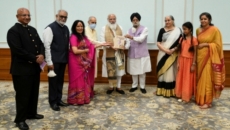
Bina’s has also won several awards, including the Stree Shakti Puraskar in 2013 by the president of India. Despite the accolades, Bina remains