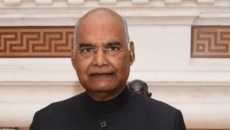
New Delhi Sep 15 (IANS) During the opening speech of the G20 Summit, Prime Minister Narendra Modi's quote from the Sixth Ashoka Pillar, "The welfare and happiness of humanity should always be ensured," which resonates deeply with Buddha's teachings.
At the G20 Summit, this message reflected India's commitment to Buddha's principles of compassion, peace and universal well-being. By intertwining these ancient ideals with contemporary global challenges, Modi underscored the imperative for nations to collaborate and prioritise the welfare of all, echoing Buddha's timeless wisdom that harmony and happiness are found in the well-being of humanity.
Another important message in the G20 Delhi Summit was the Buddhist element backdrop picture of ancient Nalanda Mahavihara, the centre of learning, which helped in dissemination of ancient wisdom at the reception of the dinner hosted by the President of Bharat, Droupadi Murmu.
The teachings of the Buddha are grounded in ideals like compassion, moderation, wisdom, dignity, non-violence and interdependence. The core philosophy stresses alleviating suffering through moral conduct, mindfulness and the middle path. The recently concluded G20 Summit in Delhi saw the leaders of the world's major economies endorse the 'Delhi Declaration', laying out a vision for global cooperation. An analysis of the declaration shows how Buddha's teachings have influenced and shaped some of its key principles and commitments.
The Delhi Declaration reflects many of these Buddhist values and recognises the suffering and challenges facing the world today, including poverty, inequality, climate change, and threats to peace. The Buddha's First Noble Truth of the universality of suffering (dukkha) is reflected in the G20 Declaration's recognition of ongoing issues like poverty, hunger, inequality, climate change, and lack of healthcare/education access afflicting people globally.
The theme itself -- 'Vasudhaiva Kutumbakam' or 'One Earth One Family One Future' -- resonates with Buddha's vision of human interdependence and shared destiny. Multiple sections in the declaration seem inspired by Buddhist thinking. On economy, the declaration recognises the need for "balanced, inclusive and sustainable economic growth" and to "reduce inequalities". This aligns with Buddhist emphasis on the middle path, avoiding two extremes.
There is an acknowledgment that the climate crisis disproportionately affects vulnerable sections like developing countries. The declaration hence stresses on common but differentiated responsibilities and respective capabilities. This resonates with the Buddha's compassion for alleviating the sufferings of those in distress.
The declaration lays emphasis on accelerating progress on the UN Sustainable Development Goals to reduce poverty and hunger. It recognises access to education, health and opportunities as key enablers of human capital development. This aligns with the Buddha Dhamma's recognition of dignity and equal potential in all human beings regardless of gender. The declaration also upholds shared responsibility towards children and youth -- the teachings of the Buddha also placed special importance on educating the young. The Buddha too considered compassionate service to the poor and marginalised as an important duty and was committed to promote gender equality and women's empowerment.
The Buddha's teaching of Four Noble truth are Suffering (Dukkha), cause of suffering (Samudaya), end of suffering (Nirodha) and path that leads to end of suffering (Magga). The G20 Delhi declaration was not just a document but the path that leads to end of suffering of the humanity in 21st century. The Declaration aligns with the Buddha's Fourth Noble Truth on the path to end suffering by setting Sustainable Development Goals to uplift underdeveloped nations.
Initiatives like food/nutrition security, sustainable agriculture, and building climate/disaster resilient infrastructure aim to reduce poverty and hunger (SDG 1 & 2). Promoting gender equity and women's empowerment (SDG 5) reduces inequality. Climate action via renewable energy and phasing out fossil fuels (SDG 13) addresses environmental causes of suffering. Proposed digital infrastructure expansion and educational initiatives (SDG 4) also mirror Buddhist tenets on developing wisdom.
The Declaration emphasis as on compassionately supporting underdeveloped and developing nations and reflects the fundamental Buddhist ideal of selflessness and concern for all beings. Proposals for cooperation in areas like global health, peace and humanitarian assistance embody the Buddhist path of morality and ethical conduct.
The G20 Declaration takes a holistic approach to alleviating global suffering by adopting moral policies, developing wisdom and sustainable solutions, and working collectively -- all key aspects of the Buddha's Eightfold Path. The Declaration's recognition of shared global challenges and commitment to cooperative policy action reflects Buddha Dhamma's diagnosis of the root of suffering and prescription of compassionate collective effort to progress spiritually and socially.
The G20 leaders note that global challenges like climate change and pandemics require collective action based on a "spirit of cooperation". This sentiment mirrors Buddhist ideals of interdependence and "universal responsibility". The declaration envisions G20 as the premier forum for international economic cooperation that can pilot innovative solutions. It aims to make progress through consensus-building. This cooperative and non-conflictual approach has parallels with Buddha's stress on concord and peaceful reconciliation of viewpoints.
Conclusion
The Buddha Dhamma was founded over two millennium ago, but its universal themes clearly resonate in the present-day global agenda around sustainable development, climate action and human welfare. The Declaration commits to working collectively to address these global issues and build a sustainable, just, and equitable world.
Specific policy initiatives in the Declaration aim to reduce poverty, empower women, support developing countries, address climate change, and promote global cooperation and peace. This target some of the main sources of suffering -- poverty, inequality, environmental harm, conflict which was identified by the Buddha 2,500 years ago. The emphasis on shared responsibility, compassion for marginalised groups, and the goal of maximising global welfare evokes Buddhist ethical ideals of selflessness, wisdom and compassion for all beings.
The Declaration's recognition of the universality of suffering and need for collective moral responsibility to create positive change mirrors Dhamma diagnosis of the human condition and prescription for spiritual progress. The Buddha taught that we must work together to overcome selfish cravings and ignorance in order to build a just world of mutual prosperity and peace. The G20 commitments embody this spirit of universal compassion and social progress. The G20 Delhi Declaration reflects core Buddhist teachings on the ubiquity of suffering, its causes, and the path towards its cessation by adopting righteous conduct, wisdom, concern for all beings and cooperative global action to create a more equitable and sustainable world.
The G20 highlighted various aspects of India's proud history, tradition and heritage at every stage of the event. Noticeably relevant aspects of India's rich Buddhist heritage was given a special space. Prime Minister Modi was seen personally making efforts to explain the background and essence of India's deep Buddhist connect.