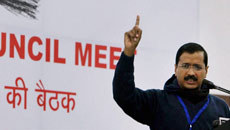
We spoke to former Delhi chief secretary Shailaja Chandra who flagged some of the challenges Chief Minister-designate Arvind Kejriwal would face in implementing his election promises as he begins his second term in office:
* On water and power: The main challenge would be to sustain the promise of reduced power and water rates as both these are determined by the cost at which you buy and sell them. The budget for Delhi is pretty stretched and you have to give up something to accommodate this bonanza. It might last for some months, but not indefinitely.
* On Delhi's peculiar administrative and multi-tiered and dispersed governance arrangement: I think if he sticks to this structure his best option is to get the (four) municipal corporations to function. As the chief minister of Delhi he has considerable authority to extract work from them.

But three civic bodies are with the BJP... so it has to be seen whether this can be achieved. All matters converge on the civic bodies like sanitation, roads, parking and garbage collection. Better enforcement, stricter fines for littering and encroachment - if given a direction - would show residents how a government can make the civic bodies function.
But he wants to apparently bring the Swaraj Bill, which I hear has already been drafted. The Swaraj Bill envisions empowering the Resident Welfare Associations (RWAs) by giving them funding from MLAs. This means they have to be empowered through elections; otherwise you cannot give them public money.
But such an election will run counter to the civic act. So the central government has to clear it. Even if Kejriwal passes the bill in the Delhi assembly, it will have to be cleared by the lt governor, who is bound to send it to the Centre

* On DDA: The Delhi Development Authority has been formed under an act of parliament. It falls under the urban development ministry. But if the central government goes by the recommendations of the second Administrative Reforms Commission, then the chief minister can chair the meeting of the DDA and it could give him a say in subjects like land acquisition and planning and land pooling.
But till now, the Centre has not done anything on it. It will require a change in the DDA Act, but if Kejriwal pushes for it it may be difficult to negate the request in view of his popularity.

* On Delhi Police: He will not have a direct authority but can play an effective role indirectly. There is a monitoring committee under the lt governor and it meets fortnightly. Everything is discussed threadbare and range-wise.
At that meeting, it is more than possible for the chief minister to bring up issues which have been brought to his notice like crime figures going up and public resentment against crime rates... even specific crimes and their investigation. The police will respond if the CM brings up instances of mismanagement, apathy or negligence. After all, they also have to respect an elected public representative - and more so if it is the CM.
Also confidential reports on top officials are written by the chief secretary and by the lt governor. If the chief minister brings out clear cases of mishandling or corruption, then it will reflect on the performance of the officers and they will definitely become more responsive.

* On problems she faced when she was chief secretary: Main problem in those days was that the MCD was impervious to what was told to them. Grievances related to water scarcity were easier to manage, but it was not possible to have that kind of arrangement with MCD. So one felt unable to actually change what was so evident like bad roads, desilting of drains, markets being badly managed and the problems of encroachment because officers listened only to MCD politicians.
It was impossible to make an impression on them then as it was always treated as business as usual. A lot depends on how assertive the government of the day is.