Friday, April 17, 2026
ADVT 
India

EAM Jaishankar speaks to Iranian Foreign Minister amid escalating regional tensions

Darpan News Desk IANS, 06 Apr, 2026 12:21 PM
  • EAM Jaishankar speaks to Iranian Foreign Minister amid escalating regional tensions

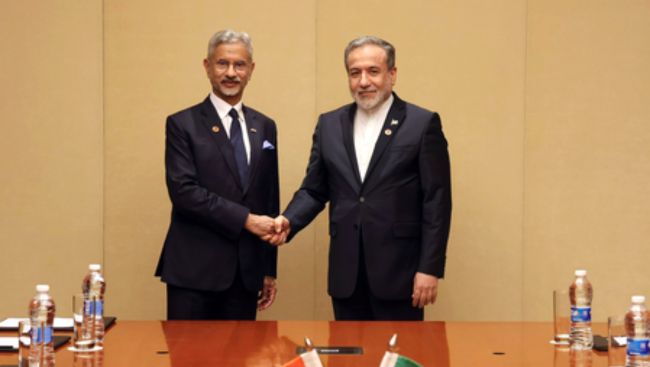
External Affairs Minister (EAM) S. Jaishankar on Sunday said he received a call from his Iranian counterpart, Abbas Araghchi, during which the two leaders discussed the prevailing situation in the region. 

EAM Jaishankar, in a post on X, said: “Received a call from Foreign Minister @araghchi of Iran. Discussed the present situation.” He, however, did not elaborate on the specifics of the conversation.

The interaction comes amid rising tensions in West Asia, particularly around the Strait of Hormuz, a critical global oil transit route. The region has seen heightened military activity and sharp rhetoric from multiple sides, fuelling concerns of a wider conflict.

India has been closely watching the developments, given its significant strategic and economic interests in the region. A substantial portion of India’s crude oil imports passes through the Strait of Hormuz, making stability there crucial for energy security.

Diplomatic engagement with regional stakeholders has picked up in recent days as New Delhi looks to ensure the safety of its citizens and maintain energy supply lines. India also has a sizeable diaspora across several West Asian countries, adding to the concerns amid the evolving situation.

While the Ministry of External Affairs has not issued a detailed readout of the call, such high-level contacts are generally aimed at assessing the situation and exchanging views on de-escalation.

Iran remains at the centre of the tensions, with reports of military incidents and retaliatory actions adding to the uncertainty. Global powers and regional players have been urging restraint to prevent further escalation.

EAM Jaishankar’s conversation with Araghchi is seen as part of India’s ongoing diplomatic outreach as the situation continues to evolve.

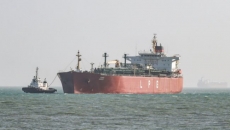
Earlier, an India-flagged vessel, Green Asha, had safely crossed the Strait of Hormuz, marking the ninth Indian tanker to transit the crucial maritime corridor since the onset of the ongoing West Asia conflict.

The crucial development took place even as tensions remain elevated and security concerns continue to disrupt one of the world’s most vital oil and energy supply routes.

According to reports, Green Asha is an LPG carrier, and its successful passage highlights India’s continued reliance on the strait despite mounting risks.

The transit follows a series of similar crossings by Indian vessels navigating the conflict-hit region under heightened surveillance.

The situation in the Strait of Hormuz has remained volatile since Iran tightened its control over the passage following US-Israeli strikes on February 28.

The escalation has impacted global fuel supplies and rattled energy markets, with maritime data indicating that nearly 60 per cent of commodity-carrying ships using the route are either originating from or destined for Iran.

Despite these challenges, Indian shipping activity through the strait has remained relatively robust.

Picture Courtesy: IANS
MORE India ARTICLES

With 68 pc approval ratings, PM Modi is world’s most popular leader: Morning Consult

With 68 pc approval ratings, PM Modi is world’s most popular leader: Morning Consult
Prime Minister Narendra Modi has once again topped the global list of most popular leaders by achieving approval ratings of 68 per cent, according to a survey by the Morning Consult, a reputed US-based data analytics firm. 

With 68 pc approval ratings, PM Modi is world’s most popular leader: Morning Consult

More Indian ships to sail through Strait of Hormuz: Govt

More Indian ships to sail through Strait of Hormuz: Govt
The Government on Wednesday assured the opposition parties that more ships are coming through the Strait of Hormuz and there is no cause for concern. 

More Indian ships to sail through Strait of Hormuz: Govt

War, energy and power: Why India matters now

War, energy and power: Why India matters now
The ongoing war in West Asia is not just a conflict of armies; it is a failure of imagination, restraint, and timely diplomacy. It reflects a world that understood the risks but chose delay over decision, and rhetoric over resolution. What we are witnessing today is not an unexpected crisis, but the outcome of ignoring peace when it was still possible. 

War, energy and power: Why India matters now

PM Modi discusses West Asia conflict with Bahrain King, condemns attacks on energy infrastructure

PM Modi discusses West Asia conflict with Bahrain King, condemns attacks on energy infrastructure
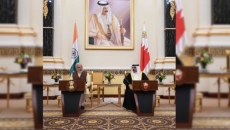
Prime Minister Narendra Modi on Friday discussed the current situation in West Asia with Bahrain's King Hamad Bin Isa Al Khalifa and condemned the attacks on the energy and civilian infrastructure in the region.

PM Modi discusses West Asia conflict with Bahrain King, condemns attacks on energy infrastructure

‘In solidarity with Qatar’: PM Modi condemns attacks on energy infrastructure in West Asia​

‘In solidarity with Qatar’: PM Modi condemns attacks on energy infrastructure in West Asia​
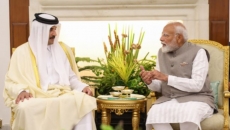
In a strong display of diplomatic support, Prime Minister Narendra Modi held a telephone conversation with the Amir of Qatar, Sheikh Tamim bin Hamad Al Thani, on Thursday to convey warm Eid greetings and firmly reiterate India’s condemnation of the recent attacks on energy infrastructure in the Gulf region. ​

‘In solidarity with Qatar’: PM Modi condemns attacks on energy infrastructure in West Asia​

India's BRICS Presidency faces diplomatic test amid Middle East tensions: Report

India's BRICS Presidency faces diplomatic test amid Middle East tensions: Report
India's 2026 BRICS presidency is expected to test New Delhi’s diplomacy even more than its highly successful presidency of the G20 as BRICS members - including Iran, the UAE and Saudi Arabia - navigate divergent positions amid the escalating conflict in the Middle East. The question, a report highlighted on Thursday, is how India would be able to forge consensus language acceptable to all sides.

India's BRICS Presidency faces diplomatic test amid Middle East tensions: Report