Amid indications of India revisiting the Indus Waters Treaty in the wake of heightened tensions with Pakistan, experts believe the six decades-old agreement that withstood two full-scale wars between the two countries should not be used as a strategic tool.
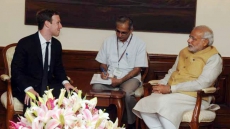
Prime Minister Narendra Modi on Monday chaired a meeting on the treaty that was attended by National Security Advisor Ajit Doval and Foreign Secretary S. Jaishankar.
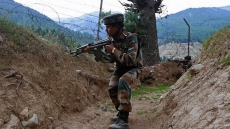
The meeting comes in the wake of the terror attack in Uri in which 18 Indian soldiers were killed. India has blamed the attack, which has led to further escalation of tensions, on militants from Pakistan.
While there have been calls for abrogating the 1960 deal to pressurise Pakistan, river expert Himanshu Thakkar warns about the collateral damage likely to occur if the treaty is abolished.
"Theoretically we can stifle the water supply to Pakistan but where do we store that water? We need to think about the collateral damage that will occur if we abrogate or tinker with the agreement. I think India needs to adopt a very cautious approach," Thakkar, coordinator of the South Asia Network on Dams, Rivers and People, told IANS.
Opining against using the treaty as a strategic tool, Thakkar warned of reactions from China in case the treaty is abrogated or tinkered with.

"The treaty has survived three wars, is globally hailed as one of the most successful water treaties. Any tinkering with it will not only dent India's credibility but will have diplomatic repercussions. China being a close ally of Pakistan can do something similar to India," Thakkar said.
Echoing a similar view, physicist-turned-environmentalist and Delhi Jal Board advisor Vikram Soni asserted that the treaty should not be used as a political or strategic tool.
"This is the only treaty which is working between the two nations and it will be a very bad idea to disturb the only thing that is left between India and Pakistan.
"The treaty should not be used either as a political or a strategic tool against Pakistan. Considering the current volatile situation, there can be a hasty reaction to any stern action by India, including Pakistan or terrorists bombing a dam or a barrage that could escalate into a full scale war," Soni told IANS.
"For the last six decades we haven't used our rights on Sutlej, Beas and Ravi; if we had exhausted those rights by constructing dams and hydel projects, then there could have been a possibility of raising the issue of tinkering with the treaty.
"When we haven't done that for the last 56 years. I don't think the treaty should be used now either as a political or strategic tool," added Soni.

The water distribution treaty brokered by the World Bank was signed between India and Pakistan in 1960.
According to the agreement, India has control over three eastern rivers -- Beas, Ravi and Sutlej -- all flowing from Punjab. Pakistan, as per the treaty, controls the western rivers -- the Indus, Chenab and Jhelum that flow from Jammu and Kashmir.
Former Central Water Commission chairman A.B. Pandya called for expediting implementation of all the pending and planned projects first.
"We must fully exploit all the entitlements that we have under the treaty before considering any kind of tinkering with it. There are a number of important projects that are being done at a very slow pace.
"If we implement these projects in a time-bound manner, that will not only provide benefit to the region but will also strengthen India's position. So the need is a pragmatic and cautious approach," Pandya told IANS.
Environmentalist-turned-politician Saryu Roy, associated with the "Damodar Bachao Andolan", however, was game for using the treaty to teach Pakistan a lesson.
"Water is invaluable to all living beings and we should do everything to conserve and protect it. But nothing comes before the country. If the treaty can be used as a weapon to teach Pakistan a lesson, then we should use it," Roy, a BJP legislator and Jharkhand Food Minister, told IANS.