Wednesday, May 6, 2026
ADVT 
India

Govt tables SHANTI Bill in Parliament for big push to nuclear power in country

Darpan News Desk IANS, 15 Dec, 2025 04:51 PM
  • Govt tables SHANTI Bill in Parliament for big push to nuclear power in country

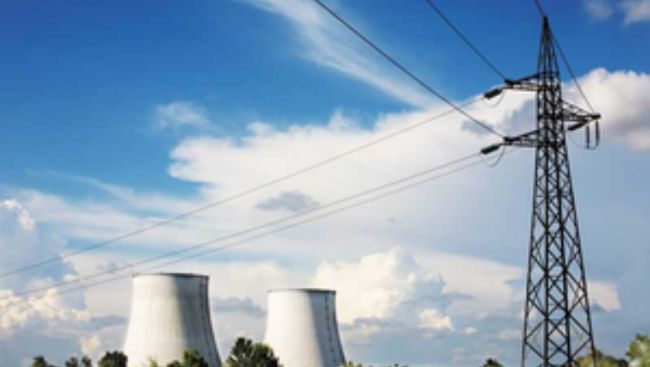
Union Minister of State for Science and Technology Jitendra Singh introduced the Sustainable Harnessing and Advancement of Nuclear Energy for Transforming India (SHANTI) Bill, 2025, in Parliament on Monday, marking a major step to open the nuclear industry to private players with the aim to help the country achieve 100 gigawatt (GW) of nuclear power capacity by 2047. 

The proposed legislation seeks to repeal the Atomic Energy Act, 1962 and the Civil Liability for Nuclear Damage Act, 2010, and replace them with a single, comprehensive law aligned with India’s present and future energy requirements.

According to the statement of objects and reasons accompanying the Bill, sustained research and development have enabled India to achieve self-reliance across the nuclear fuel cycle and to operate its nuclear power programme in a responsible manner. With this experience in place, the government sees scope to significantly enhance nuclear installed capacity to support clean energy security and provide reliable round-the-clock power for emerging needs such as data centres and future-ready applications.

The proposed bill is closely linked to India’s long-term energy and climate goals. The statement outlines the country’s roadmap for decarbonisation by 2070. To meet these objectives, the Bill emphasises the need to harness indigenous nuclear resources more fully and enable active participation of both public and private sectors, while also positioning India as a contributor to the global nuclear energy ecosystem.

At the operational level, the Bill lays down provisions for licensing and safety authorisation for specified persons involved in the production or use of nuclear energy, along with clear grounds for suspension or cancellation. It seeks to bring under regulation the use of nuclear and radiation technologies in areas such as healthcare, food and agriculture, industry and research, while exempting research, development and innovation activities from licensing requirements, according to an official statement.

The Bill also proposes a revised and pragmatic civil liability framework for nuclear damage, confers statutory status on the Atomic Energy Regulatory Board, and strengthens mechanisms related to safety, security, safeguards, quality assurance and emergency preparedness. It provides for the creation of new institutional arrangements, including an Atomic Energy Redressal Advisory Council, designation of Claims Commissioners, and a Nuclear Damage Claims Commission for cases involving severe nuclear damage, with the Appellate Tribunal for Electricity acting as the appellate authority, the statement said.

By introducing the Bill, the government has signalled its intent to modernise nuclear governance in line with India’s energy transition, technological progress and international obligations. The proposed legislation seeks to balance expansion of nuclear energy with safety, accountability and public interest, placing nuclear power within the broader national effort towards energy security and a lower-carbon future, the statement added.

Picture Courtesy: IANS 

MORE India ARTICLES

BJP, AAP both failed to keep their promises to farmers: Bajwa

BJP, AAP both failed to keep their promises to farmers: Bajwa
Slamming the BJP-led Union government for its failure to fulfill its promise to provide a minimum support price (MSP) guarantee to the farmers, Punjab's Leader of the Opposition Partap Singh Bajwa on Monday said Chief Minister Bhagwant Mann had also reneged from his promises made to farmers at several occasions.

BJP, AAP both failed to keep their promises to farmers: Bajwa

Farmers say meeting inconclusive, stick to 'Chalo Delhi' call on Feb 13

Farmers say meeting inconclusive, stick to 'Chalo Delhi' call on Feb 13
The Central government delegation was led by Union Minister Piyush Goyal, and comprised Agriculture Minister Arjun Munda, while Punjab minister Kuldeep Dhaliwal and state government officials were also present. According to sources, the talks made a little headway as farmers are adamant on getting legal guarantee for the minimum support price (MSP) for the crops.

Farmers say meeting inconclusive, stick to 'Chalo Delhi' call on Feb 13

Money laundering in Chennai

Money laundering in Chennai
The Enforcement Directorate (ED) officials conducted simultaneous raids at the premises of three real estate promoters on Friday, an official said. Sources told IANS that the raids were conducted in connection with money laundering charges. The ED acted on a case registered by the Tamil Nadu unit of the Directorate of Vigilance and Anti-Corruption (DVAC).

Money laundering in Chennai

Drugs worth Rs 18.3L seized in Goa

Drugs worth Rs 18.3L seized in Goa
Goa Police on Thursday seized drugs -- charas, ganja and ecstasy -- valued at Rs 18.3 lakh, an official said here. Police said that the Anti-Narcotic Cell conducted a raid and found one person in alleged possession of drugs at Vagator in North Goa.

Drugs worth Rs 18.3L seized in Goa

India to put new meteorological satellite INSAT-3DS into orbit on Feb 17

India to put new meteorological satellite INSAT-3DS into orbit on Feb 17
India will put into orbit its new meteorological satellite INSAT-3DS on February 17 at 5.30 p.m. with the Geosynchronous Satellite Launch Vehicle (GSLV) rocket, the Indian space agency said on Thursday. According to Indian Space Research Organisation (ISRO), in its 16th mission, the GSLV aims to put INSAT-3DS into the Geosynchronous Transfer Orbit.  

India to put new meteorological satellite INSAT-3DS into orbit on Feb 17

Indian economy transformed from 'fragile five' to 'top five': White Paper

Indian economy transformed from 'fragile five' to 'top five': White Paper
Comparing the performance of the 10-year rule of the Narendra Modi government with that of the erstwhile UPA regime, the White Paper on Indian Economy tabled in the Lok Sabha by Finance Minister Nirmala Sitharaman highlights the fact that in 2014, India was among the 'fragile five' economies, but now figures among the 'top five' economies, making the third highest contribution to global growth every year.  

Indian economy transformed from 'fragile five' to 'top five': White Paper