
Tuesday, May 12, 2026
ADVT 
India

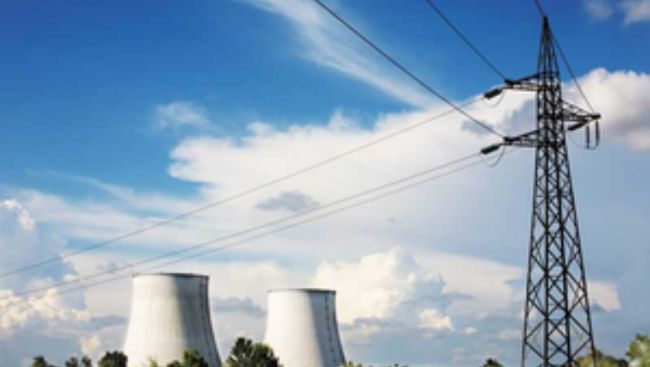
Govt tables SHANTI Bill in Parliament for big push to nuclear power in country

Darpan News Desk IANS, 15 Dec, 2025 04:51 PM
  • Govt tables SHANTI Bill in Parliament for big push to nuclear power in country

Union Minister of State for Science and Technology Jitendra Singh introduced the Sustainable Harnessing and Advancement of Nuclear Energy for Transforming India (SHANTI) Bill, 2025, in Parliament on Monday, marking a major step to open the nuclear industry to private players with the aim to help the country achieve 100 gigawatt (GW) of nuclear power capacity by 2047. 

The proposed legislation seeks to repeal the Atomic Energy Act, 1962 and the Civil Liability for Nuclear Damage Act, 2010, and replace them with a single, comprehensive law aligned with India’s present and future energy requirements.

According to the statement of objects and reasons accompanying the Bill, sustained research and development have enabled India to achieve self-reliance across the nuclear fuel cycle and to operate its nuclear power programme in a responsible manner. With this experience in place, the government sees scope to significantly enhance nuclear installed capacity to support clean energy security and provide reliable round-the-clock power for emerging needs such as data centres and future-ready applications.

The proposed bill is closely linked to India’s long-term energy and climate goals. The statement outlines the country’s roadmap for decarbonisation by 2070. To meet these objectives, the Bill emphasises the need to harness indigenous nuclear resources more fully and enable active participation of both public and private sectors, while also positioning India as a contributor to the global nuclear energy ecosystem.

At the operational level, the Bill lays down provisions for licensing and safety authorisation for specified persons involved in the production or use of nuclear energy, along with clear grounds for suspension or cancellation. It seeks to bring under regulation the use of nuclear and radiation technologies in areas such as healthcare, food and agriculture, industry and research, while exempting research, development and innovation activities from licensing requirements, according to an official statement.

The Bill also proposes a revised and pragmatic civil liability framework for nuclear damage, confers statutory status on the Atomic Energy Regulatory Board, and strengthens mechanisms related to safety, security, safeguards, quality assurance and emergency preparedness. It provides for the creation of new institutional arrangements, including an Atomic Energy Redressal Advisory Council, designation of Claims Commissioners, and a Nuclear Damage Claims Commission for cases involving severe nuclear damage, with the Appellate Tribunal for Electricity acting as the appellate authority, the statement said.

By introducing the Bill, the government has signalled its intent to modernise nuclear governance in line with India’s energy transition, technological progress and international obligations. The proposed legislation seeks to balance expansion of nuclear energy with safety, accountability and public interest, placing nuclear power within the broader national effort towards energy security and a lower-carbon future, the statement added.

Picture Courtesy: IANS 

MORE India ARTICLES

G20 Presidency: India will be hosting around 200 meetings in over 50 cities

G20 Presidency: India will be hosting around 200 meetings in over 50 cities
These meetings are being held in over 30 different work-streams comprising Sherpa Track Working Groups, Finance Track work streams, Ministerial meetings and Engagement Groups. The dates and venues of G20 official meetings are periodically updated on the G20 website, Minister of State for External Affairs V. Muraleedharan told the Rajya Sabha in a written reply.

G20 Presidency: India will be hosting around 200 meetings in over 50 cities

Expect Centre to play proactive role to bridge gap, says SC on Punjab-Haryana dispute on SYL canal

Expect Centre to play proactive role to bridge gap, says SC on Punjab-Haryana dispute on SYL canal
Attorney General R. Venkataramani submitted that the matter appears to be not really moving further despite the best endeavour of the Centre. Haryana government counsel disputed the position about possibilities of any settlement unless Punjab moves from its stated position.

Expect Centre to play proactive role to bridge gap, says SC on Punjab-Haryana dispute on SYL canal

Punjab: Police officer gets Shaheed-E-Azam Bhagat Singh award

Punjab: Police officer gets Shaheed-E-Azam Bhagat Singh award
Gurjot Singh Kaler, working as a senior police officer in Punjab as AIG (Excise and Taxation), was awarded with the Shaheed-E-Azam Bhagat Singh State Youth Award at the Hussainiwala Border in Ferozepur district on the anniversary of Bhagat Singh that falls on Thursday.

Punjab: Police officer gets Shaheed-E-Azam Bhagat Singh award

Delhi Police bust tiger skin smuggling gang; 5 held

Delhi Police bust tiger skin smuggling gang; 5 held
With the arrest of five men, the Crime Branch of Delhi Police has busted a racket that indulged in smuggling and selling skin of Royal Bengal Tigers, an official said on Wednesday. The accused have been identified as Amir Khan, Deepak Kumar, Mohit, Shivam Sisodia, and Rahul Rawat, all residents of NCR.

Delhi Police bust tiger skin smuggling gang; 5 held

Excise policy scam: Sisodia remanded to judicial custody in ED case

Excise policy scam: Sisodia remanded to judicial custody in ED case
On expiry on Sisodia's ED custody, which was extended on March 17, he was produced before Special Judge M.K. Nagpal of Rouse Avenue Court. The judge said: "We will send him to judicial custody till April 5." Sisodia is already in judicial custody in the corruption case being probed by the Central Bureau of Investigation.

Excise policy scam: Sisodia remanded to judicial custody in ED case

Reducing regional divide among key priority areas for India under G20 presidency: PM Modi

Reducing regional divide among key priority areas for India under G20 presidency: PM Modi
Prime Minister Narendra Modi on Wednesday said that reducing the regional divide is one of the key priority areas for India during its G20 presidency. Modi said this after inaugurating the new International Telecommunication Union (ITU) Area office and Innovation Centre in India at a programme in Vigyan Bhawan here.

Reducing regional divide among key priority areas for India under G20 presidency: PM Modi