
Sunday, December 21, 2025
ADVT 
India

GST 2.0: What gets cheaper and costlier from Sep 22

Darpan News Desk IANS, 03 Sep, 2025 11:03 AM
  • GST 2.0: What gets cheaper and costlier from Sep 22

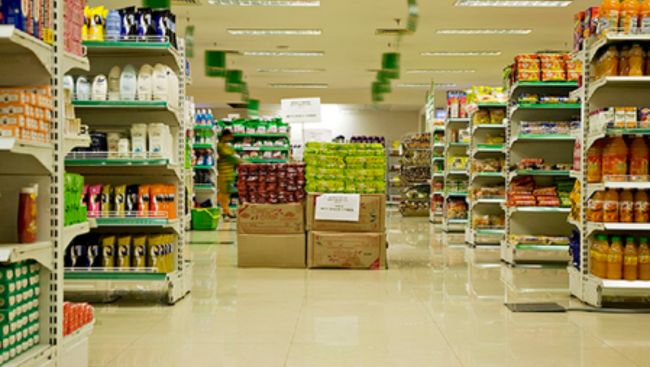
The GST Council on Wednesday approved historical changes to India's indirect tax structure — adopting a 5 per cent and 18 per cent tax structure — and several daily-use goods will become cheaper from September 22. 

From groceries and fertilisers to footwear, textiles, and even renewable energy, a broad basket of goods and services is set to become more affordable. Items earlier taxed at 12 per cent and 28 per cent will now largely migrate to the other two slabs, making a wide range of products cheaper.

Food and daily essentials

Milk products: Ultra-high temperature (UHT) milk will now be tax-free (down from 5 per cent), while condensed milk, butter, ghee, paneer, and cheese have moved from 12 per cent to 5 per cent or nil in some cases.

Staple foods: Malt, starches, pasta, cornflakes, biscuits, and even chocolates and cocoa products will see rates reduced from 12–18 per cent to 5 per cent.

Dry fruits and nuts: Almonds, pistachios, hazelnuts, cashews, and dates, earlier taxed at 12 per cent, will now attract just 5 per cent.

Sugar and confectionery: Refined sugar, sugar syrups, and confectionery items like toffees and candy have shifted to the 5 per cent slab.

Other packaged foods: Vegetable oils, animal fats, edible spreads, sausages, meat preparations, fish products, and malt extract-based packaged foods have been moved to the 5 per cent slab.

Namkeens, bhujia, mixture, chabena and similar edible preparations ready for consumption form (other than roasted gram), pre-packaged and labelled to go from 18 per cent to 5 per cent.

Waters, including natural or artificial mineral waters and aerated waters, not containing added sugar or other sweetening matter, nor flavoured to move from 18 per cent to 5 per cent.

Agriculture and fertilisers

Fertilisers are down from 12 per cent/18 per cent to 5 per cent.

Select agricultural inputs, including seeds and crop nutrients, have been rationalised from 12 per cent to 5 per cent.

Healthcare

Life-saving drugs, health-related products, and some medical devices have seen rate cuts from 12 per cent/18 per cent to 5 per cent or nil.

Consumer goods

Entry-level and mass-use items like select electrical appliances will move from 28 per cent to 18 per cent.

Footwear and textiles have seen GST cut from 12 per cent to 5 per cent, reducing costs for mass-market products.

However, certain goods and services remain firmly under higher taxation.

Pan masala, gutkha, cigarettes, chewing tobacco, zarda, unmanufactured tobacco, and bidi will continue under existing high GST rates and compensation cess until outstanding cess-linked loans are cleared.

Additionally, the valuation of these products will now be shifted to Retail Sale Price (RSP) instead of transaction value, tightening compliance.

All goods (including aerated waters), containing added sugar or other sweetening matter or flavoured to go from 28 per cent to 40 per cent.

A new 40 per cent slab for sin and luxury goods remains, ensuring that items like cigarettes, premium liquor, and high-end cars don’t see tax relief.

Imported armoured luxury sedans will be exempt only in special cases, such as those brought in by the President’s Secretariat.

Picture Courtesy: IANS

MORE India ARTICLES

AAP protests against FCI's slow procurement of paddy from Punjab

AAP protests against FCI's slow procurement of paddy from Punjab
The Aam Aadmi Party (AAP) held a protest on Wednesday against the BJP-led Central government over the slow procurement of paddy and lifting of old grain from Punjab’s markets. As AAP leaders were about to gherao the BJP’s office, the Chandigarh Police detained them and used water cannons to stop them.

AAP protests against FCI's slow procurement of paddy from Punjab

Punjab Police arrested 153 big drug smugglers this year: DGP Gaurav Yadav

Punjab Police arrested 153 big drug smugglers this year: DGP Gaurav Yadav
Pertinently, Punjab Police have adopted a twin approach to tackle the drug menace, focusing on cracking down on big fish and targeting drug sellers at the point of sale, including villages and mohallas.

Punjab Police arrested 153 big drug smugglers this year: DGP Gaurav Yadav

India realising Atmanirbhar Bharat vision: Sarbananda Sonowal

India realising Atmanirbhar Bharat vision: Sarbananda Sonowal
Union Minister Sarbananda Sonowal on Wednesday said that the country is realising the vision Atmanirbhar Bharat under the leadership of Prime Minister Narendra Modi. Sonowal attended the meeting on the Final Master Plan of Dibrugarh - Vision 2045 - by the Dibrugarh Development Authority (DDA) here today.

India realising Atmanirbhar Bharat vision: Sarbananda Sonowal

RG Kar protests: Junior doctors, common people take out torch rally to CBI office

RG Kar protests: Junior doctors, common people take out torch rally to CBI office
The rally started in front of the office of the West Bengal Medical Council, also at Salt Lake and ended at the Central Government Office (CGO) complex which houses the office of the CBI's special crime unit.

RG Kar protests: Junior doctors, common people take out torch rally to CBI office

Deepotsav 2024: Ayodhya sets two records with over 25 lakh diyas and 1,121 people performing aarti

Deepotsav 2024: Ayodhya sets two records with over 25 lakh diyas and 1,121 people performing aarti
In the first Deepotsav after the consecration of the Ram Temple this January, Ayodhya on Wednesday set yet another record as over 25 lakh diyas were lit on the bank of the Saryu River. During Deepotsav 2024, a record-breaking 25,12,585 diyas lit up the city -- surpassing last year’s count of 22.23 lakh -- and 1,121 Vedacharyas jointly performed the Sarayu aarti, setting another milestone.

Deepotsav 2024: Ayodhya sets two records with over 25 lakh diyas and 1,121 people performing aarti

India and China complete disengagement process in Eastern Ladakh

India and China complete disengagement process in Eastern Ladakh
Troops on both sides have been withdrawn to be stationed at depth in the rear locations as part of the disengagement process. The patrolling, which will be undertaken to points hitherto inaccessible since April 2020, will be done by small parties of troops numbering around 10 to 15 soldiers.

India and China complete disengagement process in Eastern Ladakh