
Sunday, December 21, 2025
ADVT 
India

GST 2.0: What gets cheaper and costlier from Sep 22

Darpan News Desk IANS, 03 Sep, 2025 11:03 AM
  • GST 2.0: What gets cheaper and costlier from Sep 22

The GST Council on Wednesday approved historical changes to India's indirect tax structure — adopting a 5 per cent and 18 per cent tax structure — and several daily-use goods will become cheaper from September 22. 

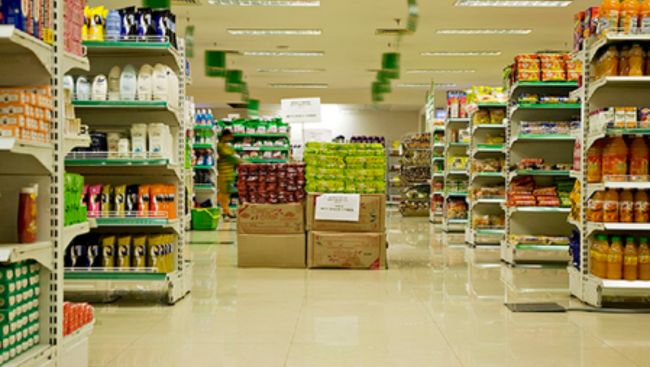
From groceries and fertilisers to footwear, textiles, and even renewable energy, a broad basket of goods and services is set to become more affordable. Items earlier taxed at 12 per cent and 28 per cent will now largely migrate to the other two slabs, making a wide range of products cheaper.

Food and daily essentials

Milk products: Ultra-high temperature (UHT) milk will now be tax-free (down from 5 per cent), while condensed milk, butter, ghee, paneer, and cheese have moved from 12 per cent to 5 per cent or nil in some cases.

Staple foods: Malt, starches, pasta, cornflakes, biscuits, and even chocolates and cocoa products will see rates reduced from 12–18 per cent to 5 per cent.

Dry fruits and nuts: Almonds, pistachios, hazelnuts, cashews, and dates, earlier taxed at 12 per cent, will now attract just 5 per cent.

Sugar and confectionery: Refined sugar, sugar syrups, and confectionery items like toffees and candy have shifted to the 5 per cent slab.

Other packaged foods: Vegetable oils, animal fats, edible spreads, sausages, meat preparations, fish products, and malt extract-based packaged foods have been moved to the 5 per cent slab.

Namkeens, bhujia, mixture, chabena and similar edible preparations ready for consumption form (other than roasted gram), pre-packaged and labelled to go from 18 per cent to 5 per cent.

Waters, including natural or artificial mineral waters and aerated waters, not containing added sugar or other sweetening matter, nor flavoured to move from 18 per cent to 5 per cent.

Agriculture and fertilisers

Fertilisers are down from 12 per cent/18 per cent to 5 per cent.

Select agricultural inputs, including seeds and crop nutrients, have been rationalised from 12 per cent to 5 per cent.

Healthcare

Life-saving drugs, health-related products, and some medical devices have seen rate cuts from 12 per cent/18 per cent to 5 per cent or nil.

Consumer goods

Entry-level and mass-use items like select electrical appliances will move from 28 per cent to 18 per cent.

Footwear and textiles have seen GST cut from 12 per cent to 5 per cent, reducing costs for mass-market products.

However, certain goods and services remain firmly under higher taxation.

Pan masala, gutkha, cigarettes, chewing tobacco, zarda, unmanufactured tobacco, and bidi will continue under existing high GST rates and compensation cess until outstanding cess-linked loans are cleared.

Additionally, the valuation of these products will now be shifted to Retail Sale Price (RSP) instead of transaction value, tightening compliance.

All goods (including aerated waters), containing added sugar or other sweetening matter or flavoured to go from 28 per cent to 40 per cent.

A new 40 per cent slab for sin and luxury goods remains, ensuring that items like cigarettes, premium liquor, and high-end cars don’t see tax relief.

Imported armoured luxury sedans will be exempt only in special cases, such as those brought in by the President’s Secretariat.

Picture Courtesy: IANS

MORE India ARTICLES

PM Modi meets Presidents of UAE and Uzbekistan before concluding 'successful' Russia visit

PM Modi meets Presidents of UAE and Uzbekistan before concluding 'successful' Russia visit
Prime Minister Narendra Modi wrapped up his visit to the Russian city of Kazan on Wednesday after participating in the restricted and open sessions of the 16th BRICS Summit and holding the much-awaited bilateral meeting with the Chinese President Xi Jinping. Just before flying back home, PM Modi also held meetings with the Presidents of the United Arab Emirates (UAE) and Uzbekistan.

PM Modi meets Presidents of UAE and Uzbekistan before concluding 'successful' Russia visit

AI adoption can generate Rs 33.8 lakh cr worth economic value by 2030: Hardeep Puri

AI adoption can generate Rs 33.8 lakh cr worth economic value by  2030: Hardeep Puri
Addressing an event in the national capital, Minister Puri underscored the pivotal role of AI in transforming the energy sector, emphasising that AI is set to revolutionise operations, drive efficiency and accelerate the shift towards a more sustainable energy landscape.

AI adoption can generate Rs 33.8 lakh cr worth economic value by 2030: Hardeep Puri

Punjab CM seeks incentives for industry on par with hill states

Punjab CM seeks incentives for industry on par with hill states
Presenting Punjab's industrial growth before a team of NITI Aayog, Chief Minister Bhagwant Mann on Wednesday sought incentives for industry of the state on a par with neighbouring hill states. Addressing the gathering during the inaugural session of a workshop on MSME exports as drivers of growth for Punjab, the Chief Minister said that "it is the need of the hour to give subsidies and incentives to the industrialists of Punjab on a par with the hill states".

Punjab CM seeks incentives for industry on par with hill states

Cyclone Dana: High alert issued across West Bengal

Cyclone Dana: High alert issued across West Bengal
The administration in West Bengal is on high alert while all necessary precautionary measures have been taken to minimize the impact of Cyclone Dana which is expected to make a landfall between Bhitarkanika of Kendrapara district and the Dhamara area of Bhadrak district. Flight services have been cancelled at Netaji Subhas Chandra Bose International Airport in Kolkata for 15 hours from Thursday.

Cyclone Dana: High alert issued across West Bengal

Massive fire erupts in Kolkata retail market, 15 fire-tenders at spot

Massive fire erupts in Kolkata retail market, 15 fire-tenders at spot
A major fire broke at the busy marketplace of Ezra Street in central Kolkata on Wednesday night. As per the information, as many as 15 fire-tenders have rushed to the spot and are trying to extinguish as well as prevent the fire from spreading further.

Massive fire erupts in Kolkata retail market, 15 fire-tenders at spot

Punjab CM responsible for plight of farmers in procuring paddy: Akali Dal

Punjab CM responsible for plight of farmers in procuring paddy: Akali Dal
The Shiromani Akali Dal (SAD) on Tuesday said Punjab Chief Minister Bhagwant Mann was responsible for the plight of farmers in the markets, saying that they were suffering because they had adhered to the appeal of the government and sown early varieties of paddy like PR-126 which were now not being procured.

Punjab CM responsible for plight of farmers in procuring paddy: Akali Dal