Monday, April 20, 2026
ADVT 
India

India concerned over civilian casualties in Lebanon, calls for adherence to international law

Darpan News Desk IANS, 10 Apr, 2026 10:53 AM
  • India concerned over civilian casualties in Lebanon, calls for adherence to international law

India on Friday expressed its concern over the reports of civilian casualties in Lebanon, emphasising that the direction of recent events is very disturbing.

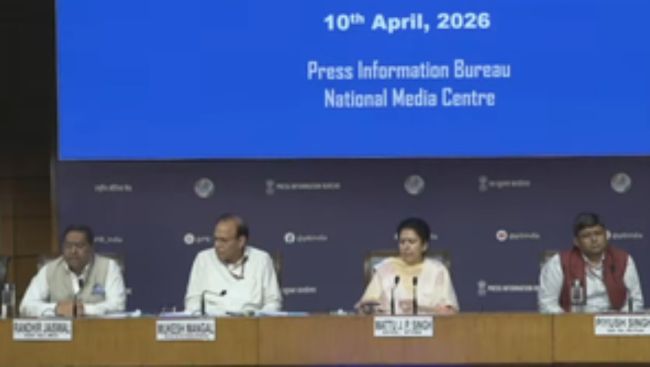
While addressing an inter-ministerial briefing on recent developments in West Asia in New Delhi on Friday, Ministry of External Affairs (MEA) spokesperson Randhir Jaiswal called for adherence to international law and respecting the sovereignty and territorial integrity of states. He stated that the Indian Embassy remains in touch with the Indian community in Lebanon.

"We are deeply concerned by reports of a large number of civilian casualties in Lebanon. As a troop contributing country to the UNIFIL that is invested in Lebanon’s peace and security, the direction of events is very disturbing. India has always emphasised the protection of civilians as the foremost priority. Observing international law, and respecting sovereignty and territorial integrity of states is essential. Our Embassy in Lebanon remains in close touch with the Indian community for its safety and security," Jaiswal stated.

According to the MEA spokesperson, there are about 1,000 Indian nationals in Lebanon currently. 

His statement comes after a two-week ceasefire between the United States and Iran took effect on Wednesday, with peace talks scheduled to begin on Saturday. However, Israel has said that the ceasefire does not cover military action in Lebanon.

On April 8, Israel Prime Minister's Office expressed support for the US decision to suspend strikes on Iran. However, it mentioned that the two-week truce does not include military operations in Lebanon.

Hours after the temporary truce was announced between the United States and Iran, Israel claimed of giving Hezbollah one of the biggest blows by attacking "100 targets in 10 minutes" with Israeli Prime Minister Benjamin Netanyahu insisting that Lebanon was not part of the ceasefire deal. 

Asserting that Tehran is beaten and weaker than ever with its missile production machinery destroyed completely, Reuven Azar, the Ambassador of Israel to India, on Thursday told IANS that Israel will continue to respond to the threat posed by Hezbollah.

"We have made this clear, and the American administration has confirmed it. We were attacked unilaterally by Hezbollah, that has violated not only this ceasefire but also terms that were signed last year. They were not supposed to operate in southern Lebanon. The Lebanese government committed to disarming them, but that has not happened. Therefore, we are defending ourselves, especially our border communities, which have been heavily targetted by Iranian missiles and anti-tank weaponry," Azar told IANS in an exclusive interview. 

Israel Defence Forces (IDF) said on Wednesday that it has stopped operations against Iran but continues to conduct targetted ground operations against Hezbollah.

"In accordance with directives from the political echelon, the IDF has ceased fire in the operation against Iran, and is highly prepared to respond defensively against any violation. Overnight, the IDF conducted a wide-scale wave of strikes targeting missile launch sites and launchers across Iran, in order to significantly degrade its launching capabilities. Simultaneously, in Lebanon, the IDF is continuing to conduct targeted ground operations against Hezbollah. The IDF will continue to operate across all fronts to defend Israel," IDF posted on X.

Picture Courtesy: IANS
MORE India ARTICLES

War, energy and power: Why India matters now

War, energy and power: Why India matters now
The ongoing war in West Asia is not just a conflict of armies; it is a failure of imagination, restraint, and timely diplomacy. It reflects a world that understood the risks but chose delay over decision, and rhetoric over resolution. What we are witnessing today is not an unexpected crisis, but the outcome of ignoring peace when it was still possible. 

War, energy and power: Why India matters now

PM Modi discusses West Asia conflict with Bahrain King, condemns attacks on energy infrastructure

PM Modi discusses West Asia conflict with Bahrain King, condemns attacks on energy infrastructure
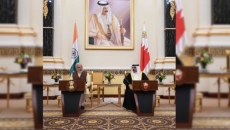
Prime Minister Narendra Modi on Friday discussed the current situation in West Asia with Bahrain's King Hamad Bin Isa Al Khalifa and condemned the attacks on the energy and civilian infrastructure in the region.

PM Modi discusses West Asia conflict with Bahrain King, condemns attacks on energy infrastructure

‘In solidarity with Qatar’: PM Modi condemns attacks on energy infrastructure in West Asia​

‘In solidarity with Qatar’: PM Modi condemns attacks on energy infrastructure in West Asia​
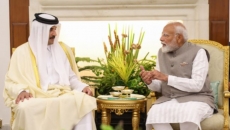
In a strong display of diplomatic support, Prime Minister Narendra Modi held a telephone conversation with the Amir of Qatar, Sheikh Tamim bin Hamad Al Thani, on Thursday to convey warm Eid greetings and firmly reiterate India’s condemnation of the recent attacks on energy infrastructure in the Gulf region. ​

‘In solidarity with Qatar’: PM Modi condemns attacks on energy infrastructure in West Asia​

India's BRICS Presidency faces diplomatic test amid Middle East tensions: Report

India's BRICS Presidency faces diplomatic test amid Middle East tensions: Report
India's 2026 BRICS presidency is expected to test New Delhi’s diplomacy even more than its highly successful presidency of the G20 as BRICS members - including Iran, the UAE and Saudi Arabia - navigate divergent positions amid the escalating conflict in the Middle East. The question, a report highlighted on Thursday, is how India would be able to forge consensus language acceptable to all sides.

India's BRICS Presidency faces diplomatic test amid Middle East tensions: Report

Canada-India academic ties create pathways for future talent: Report

Canada-India academic ties create pathways for future talent: Report
Canadians stand to benefit from India’s intellectual capital, reinforcing prosperity in an increasingly competitive global landscape. Recent progress in education mobility between Canada and India offers a vital opportunity to restore people-to-people ties impacted by visa restrictions, a report has highlighted.

Canada-India academic ties create pathways for future talent: Report

Indian refineries increase LPG production by 36 per cent to plug import gap

Indian refineries increase LPG production by 36 per cent to plug import gap
India’s domestic refineries have stepped up LPG production as much as 36 per cent to fill the gap in imports caused by the disruption due to the closure of the Strait of Hormuz because of the Iran war, according to a statement issued by the Ministry of Petroleum and Natural Gas on Monday.  

Indian refineries increase LPG production by 36 per cent to plug import gap