India, which contributed over four million soldiers during the two World Wars and has fought five sub-continental wars since Independence, must come to terms with its military history. Otherwise the war memorial of the kind envisaged in the national capital would be jingoistic, says the author of a new book on this country's effort during WW-I.
"As a country, we are perhaps uncomfortable with the role of the military. We need greater emphasis on the role of the armed forces, particularly post-Independence. We need to be quite open about our military history... otherwise the (proposed) war memorial becomes a jingoistic exercise," Vedica Kant, whose first book, "India and the First World War", has just been published, told IANS in an interview.
"We need to be quite open about our military history. We need to examine the campaigns our armed forces were involved in; what went right and what went wrong.
"Our military history post-1947 has not been properly chronicled. For instance, we still have not officially released the Henderson-Brooks report (on the 1962 debacle against China)," added Kant, who is in her late 20s and is currently based in London where she works for a leading political risk consultancy.
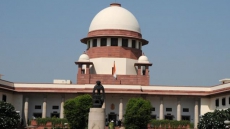
(Presenting the budget for 2014-15 on July 10, Defence Minister Arun Jaitley announced that a National War Memorial and Museum would be built for Rs. 400 crore ($65,000) in the vicinity of the India Gate memorial to the unknown soldier. India Gate was built in memory of the Indian soldiers who had died during the First World War.)
Kant has an M.Phil degree from Oxford and and a Bachelor's degree from Singapore Management University. Quite appropriately, the title of her profusely illustrated book (Lustre Press/Roli Books) is prefaced with: "If I die here, who will remember me?" and has a forward by noted author Amitav Ghosh.
Thus, what did the Great War mean for Indian soldiers who had to fight a battle they were unprepared for, in lands they had never seen, against an enemy they didn't know and hitherto unheard of forms of warfare? How did the war impact the political climate in India?
Using first-hand accounts such as letters home, documents from various archives and rare photographs, Kant reconstructs the story of a war which was as much India's as it was England's.
The book documents, for the first time, India's contribution to the First World War, with details of the different theatres in which Indian soldiers took part. Additionally, Kant also examines the unsettling encounters the Indian soldiers had with foreign, especially European, culture and how it impacted the way they viewed life and living back home.
As for the conclusions to be drawn from the Indian effort, Kant writes: "In addition to its impact on the national politics of India, at a more micro level, the war had a bearing on the quotidian lives of the millions of soldiers who had experienced it first hand and were, in fact, significant contributors to its outcome. It is almost impossible to document or distil into one clear, coherent narrative the precise manner in which the war impacted its Indian participants. What the soldiers and other non-combatants made of the war and how they were influenced by it was determined by very individual factors such as theatre of battle, religion, class, caste and regional identity to name just a few."
She adds: "Despite these discrepancies in response, there is no doubt that most of the Indian troops returned from the war as changed men. In the words of one British officer, the Indian soldier could now be called a 'man of the world'. This worldliness also manifested itself in the politics of the retired soldiers. One of the most interesting outcomes of the war was the impact it had on the development of a political consciousness among some former soldiers and their role in the burgeoning national movement."