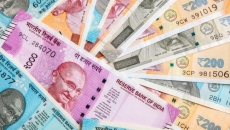
Tens of thousands of people struggled in paying for daily essentials on Wednesday, a day after Prime Minister Narendra Modi invalidated the large currency notes of Rs 500 and 1,000 in a bid to crack down on unaccounted wealth, corruption and terror financing.
The impact of the decision was evident as shopkeepers refused to accept the large currency notes available with common people mostly to serve their daily cash requirements, in a country where almost all ATMs would largely disburse mostly Rs 500 or 1,000 bills.
According to Reserve Bank of India data, Rs 17,54,000 crore worth of currency is in circulation in the country, out of which 45 per cent is accounted for by Rs 500 notes and 39 per cent for Rs 1,000 notes.
In other words, Rs 16,32,000 crore worth of currency stands demonetised after the government's Tuesday midnight shocker. Of course, a large proportion of this would be with the banks reducing the amount in circulation.
Chaos reigned at petrol pumps, tourist places and toll plazas across India as outlets were running out of smaller bills, hampering the effort of consumers to buy anything that cost less than Rs 500 or Rs 1,000, even though many outlets were legally allowed to accept the big notes for 72 hours.

Sachin Chaudhary said he wanted to buy vegetables. The married MNC employee in Delhi carried Rs 100 notes and was confident of not facing any hiccups.
"But the vendor refused. He said he had not been able to buy vegetables from the wholesale market for lack of enough smaller notes," Chaudhary told IANS, sharing his early morning predicament.
The government on Tuesday announced that Rs 500 and 1,000 notes would be accepted at petrol pumps, milk booths run by the government and also to buy medicines.
But that didn't help as chaos reigned at milk booths with people making a mad rush to the outlets to get change for the large bills.
"The government should have provided us with adequate change, especially 100 rupee notes, before implementing such a big decision," Brij Bhushan Tiwari, a Delhi petrol pump owner, told IANS.

Mamata Jha, a 60-year-old diabetic patient, went to buy some medicine, hoping that chemists would easily accept the large currency notes.
But she came in for a rude shock when she was told by a chemist in north Delhi that he could not render her Rs 150 change from a Rs 1,000 note.
"My medicine costs 850 rupees. The chemist handed me over a written slip for 150 rupees saying it can be exchanged for some medicine whenever I wanted to buy it. I refused and he said he was also helpless," Jha told IANS.
There were complaints that some small traders and shop owners were using the opportunity to mint extra money.
Some of the small general and provisional stores are charging Rs 50-100 from customers for accepting Rs 500 and Rs 1,000 notes.
In Koklata, Agra and other places, tourists and traders from various countries seem hard hit by the acute cash crisis. For foreign buyers, the problem has been compounded since all banks and ATM cubicles were closed on Wednesday.

Foreign tourists visiting the Taj Mahal in Agra had a tough time when the Archaeological Survey of India (ASI) refused to accept Rs 500 and Rs 1,000 notes as entry fee.
ASI chief Bhuvan Vikram told IANS: "There's little that we can do. We have displayed the government order on the ticket windows. It is a government policy. How can we help?"
A tourist from from the US, Liza, 29, asked: "This is no way and what is our fault?"
In Mumbai, all daily cash transactions choked up as people experienced the first impact of the decision after frantically running about to secure change for Rs 500 and Rs 1,000 notes as three-wheeler drivers and cabbies refused to accept these.
The wholesale fresh fruits and vegetables market in Navi Mumbai experienced piling up of perishable goods as most wholesalers turned up with the banned currency notes.
"We are asking the banks to allow us to accept these notes and cooperate in exchanging them later. Failing this huge quantities of fresh goods which came from farms will perish and the farmers and traders could incur losses worth crores of rupees," said an official.
A similar story was repeated in several other parts of the country.

NEW RS 500, RS 2,000 NOTES AT ATMS FROM FRIDAY
Amid confusion over ATMs being able to disburse large amounts of Rs 100 notes when they reopen on Friday, Finance Secretary Ashok Lavasa clarified on Wednesday that new currency notes of Rs 500 and Rs 2,000 value will also be available for people to withdraw.
The confusion arose after the demonetisation of Rs 500 and Rs 1,000 notes announced by Prime Minister Narendra Modi on Tuesday, following which people found it hard to get hold of Rs 100 notes for transactions.
"There will not be any problem as it (Rs 500 and Rs 2,000 notes) will be available from Nov 11 in all ATMs," Lavasa said.
The government had already announced on Tuesday that while ATMs will be shut for two days, once they reopen on Friday, a person can withdraw up to Rs 2,000 per day through a single card till November 18.
Thereafter, the limit will be increased to Rs 4,000 per day.
"The Reserve Bank will closely monitor the fresh notes that will be issued. The cash withdrawal restrictions will ease once supplies of new Rs 2,000 and Rs 500 notes improve," Lavasa added.
As per data available with the Reserve Bank of India (RBI), Rs 17,54,000 crore worth of currency is in circulation in India, out of which 45 per cent is accounted for by Rs 500 notes and 39 per cent by Rs 1,000 notes.
In other words, Rs 6,32,000 crore worth of currency stands demonetised.