Wednesday, July 1, 2026
ADVT 
India

Kids In India Show Religious Tolerance: Study

Darpan News Desk IANS, 15 Jun, 2018 11:52 AM
    Turns out, children in India have a remarkable level of acceptance of different religions' rules and practices.
     
     
    A University of California-Santa Cruz study found that both Hindu and Muslim children in India thought that Hindu children should follow Hindu norms and Muslim children should follow Muslim norms.
     
     
    "Even in a region with a long history of high religious tension, we see impressive levels of religious tolerance among children," said co-author Audun Dahl. "Children think that people in different religions should follow their own norms--and that's a starting point, a reason for optimism."
     
     
    Very little research has been done on how children reason about religious norms, despite the fact that differences between religious norms underpin conflicts around the globe, including Catholic/Protestant clashes in Europe and differences among Sunni and Shia Muslims, noted Dahl. Religious norms dictate practices from clothing and land ownership to reproduction, he said, with adult adherents frequently wanting others to adhere to their norms.
     
     
    "Children expressed preferences for their own religion, but we found no evidence of children rejecting the norms of the other religion," said Dahl, adding that such tolerance is the first step toward greater harmony.
     
     
    The study took place in Gujarat, India, a region with a history of Hindu-Muslim violence. Investigators worked with 100 children ages 9 to 15, focusing on different Hindu norms, such as the prohibition against eating beef, and Muslim norms, such as the prohibition against worshipping an idol. They also asked the children about hitting people to explore the youngsters' reasoning around moral norms.
     
     
    These findings offered hope that exposure to conflicts over religious differences, like those experienced by children in many regions of the world, need not lead children to develop negative attitudes toward the religious practices of other groups. "Rather, perhaps these levels of understanding will play a role in reducing conflict over time," said Dahl.
     
     
    The study is published in Child Development.
    MORE India ARTICLES

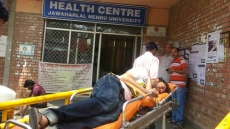
    JNU Hunger Strike: Kanhaiya Kumar’s Health Worsens, Hospitalised

    JNU Hunger Strike: Kanhaiya Kumar’s Health Worsens, Hospitalised
    Kanhaiya Kumar, the JNU Students Union (JNUSU) president, and 19 other students are on an indefinite hunger strike since April 28 to protest against the punishment handed out to them by a high-level committee.

    JNU Hunger Strike: Kanhaiya Kumar’s Health Worsens, Hospitalised

    Seven Killed As Tents Collapse In Ujjain Ardh Kumbh

    Seven Killed As Tents Collapse In Ujjain Ardh Kumbh
    At least seven people were killed and nearly 50 injured at the Ardh Kumbh Mela here on Thursday when some temporary structures collapsed after strong winds and heavy rains, officials said.

    Seven Killed As Tents Collapse In Ujjain Ardh Kumbh

    BJP-Congress trade charges in AgustaWestland debate

    BJP-Congress trade charges in AgustaWestland debate
    The Bharatiya Janata Party on Wednesday accused the previous UPA government of "twisting norms" in the process of procuring VVIP choppers from AgustaWestland.

    BJP-Congress trade charges in AgustaWestland debate

    Vijay Mallya's Resignation From Rajya Sabha Accepted

    Vijay Mallya's Resignation From Rajya Sabha Accepted
    Rajya Sabha sources said Mallya sent another resignation letter to the chairman before the house could have taken the ethics panel report seeking his expulsion "with immediate effect".

    Vijay Mallya's Resignation From Rajya Sabha Accepted

    Modi Does Not Have Delhi University Degree, Alleges Kejriwal

    Prime Minister Narendra Modi does not have a BA degree from the Delhi University (DU) as claimed by him, Delhi Chief Minister Arvind Kejriwal alleged on Wednesday.

    Modi Does Not Have Delhi University Degree, Alleges Kejriwal

    Punjab To Develop 200 Smart Villages For Rs.2,000 Crore

    Punjab To Develop 200 Smart Villages For Rs.2,000 Crore
    The villages will be provided with ultra-modern facilities like 4G connectivity, solar street lights, sewa kendras (service centres), sewerage and drainage facilities, bank branches and model schools etc

    Punjab To Develop 200 Smart Villages For Rs.2,000 Crore