Monday, December 22, 2025
ADVT 
India

Modi calls for legal frameworking of 'Swachh Bharat' mission

Darpan News Desk IANS, 19 Sep, 2014 02:33 PM
    Prime Minister Narendra Modi Friday stressed the need for creating a legal architecture to institutionalize his "Swachh Bharat" national sanitation campaign to be launched on Oct 2, with the aim of creating a clean India by 2019.
     
    He was chairing a high-level meeting to review preparations for the launch of Mission Swachh Bharat, the Prime Minister's Office (PMO) said in a statement. 
     
    The clean India campaign should become the agenda of the entire country, Modi said at the meeting.
     
    "Towns along river bank of the Ganga and its tributaries will be accorded top priority in Mission Swachh Bharat," the PMO said. 
     
    Scientist Raghunath Anant Mashelkar, former director general of the Council of Scientific and Industrial Research, has been named the chair of an expert panel to recommend best technologies for the campaign
     
    The 19-member expert committee has been asked to examine best technologies on sanitation and water so that they can be scaled up on a sustainable basis in various states -- with affordability, sustainability, scalability and quality as the main criteria.
     
    The terms of reference include achieving Prime Minister Modi's "Swachh Bharat" goals by 2019, with an emphasis on areas like potable water and sanitation, while also examining the environmental impact of each technology compared with its uses, officials said.
     
    Ahead of naming the committee, Modi had invited ideas from people at large on the design of Mission Swachh Bharat, and announced that the programme will be launched Oct 2, the birthday of Mahatma Gandhi.
     
    "Mission Swachh Bharat aspires to realise Gandhiji's dream of a clean India through 'jan bhagidari' (people's participation). Together, we can make a big difference," Modi had tweeted.
     
    The committee has also been asked to examine the uses of these technologies in different agro-climatic zones in the country, and also suggest what non-technological innovations will be needed in terms of policy and fiscal measures, to put them in effective use.
     
    The committee has also been asked to recommend innovative ways by which all stake-holders -- government, utilities, service providers, non-profits and other institutions -- can be roped in to create a powerful network to deliver the larger objective.
     
    Members include Anand Sekhar of Global Sanitation Fund, H.S. Shankar of IIT-Mumbai, G. Vasdeo of NARDEP, Markand Phadke of Reliance Innovation Leadership Centre, Jayesh Patel of Safai Mahavidyalaya, Satish Wate of NEERI and Vinay Sahasrabhuddhe of Public Policy Research Centre.
     
    The panel also includes senior officials from the ministry of drinking water and sanitation, and representatives from the state governments of Gujarat and Maharashtra. Rajesh Kumar, director for water in the central nodal ministry, is member secretary.

    MORE India ARTICLES

    Delhi Police studies Surat's CCTV system

    Delhi Police studies Surat's CCTV system
    A Delhi Police team Tuesday went to Surat in Gujarat to study the CCTV cameras installed there in the public-private partnership (PPP) model.

    Delhi Police studies Surat's CCTV system

    Dehradun shootout: Life imprisonment for 17 policemen

    Dehradun shootout: Life imprisonment for 17 policemen
    A Delhi court Monday awarded life imprisonment to 17 of the 18 policemen convicted of killing a 22-year-old MBA student in a fake shootout in Dehradun in 2009.

    Dehradun shootout: Life imprisonment for 17 policemen

    Five bodies found in Himachal river, 21 still missing

    Five bodies found in Himachal river, 21 still missing
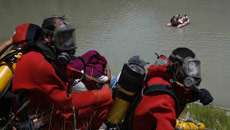
    The bodies of five engineering students were retrieved Monday from the Beas river in Himachal Pradesh's Mandi district while a search is on for 21 others who were washed away. A court described it as "consequence of utter and callous negligence".

    Five bodies found in Himachal river, 21 still missing

    President lists how Modi's 'acche din' are here to come

    President lists how Modi's 'acche din' are here to come
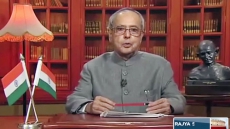
    If "acche din aane wale hain" or good days are to come was Prime Minister Narendra Modi's vote-pulling election slogan, President Pranab Mukherjee Monday outlined "how" in his 55-minute address to a joint session of parliament, listing the new government's priorities in areas ranging from domestic issues to foreign policy.

    President lists how Modi's 'acche din' are here to come

    More Indians fancying foreign vacations this summer

    More Indians fancying foreign vacations this summer
    A strengthening rupee, the impact and influence of social media and, most importantly, the yearning of Indian travellers to explore the world, especially during the ongoing summer vacation, is contributing to the robust growth of India's outbound travel sector.

    More Indians fancying foreign vacations this summer

    Chinese foreign minister meets Sushma Swaraj, 'all issues' on table

    Chinese foreign minister meets Sushma Swaraj, 'all issues' on table
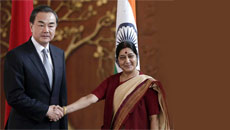
    China Sunday made contact with the new Indian government as its Foreign Minister Wang Yi, special envoy of President Xi Jinping, held talks with External Affairs Minister Sushma Swaraj here, during which "all issues of significance" were on the table, including the unsettled border, Tibet and stapled visas besides a boost in trade ties.

    Chinese foreign minister meets Sushma Swaraj, 'all issues' on table