As Narendra Modi resumes the task of continuing the economic reforms even if it means administering "bitter medicine", the first dose of which was given on Friday, one might have expected the Congress to offer him wholehearted support.
Such a gesture would have been normal considering that the former finance minister, P. Chidambaram, admitted that his government made a mistake by taking the "foot off the accelerator of reforms" in the last two years before its unlamented demise.
However, now that the new prime minister has decided to step on the gas albeit with the warning that the harsh measures under the reforms are likely to make a "dent" in his popularity, at least Chidambaram should be pleased that his unfinished task is being completed.
Instead, the Congress's negative reaction was confirmed by its criticism of the railway fare and freight hikes although these were proposed by its own government before it left office. This attitude not only demonstrates a sense of cussedness, but is probably also motivated by the fear that all its profligate programmes are now in danger of being junked.
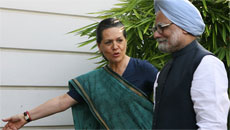
It is worth nothing that for the first time since the reforms were initiated, the Modi government is serious about implementing them. Unlike Manmohan Singh, who had been apologetic about the reforms because of resistance from the Left (between 2004 and 2008) and from the left-leaning members of the Congress led by Sonia Gandhi, Modi is likely to go full steam ahead with what the communists decry as a pro-capitalist, "neo-liberal" agenda.
This template is expected to include the cutting of subsidies, which were the lifeblood of Sonia Gandhi's populism, a preference for imposing user charges and removing environmental and other bottlenecks for industrial projects such as the complicated land acquisition process drafted by the previous government.
All of this cannot but raise the hackles of the "socialists" in the Congress and of the mainstream Left, who will see these measures as a capitulation to the corporate lobby. Unfortunately, those in the Congress like the former dream team of Manmohan Singh, Chidambaram and Montek Singh Ahluwalia, who may secretly endorse Modi's initiatives, are expected to maintain a deafening silence.
It is their tendency to avoid speaking the unpleasant truth to the Congress president which led to the party downhill. Yet, there is unlikely to be any reversal of this suicidal mentality. The reason is the ingrained belief in the Indian political class that it is the bounden duty of the opposition to oppose even if the government's proposals are aimed at economic revival.
This reflexive response is largely due to the absence of an ideological approach to the economic issues among politicians. To many of them, politics is a matter of manipulating castes through the quota system and promising freebies. If there is an ideology, it has a Leftist bias with its innate animus against businessmen, who are invariably pilloried as rapacious.
Since Modi is an exception among politicians in this respect, he has always stood out as a distinctive figure. However, if he embarks on a capitalist path, the flutter in the political field, including the saffron camp, can well be imagined.
It is difficult to say what his first major initiative will be. The railway fare and freight hikes are, after all, an implementation of a pending proposal. The budget, therefore, is expected to provide the real roadmap.
But, notwithstanding the bullish conduct of the stock market, the investors will be wary because it is still uncertain whether Modi's declarations of intent are tactical or denote a genuine change of stance which militates against the saffron lobby's protectionism represented by the Swadesh Jagran Manch (SJM).
The reason for the uncertainty is that no Indian government has ever followed a patently capitalist path. There has only been a reluctant transition from a mixed (which was derisively called mixed-up) economy to a market-dominated one although, as Manmohan Singh said, "the logic of an open economy and its benefits are still not widely understood among the general public . The instinctive reaction of many, both in the political class and in the public at large, is to revert to a state-controlled system".
The point remains, therefore, that by tilting against what Harsh Mander, a former member of Sonia Gandhi's left-of-centre National Advisory Council (NAC) described as welfare economics, Modi will be putting the country on a new course, which will be fundamentally different from the half-hearted reforms of the past.
For the Bharatiya Janata Party's (BJP) opponents, however, the cutbacks in subsidies, higher fares, new labour laws, et al will be a godsend since they will provide an opportunity to take to the streets in protest against the government's "anti-poor" policies.
Whether they will politically gain from the agitations or be exposed as anti-development is not known. But, the country obviously faces a situation when it either has to make up its mind to be a part of the global economy or regress to a closed, autarkic system of the kind when it crawled at the 2-3 per cent Hindu rate of growth.