Monday, April 13, 2026
ADVT 
India

PM Modi chairs CCS meet to safeguard India from West Asia war fallout

Darpan News Desk IANS, 01 Apr, 2026 10:19 AM
  • PM Modi chairs CCS meet to safeguard India from West Asia war fallout

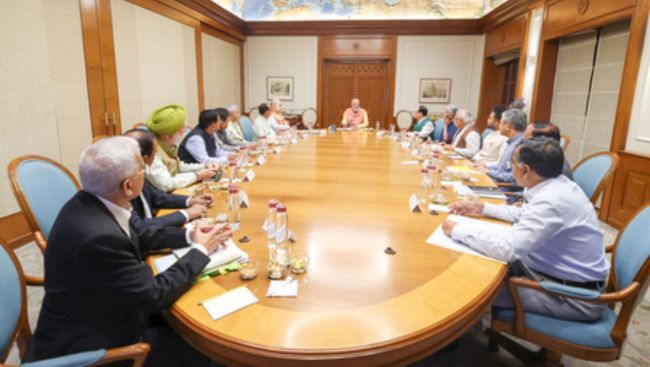
Prime Minister Narendra Modi on Wednesday chaired a meeting of the Cabinet Committee on Security (CCS) to review the evolving situation in West Asia and assess its potential impact on India's national interests. 

This was the second CCS meeting since tensions escalated on February 28, 2026, following US-Israel airstrikes on Iranian targets and subsequent retaliatory actions, which have led to disruptions in the region, including in the Strait of Hormuz, and volatility in global energy markets.

The high-level meeting, held in the evening, was attended by Defence Minister Rajnath Singh, Home Minister Amit Shah, External Affairs Minister S. Jaishankar, Finance Minister Nirmala Sitharaman, Petroleum Minister Hardeep Singh Puri, and Commerce Minister Piyush Goyal, among others. 

Agriculture Minister Shivraj Singh Chouhan, Chemical and Fertilisers Minister J.P. Nadda, and Railway Minister Ashwini Vaishnaw were also present.

National Security Adviser Ajit Doval, senior officials including the Principal Secretaries, and Cabinet Secretary T.V. Somanathan also attended the meeting.

Cabinet Secretary Somanathan made a detailed presentation on the global situation and the measures already taken or under consideration by various ministries.

Discussions focused on the short-, medium-, and long-term implications of the crisis for key sectors, including energy security, petroleum imports, fertilisers, food security, agriculture, MSMEs, exports, shipping, trade, finance, and supply chains.

With nearly one-fifth of global oil trade passing through the Strait of Hormuz, India -- which depends significantly on West Asian energy supplies -- is assessing potential risks to fuel prices, aviation, and industrial inputs.

The meeting reviewed the current macroeconomic situation and deliberated on both immediate safeguards and long-term strategies to strengthen resilience.

This follows a similar CCS review held last week on the unfolding developments in the region. The government has been focusing on diversifying energy sources, maintaining buffer stocks of essential commodities, and ensuring uninterrupted domestic supply.

India has consistently called for de-escalation, dialogue, and the protection of civilian lives and critical infrastructure.

The government’s approach is aimed at mitigating external shocks while maintaining a balanced diplomatic stance amid a volatile geopolitical environment.

Picture Courtesy: IANS
MORE India ARTICLES

War, energy and power: Why India matters now

War, energy and power: Why India matters now
The ongoing war in West Asia is not just a conflict of armies; it is a failure of imagination, restraint, and timely diplomacy. It reflects a world that understood the risks but chose delay over decision, and rhetoric over resolution. What we are witnessing today is not an unexpected crisis, but the outcome of ignoring peace when it was still possible. 

War, energy and power: Why India matters now

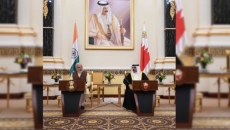
PM Modi discusses West Asia conflict with Bahrain King, condemns attacks on energy infrastructure

PM Modi discusses West Asia conflict with Bahrain King, condemns attacks on energy infrastructure
Prime Minister Narendra Modi on Friday discussed the current situation in West Asia with Bahrain's King Hamad Bin Isa Al Khalifa and condemned the attacks on the energy and civilian infrastructure in the region.

PM Modi discusses West Asia conflict with Bahrain King, condemns attacks on energy infrastructure

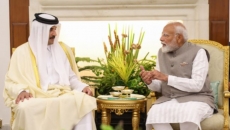
‘In solidarity with Qatar’: PM Modi condemns attacks on energy infrastructure in West Asia​

‘In solidarity with Qatar’: PM Modi condemns attacks on energy infrastructure in West Asia​
In a strong display of diplomatic support, Prime Minister Narendra Modi held a telephone conversation with the Amir of Qatar, Sheikh Tamim bin Hamad Al Thani, on Thursday to convey warm Eid greetings and firmly reiterate India’s condemnation of the recent attacks on energy infrastructure in the Gulf region. ​

‘In solidarity with Qatar’: PM Modi condemns attacks on energy infrastructure in West Asia​

India's BRICS Presidency faces diplomatic test amid Middle East tensions: Report

India's BRICS Presidency faces diplomatic test amid Middle East tensions: Report
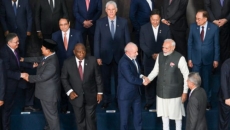
India's 2026 BRICS presidency is expected to test New Delhi’s diplomacy even more than its highly successful presidency of the G20 as BRICS members - including Iran, the UAE and Saudi Arabia - navigate divergent positions amid the escalating conflict in the Middle East. The question, a report highlighted on Thursday, is how India would be able to forge consensus language acceptable to all sides.

India's BRICS Presidency faces diplomatic test amid Middle East tensions: Report

Canada-India academic ties create pathways for future talent: Report

Canada-India academic ties create pathways for future talent: Report
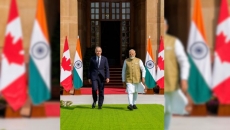
Canadians stand to benefit from India’s intellectual capital, reinforcing prosperity in an increasingly competitive global landscape. Recent progress in education mobility between Canada and India offers a vital opportunity to restore people-to-people ties impacted by visa restrictions, a report has highlighted.

Canada-India academic ties create pathways for future talent: Report

Indian refineries increase LPG production by 36 per cent to plug import gap

Indian refineries increase LPG production by 36 per cent to plug import gap
India’s domestic refineries have stepped up LPG production as much as 36 per cent to fill the gap in imports caused by the disruption due to the closure of the Strait of Hormuz because of the Iran war, according to a statement issued by the Ministry of Petroleum and Natural Gas on Monday.  

Indian refineries increase LPG production by 36 per cent to plug import gap