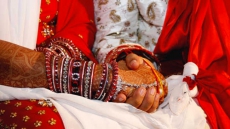
Semi-arranged marriages are partially replacing arranged marriages in India, especially in urban areas, leading to reduction in marital violence and giving women a greater say in crucial decisions on finances and family planning, according to a UN report.
The observation was made in the UN Women's new report 'Progress of the World's Women 2019-2020: Families in a Changing World' which was released on Tuesday.
The report shows that families, in all their diversity, "can be critical drivers of gender equality, provided decision-makers deliver policies rooted in the reality of how people live today, with women''s rights at their core," Phumzile Mlambo-Ngcuka, UN Women Executive Director, said while releasing the report.
But families can also be breeding grounds of conflict, inequality and, far too often, violence, she said.
"Around the world, we are witnessing concerted efforts to deny women''s agency and their right to make their own decisions in the name of protecting 'family values'," Mlambo-Ngcuka said.
The report stated that marriages remain largely universal and socially compulsory in much of Southern and Eastern Asia, Sub-Saharan Africa and Northern Africa and Western Asia. In these regions, the extent to which women can exercise agency in partnership formation is highly constrained by a mix of social norms and economic factors, the report said, adding that in many countries, choosing a partner is not an individual decision but one that is taken by the wider family or social network.
"In India, for example, the practice of arranged marriages remains commonplace. In traditional parent-arranged marriages, women often exercise little agency in choosing a partner and may meet their husband-to-be for the first time on their wedding day," it said. "The practice, however, has evolved over time and has been partially replaced by semi-arranged marriages, particularly in urban areas," it said, adding that in these arrangements, families are involved in suggesting potential matches, but women choose whether to marry and who to partner with.
The report noted that women in semi and self-arranged marriages are three times as likely as those in family-arranged marriages to exercise agency on key areas of decision making, including on expenditures, when to have children (and how many) and contraception, and twice as likely to be able to visit friends and relatives unescorted.
Those in semi-arranged marriages are also less likely to experience marital violence compared to those in traditional marriages arranged by parents, it added.
The report also highlighted that the practice of dowry remains widespread in South Asia despite long-standing feminist campaigns and legislation prohibiting the practice in both Bangladesh and India.
In India, "economic liberalisation and commercialization have contributed to the spread of the practice from upper- to middle- and lower-caste Hindus, as well as to Christians, Muslims and tribal groups," the report said, adding that the status and economic position of families is linked with weddings as "a public display of wealth."
"Gifts that were once voluntary and/or nominal have become compulsory and spiralled up in value. Dowry has shifted from a signifier of marriage to a central condition for a daughter's eligibility," it said.
It also noted that dowry practices can fuel violence against women when, for instance, the bride's family fails to pay the dowry in full or the gifts are deemed unsatisfactory. The report noted that husbands are the most common perpetrators and mothers-in-law are often implicated.
Cited the contradictory views of women in Kerala on dowry, the report stated that while they noted the centrality of a substantial dowry to securing a good marriage, they also identified dowry as "the main problem women face."
Beyond decision-making on financial matters, evidence from Ecuador, Ghana and India suggests that when women own assets such as land and housing, they tend to enjoy a greater degree of protection against intimate partner violence as well as an escape route out of abusive situations. However, it is concerning that only a fraction of women aged between 15-49 in India receive a wage or income of their own.
In practice, this renders the great majority of women financially dependent on their spouses, fathers, in-laws and other extended kin, it said.
It further said that in some contexts, women have experienced stagnation, or even decline, in their capacity to have an income of their own due to adverse labour market conditions or severe curtailment of work-family reconciliation measures.
"Both China and India have seen a decline in women's labour force participation rates (LFPR), albeit under very different socio-economic conditions, while experiencing stunning rates of economic growth.
The fall in women''s LFPR (for those aged 25-54) in India is one of the largest globally (6.9 percentage points) during the period 1997-2018, the report said.
The report also said that in India, while the number of divorcees has doubled over the past two decades, still only 1.1 per cent of women are divorced, with those in urban areas making up the largest proportion.
Noting that divorce rates are generally low in India, it said that the default regime is separation of property and the right to maintenance is weakly enforced.