The ongoing war in West Asia is not just a conflict of armies; it is a failure of imagination, restraint, and timely diplomacy. It reflects a world that understood the risks but chose delay over decision, and rhetoric over resolution. What we are witnessing today is not an unexpected crisis, but the outcome of ignoring peace when it was still possible.
For decades, the region lived under an illusion of stability. The framework created after the Oslo Accords was never fully implemented, yet it continued to be invoked as if it still carried meaning. Instead of addressing core disputes, the international community allowed the situation to drift. Negotiations became symbolic, mistrust became structural, and conflict became inevitable.
Peace was not defeated overnight—it was neglected over time.
The present war has exposed this neglect in its starkest form. The United States, long seen as the anchor of regional stability, now appears constrained and reactive. Its inability to prevent escalation, even among close partners, has raised questions about its strategic coherence. Regional actors, in turn, have adjusted accordingly—asserting their own interests, often at the cost of collective stability.
At the same time, the conflict has revealed a deeper transformation. Power in West Asia is no longer about decisive victories. It is about endurance, disruption, and the ability to impose costs. This has created a situation where no side can truly win, yet all sides can continue to escalate.
When energy becomes a battleground
One of the most dangerous aspects of this war is the centrality of energy.
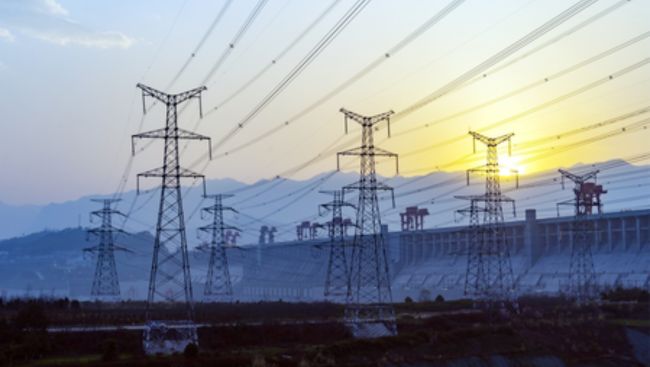
Oil fields, gas reserves, and maritime routes are no longer just economic assets; they are instruments of pressure. The vulnerability of the Strait of Hormuz and critical infrastructure has made it clear that the global economy is deeply exposed to regional instability.
Even limited disruptions have triggered price volatility. A prolonged conflict could push energy prices to levels that would strain economies worldwide, particularly in Asia and Europe. Inflation, supply chain disruptions, and slowed growth would follow.
This is not just an economic issue—it is a strategic one. The world’s dependence on a single region for energy has become its greatest vulnerability.
A fragmented order, a missing peace
The war is accelerating the emergence of a fragmented regional order.
No single power dominates. The United States remains influential but less decisive. China is expanding economically without taking on security responsibilities. Russia is engaging selectively. Regional powers are pursuing independent and often competing strategies.
In such a landscape, peace cannot be imposed from outside. It must be built from within.
Yet, the tragedy is that the institutions and processes meant to enable peace have lost credibility. Diplomacy has been reactive rather than preventive. Dialogue has followed conflict instead of averting it. The world has, in effect, normalised instability.
A changing order: India’s moment to create history
The world that emerges from the ongoing conflict in West Asia will be more uncertain, more fragmented, and far less predictable than before. This is not just a temporary disruption—it is the beginning of a more chaotic order where traditional power structures will weaken, and new forms of influence will emerge.
Energy will sit at the centre of this transformation. Countries will no longer rely on a single region or route. Diversification, resilience, and strategic reserves will become core national priorities. At the same time, regional alignments will grow more fluid, shaped less by fixed alliances and more by immediate interests. External powers will find it harder to impose outcomes, and local dynamics will increasingly define the course of events.
In such a world, influence will not come only from military or economic strength. It will come from the ability to connect interests, reduce tensions, and create pathways for stability. This is where India’s moment lies.
India’s strategic opening
India is uniquely positioned in this evolving landscape. It maintains functional relationships across the divide—engaging with Gulf countries, Iran, and Israel without being seen as an adversary by any. This balanced posture gives India a rare credibility at a time when most major powers are viewed through the lens of alignment or bias.
This credibility must now be translated into initiative.
India can take the first step by calling for a structured foreign representatives’ consultation, beginning with Gulf and Iranian interlocutors. The objective at this stage need not be an ambitious peace settlement. It should be focused, realistic, and urgent: creating a platform for communication where none currently exists.
Such an initiative would signal intent—not to impose solutions, but to enable dialogue.
A phased approach to de-escalation
Given the complexity of the conflict, India’s approach should be gradual and outcome-oriented.
First, the immediate goal must be to secure a mutual understanding on non-targeting of energy infrastructure. Oil fields, gas facilities, and shipping routes are not just national assets; they are global lifelines. Continued attacks on these will deepen economic instability far beyond the region. A limited but enforceable commitment to protect these assets can serve as the first building block of trust.
Second, once a basic level of restraint is established, efforts can move towards a localized truce framework. This would involve reducing hostilities in critical zones and creating space for sustained dialogue. Even partial de-escalation would have significant economic and psychological impact.
Third, the longer-term challenge lies in rebuilding trust, particularly between Iran and the Gulf states. This relationship is central to the region’s stability. Without a minimum level of confidence between these actors, no broader peace framework can hold. India, with its non-threatening posture, can facilitate confidence-building measures—economic cooperation, maritime security dialogues, and backchannel engagements.
Recognising the reality
An essential part of this process is acknowledging a difficult truth: this war has elements of miscalculation and strategic overreach on multiple sides. Durable peace cannot be built on denial. While public narratives may resist such admissions, quiet diplomacy must recognise that continuing on the current path benefits no one.
The focus, therefore, should shift from assigning blame to preventing further damage.
Why India, why now
India’s stakes in the region are immediate—energy security, trade flows, and the welfare of its diaspora. But beyond these interests lies a larger opportunity.
In a world where traditional powers are either overstretched or mistrusted, there is space for a different kind of leadership—one that is not coercive, but connective.
By initiating dialogue, even at a modest level, India can position itself as a credible peacemaker. Success is not guaranteed. The divisions are deep, and the risks are real. But the cost of inaction is far greater—not just for the region, but for the global economy.
From risk to responsibility
This is a difficult call, but it is worth attempting.
If India can help create even a limited framework for de-escalation—starting with the protection of energy assets and moving towards trust-building—it would not only safeguard its own interests but also contribute meaningfully to global stability.
In a changing world order, history will not be shaped only by those who wield power, but by those who prevent its misuse.
India has the capacity to do so. The moment calls for it.
India has the capacity to be one such country.
Conclusion
The West Asia war is a reminder of what happens when peace is postponed for too long. It is a failure that will carry lasting consequences.
Yet it also offers a chance to rethink.
For India, this is not just about safeguarding interests. It is about defining a role—as a country that does not merely navigate conflicts but helps prevent them.
In a fractured world, the ability to build peace may well become the most important form of power.
Picture Courtesy: IANS