The Maharashtra government's decision to tag students of traditional madrasas as 'out-of-school' has put madrasa reforms back on the national discourse. The issue is important not just for the Muslim community but for the nation. Someone must push it through in national interest.
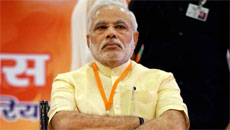
And nobody seems more primed for the role than Prime Minister Narendra Modi. It suits him as well. He can simultaneously play to the nationalist gallery and also do something significant to alter the lot of the Muslim community. A well-meaning madrasa reform agenda could be the best advertisement for 'Sab ka Sath, Sab ka Vikas'.
Reliance on madrasa education is often blamed for the backwardness of the community. But the truth is that many Muslim children go to madrasas out of compulsion. If it were not for these madrasas run by religious charities, these children would never get any 'education'. From that perspective, the argument that madrasas shield Muslim children from formal education is also seriously flawed.
The Sachar Committee Report indicated a desire within the community to shift to modern education. But lack of accessibility and financial problems come in the way. Hence, the most effective start in madrasa reforms would be to create opportunities for every Muslim child to join the formal and mainstream education by setting up quality and affordable schools in places where madrasas draw poor children in large numbers.
This means that this crucial reform can begin without ruffling any feather. This, however, shouldn't dilute the urgent need of overhauling the madrasa system of education. It has failed to equip students either with skills to take advantage of opportunities available in the modern world or spiritual training powerful enough to trigger inner transformation.
In short, madrasas churn out misfits. My heart bleeds when I see alumni of madrasas, including those of prestigious Deoband and Nadwa, working as rickshaw pullers or labourers despite seven to eight years of theological education. This also explains why only four percent of Muslim children attend madrasas as parents of 96 percent know it can do nothing to ensure the future of their children.
The need of the hour is quality formal and vocational education with a fair dose of religious and moral syllabus. But most Madarsas deliver just the reverse.

Apart from being out of sync with the demands of the modern world, madrasas have a more serious faultline. Their style tends to keep the students insulated from the mainstream. Places of learning are the only place where one mingles and grows with people from other communities.
But in a madrasa environment, Muslim children will never get a chance to get integrated with the rest of society. When they live in isolation, they will be moulded in one particular mindset and there will be no open mindedness to appreciate the country's diversity.
With the hardline Tablighi (Wahhabi) ideology dominating the madrasa scene in India, the issue is more critical than just teaching Muslim children science and mathematics. Following an orthodox form of Islam that insists on a literal interpretation of the Quran, this school of thought believes that all those who don't subscribe to their brand of Islam are to be hated, persecuted, even executed. The phenomena like IS are an offshoot of this orthodoxy.
We cannot turn a blind eye to this rigid ideology taking roots in India. I was shocked when I recently visited the campus of a popular madrasa in Bangalore. It had nothing Indian about it and looked more like a mini Saudi Arabia. That's why madrasa reform should be an urgent national priority.
However, that doesn't mean that we should convert all madrasas into mainstream schools. Religious seminaries are meant to impart in-depth religious and spiritual knowledge and as such have a definite and vital role in society. A community without spiritual and religious leadership will reel in chaos and turn fanatical. Islam today badly needs Ulemas who have the spiritual depth and are 'educated'. Inevitably, this rare tribe has to come from Islamic seminaries. So the challenge is to reform madrasas into centres of theological excellence.
The madrasas themselves must look to professionalize religious education by designing contemporary courses and setting a minimum formal education as eligibility for such studies. Like not everybody can take admission in MBBS or BE, religious education must also be restricted to those who are capable and have an aptitude for it. This will only add dignity to the profession of serving God. Secular institutions of reputes can be encouraged to start such courses for studies in different religions.