Thursday, December 25, 2025
ADVT 
Interesting

Altruism Increases After You Cross 45

Darpan News Desk IANS, 18 Aug, 2016 12:24 PM
    Combining insights from psychology, behavioural economics and neuroscience, researchers, including one of Indian-origin, have discovered that pure altruism increases with age, especially after the age of 45.
     
    General benevolence is more strongly expressed in the second half of the life span, the researchers found.
     
    "It (the research) gives us a deeper look at the people who give to charity and altruistically contribute to society," said study co-author Sanjay Srivastava, Professor of Psychology at University of Oregon in the US.
     
    People may give to charity for numerous non-altruistic reasons, such as showing off their generosity to others. To isolate pure altruism from other motivations, the researchers combined methods from the three fields - psychology, behavioural economics and neuroscience.
     
    Their goal was to find a sweet spot where altruism is done for the simple joy of seeing others benefit without expecting personal rewards or recognition, lead author Ulrich Mayr from University of Oregon said.
     
    In an experiment with 80 men and women, between ages 18-67, all with similar work and life experiences, the participants made real decisions about either giving cash to a charity or keeping it for themselves. 
     
    The researchers also used functional MRI to look at brain regions associated with value and rewards as each participant watched various scenarios involving money going either to themselves or to charities. 
     
    The participants also took detailed psychological assessments of their personality traits.
     
    The results showed that for some people neural reward areas were more active when money went to themselves than to charities. 
     
     
    Others showed more neural reward when they witnessed money going to a charity. 
     
    These individuals, whose neural responses suggest altruistic tendencies, also gave more money when they had a choice. They also showed a stronger expression of pro-social personality traits.
     
    The research team said the pattern points to a strong underlying dimension that they labeled as general benevolence, which reflects altruistic tendencies based on measures drawn from neuroscience, behavioral economics and psychology.
     
    People older than 45 receive more neural reward from seeing others better off, they give more money away and they score higher on pro-social personality traits than those under 45, showed the study published online in the Journal of Experimental Psychology: General.
     
    "It is exciting that the three very different methods converge on a common general benevolence dimension and that we can reliably measure pure altruism," Mayr said.


    MORE Interesting ARTICLES

    Learning a new language could sharpen your brain

    Learning a new language could sharpen your brain
    Just as physical exercise helps you build your muscles, learning a new language could strengthen your brain, thereby making the process of ageing...

    Learning a new language could sharpen your brain

    'Increasing male friend count leads to more sex'

    'Increasing male friend count leads to more sex'
    Women who have more male friends indulge in a lot more carnal activity with their partners than couples where the female has fewer male friends, says a new study....

    'Increasing male friend count leads to more sex'

    Football players' performance written on their faces

    Football players' performance written on their faces
    The facial appearance of a football player may give us vital clues about his performance on the field - including his likelihood of scoring goals, making assists...

    Football players' performance written on their faces

    How mosquitoes evolved to love human odour

    How mosquitoes evolved to love human odour
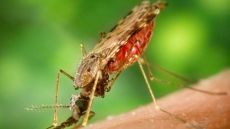
    One reason why mosquitoes transitioned from harmless animal-biting insects into deadly vectors of human disease was their love for human body odour, says a new research....

    How mosquitoes evolved to love human odour

    The Art Of Silhouette Requires A Portraitist's Eye, Artistic Skills And A Scissors

    The Art Of Silhouette Requires A Portraitist's Eye, Artistic Skills And A Scissors
    The silhouette, an ancient form of portraiture, may be dying. Only a handful of artists have learned to cut these precision profiles — traditionally clipped from black paper and mounted on a white background — that were popularized in the 1800s in Europe and the United States.

    The Art Of Silhouette Requires A Portraitist's Eye, Artistic Skills And A Scissors

    Hilary Swank Co-hosts Star-studded Thanksgiving TV Special To Help Rescue Dogs Find Homes

    Hilary Swank Co-hosts Star-studded Thanksgiving TV Special To Help Rescue Dogs Find Homes
    LOS ANGELES — Oscar winner Hilary Swank is unleashing some serious star power to help rescue dogs get adopted by families who want to make a difference on Thanksgiving — or those who just want to watch terriers instead of touchdowns on TV.

    Hilary Swank Co-hosts Star-studded Thanksgiving TV Special To Help Rescue Dogs Find Homes