Thursday, December 25, 2025
ADVT 
Interesting

Beware! Baby's Cry Can Alter Your Brain Functions

Darpan News Desk The Canadian Press, 23 May, 2016 11:36 AM
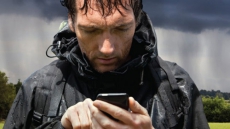
    A constantly crying baby can not only hamper your peace, it can also rattles your brain functions and alter the way you think and act to make daily decisions, a study has found.
     
    The brain data revealed that the infant cries reduced attention to the task and triggered greater cognitive conflict processing than infant laughs.
     
    "Parental instinct appears to be hardwired yet no one talks about how this instinct might include cognition," said David Haley from the University of Toronto.
     
    The team looked at infant vocalisations -- in this case, audio clips of a baby laughing or crying -- and its effect on adults who completed a cognitive conflict task. 
     
    They asked participants to rapidly identify the colour of a printed word while ignoring the meaning of the word itself. 
     
    Brain activity was measured using electroencephalography (EEG), which took place immediately after a two-second audio clip of an infant vocalisation. 
     
    Cognitive conflict processing is important because it controls attention -- one of the most basic executive functions needed to complete a task or make a decision. 
     
    A baby's cry has been shown to cause aversion in adults but it could also be creating an adaptive response, "switching on" the cognitive control parents use in effectively responding to their child's emotional needs while also addressing other demands in everyday life, Haley added in a paper published in the journal PLOS ONE. 
     
    "If an infant's cry activates cognitive conflict in the brain, it could also be teaching parents how to focus their attention more selectively," he added.
     
    The findings add to a growing body of research suggesting that infants occupy a privileged status in our neurobiological programming, one deeply rooted in our evolutionary past. 
     
    But, as Haley noted, it also reveals an important adaptive cognitive function in the human brain.

    MORE Interesting ARTICLES

    Australian children hide internet usage from parents

    Australian children hide internet usage from parents
    In a survey released Monday, 70 percent of Australian children aged between 8-17, said that their parents did not know about their internet usage...

    Australian children hide internet usage from parents

    'Dropped' calls may measure rainfall

    'Dropped' calls may measure rainfall
    We know that cellphone calls break up and crackle when it rains. But did you ever think that tracking this disruption in cellphone signals could help you calculate the amount of rainfall?

    'Dropped' calls may measure rainfall

    World's oldest recorded near-death experience found

    World's oldest recorded near-death experience found
    Researchers have stumbled upon what they believe to be the oldest professional/medical case report of near-death experiences (NDE) - dating back to the year 1740....

    World's oldest recorded near-death experience found

    Oldest evidence of human brain damage found

    Oldest evidence of human brain damage found
    Anthropologists have unearthed a 100,000-year-old skeleton of a child in Israel who may have died because of a brain injury - the oldest evidence of brain damage in a modern human....

    Oldest evidence of human brain damage found

    Bees physically transfer heat to stay cool

    Bees physically transfer heat to stay cool
    To protect their young ones from heat, honey bees can absorb heat from the brood walls just like a sponge and later transfer it to a cooler place to get rid of the heat

    Bees physically transfer heat to stay cool

    Global film industry gender-biased: Study

    Global film industry gender-biased: Study
    A study has revealed that only 22 percent of the crew involved in making 2,000 of the biggest grossing films worldwide over the past 20 years were women....

    Global film industry gender-biased: Study